

Archive for research

With a dose of health equity, brachial plexus study enrolls more patients
What drives a parent to say yes or no to enrolling their child in research? When a surprisingly high percent of patient families said no to participating in a study of brachial plexus birth injury, orthopedic surgeon Andrea Bauer, MD, and her team decided to find out why. Along the way, they became versed in ... Read More about With a dose of health equity, brachial plexus study enrolls more patients

A promising new antiseizure drug tailored to newborns
Neonatal seizures can lead to serious consequences, including significant cognitive and motor disabilities, lifelong epilepsy, and death. They are often highly resistant to treatment, in part because seizures in newborns are fundamentally different from seizures in older children and adults. Yet they are treated in much the same way as older patients, with little change over the decades. Better treatment is ... Read More about A promising new antiseizure drug tailored to newborns

Thickened feeds — but not acid-suppressing medications — help treat laryngomalacia in infants
In laryngomalacia, the soft tissues of the larynx fall over the airway opening and partially block it, which can result in stridor, feeding difficulties, and other symptoms. Infants with this condition are frequently treated with acid-suppressing medications, based on the belief that gastroesophageal reflux might worsen the problem. However, there’s little evidence to support the ... Read More about Thickened feeds — but not acid-suppressing medications — help treat laryngomalacia in infants
Taking treatment of long-gap esophageal atresia to the next level: Refining innovative techniques
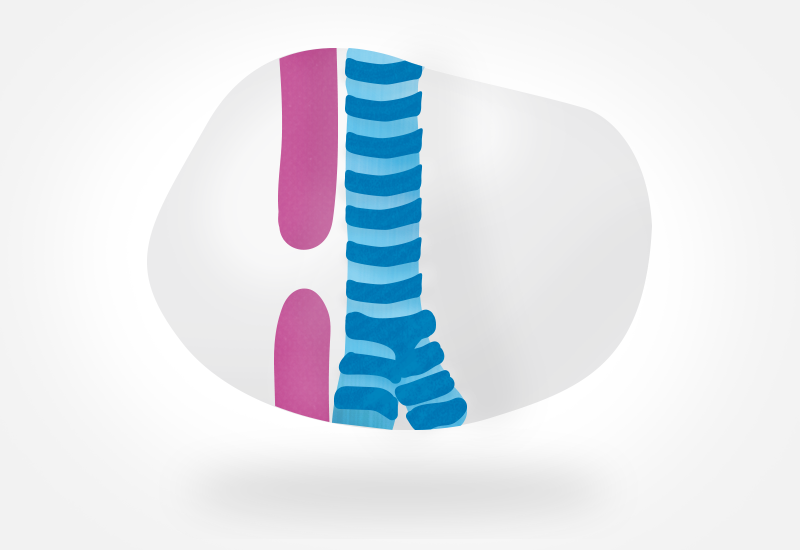
The surgeons in the Esophageal and Airway Treatment Center at Boston Children’s Hospital are pioneers in developing and refining innovative surgical approaches to long-gap esophageal atresia, a condition in which a child’s esophagus develops in two separate segments that can’t be easily connected with surgery. Among these techniques are jejunal interposition and the Foker process. ... Read More about Taking treatment of long-gap esophageal atresia to the next level: Refining innovative techniques

A coming wave of diabetes? The link with COVID-19
Researchers are observing a new long-term health concern in patients hospitalized with COVID-19 — an increase in new-onset hyperglycemia lasting months after infection. An Italian study found that about half of the patients admitted to the hospital for COVID-19 during the start of the pandemic had new cases of hyperglycemia, or high levels of blood ... Read More about A coming wave of diabetes? The link with COVID-19

Inspired by Chinese finger traps, an annuloplasty ring that grows with the child
This post is part of a series on innovations to treat valvular disease in children. Read our prior posts on transcatheter valve replacement and an expandable prosthetic heart valve. Prosthetic annuloplasty rings have improved the durability of heart valve repairs in adults. Implanted at the perimeter of dilated, leaky valves, they help keep the valve ... Read More about Inspired by Chinese finger traps, an annuloplasty ring that grows with the child
Children with severe MIS-C do better with IVIG and steroids as initial therapy
When children started getting sick with multisystem inflammatory syndrome (MIS-C) in the wake of COVID-19, clinicians largely turned to two treatments. Many used immunoglobulin (IVIG) because of MIS-C’s similarities with Kawasaki disease. And many used steroids such as methylprednisolone because of MIS-C’s inflammatory features. Key takeawayIn this large, rigorous national study, initial treatment of MIS-C ... Read More about Children with severe MIS-C do better with IVIG and steroids as initial therapy

A successful, low-cost reusable treatment for infant hypothermia
Key Takeaways Infant hypothermia leads to about one million deaths each year, primarily in low- and middle-income countries.A study in rural Rwanda of a non-electric infant warmer developed by Boston Children’s showed it successfully raised infants’ core temperatures and improved survival in preterm infants with hypothermia Infant hypothermia contributes to approximately one million deaths each ... Read More about A successful, low-cost reusable treatment for infant hypothermia

Beyond HIPAA: Maintaining patient privacy in a big data era
After a prolonged, painful era in which medical data were exchanged mainly by fax, most patients today have electronic health records. But the data within them aren’t as private as they might think, says Kenneth Mandl, MD, MPH. As director of the Computational Health Informatics Program (CHIP) at Boston Children’s Hospital, he’s seen patient data ... Read More about Beyond HIPAA: Maintaining patient privacy in a big data era
New study ties residual lesion score (RLS) to cardiac surgery outcomes
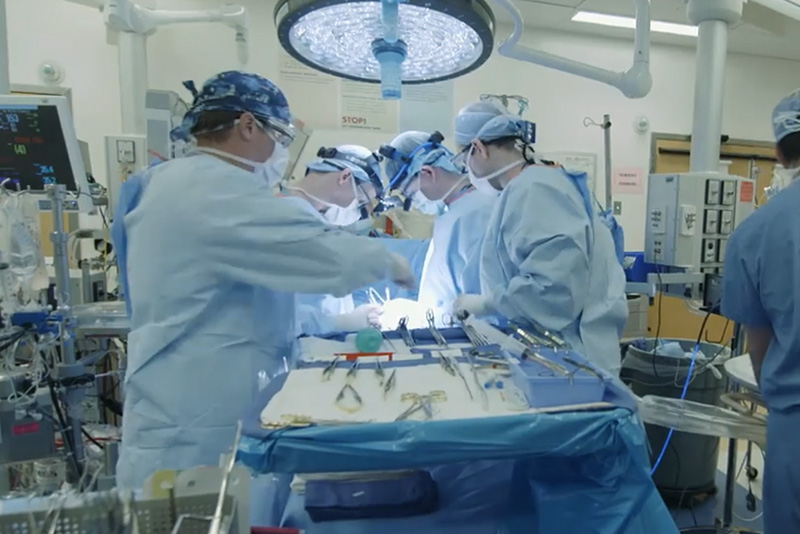
How well a patient does after surgery for congenital heart disease (CHD) depends on a large number of variables, ranging from patient characteristics to preoperative status to anatomic complexity to perioperative factors. One of the most important predictors of adverse events or reintervention is the presence of residual lesions — structural cardiac abnormalities that remain ... Read More about New study ties residual lesion score (RLS) to cardiac surgery outcomes