
Research

Sign up to receive email updates from Boston Children’s, including parenting tips, patient stories, helpful resources, and news for your family.
Subscribe now
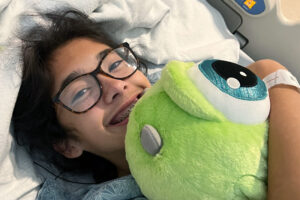
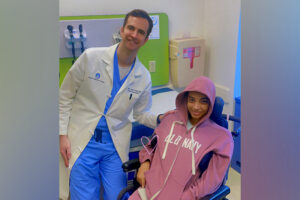


Boston Children’s is proud to lead THUMPIN’ (Tissue-engineered Hearts Using Multimodal Printing in Newborns), a new research initiative bringing together Harvard School of Engineering and Applied Sciences, Brigham and Women’s Hospital, and NTT Research to advance bioengineered heart tissues for infants and young children with congenital heart disease.
For children with complex heart defects, treatment can mean surgery after surgery as they grow. THUMPIN’ aims to change that by developing living cardiac tissues that can grow, function, and adapt with a child - with the ultimate goal of creating a complete, functioning heart.
Led by Drs. Pedro Del Nido and Kit Parker, alongside collaborators Drs. William Pu, Juan Melero-Martin, and Vassilios Bezzerides of Boston Children’s; Dr. Elena Aikawa of Mass General Brigham; and Dr. Joe Alexander of NTT Research, this initiative brings together experts across cardiac surgery, tissue engineering, stem cell biology, and more to help turn this vision into a future treatment option for children.
See the link in our bio to learn more.
9 CommentsComment on Facebook
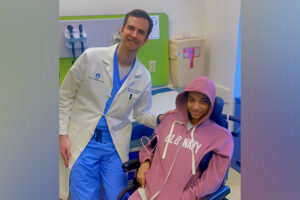
Boston Children’s is proud to lead THUMPIN’ (Tissue-engineered Hearts Using Multimodal Printing in Newborns), a new research initiative bringing together Harvard School of Engineering and Applied Sciences, Brigham and Women’s Hospital, and NTT Research to advance bioengineered heart tissues for infants and young children with congenital heart disease.
For children with complex heart defects, treatment can mean surgery after surgery as they grow. THUMPIN’ aims to change that by developing living cardiac tissues that can grow, function, and adapt with a child - with the ultimate goal of creating a complete, functioning heart.
Led by Drs. Pedro Del Nido and Kit Parker, alongside collaborators Drs. William Pu, Juan Melero-Martin, and Vassilios Bezzerides of Boston Children’s; Dr. Elena Aikawa of Mass General Brigham; and Dr. Joe Alexander of NTT Research, this initiative brings together experts across cardiac surgery, tissue engineering, stem cell biology, and more to help turn this vision into a future treatment option for children.
Learn more: bostonchildrens.social/4yyR4VB
19 CommentsComment on Facebook
We want to thank the many fundraisers and community partners who made a difference for children and families facing cancer during Childhood Cancer Awareness Month. We’re especially proud to highlight One Mission for their year-round support of pediatric cancer care and research. Through the One Mission Resource Room and the One Mission Music Therapy Program, their fundraising helps create moments of comfort, connection, and normalcy when families need it most.


4 CommentsComment on Facebook
Happy PA Week to the physician assistants at Boston Children's! 💙
They bring expertise, teamwork, and dedication to every patient they meet!
Join us in thanking our PAs in the comments.


10 CommentsComment on Facebook
Yesterday was a milestone day! Boston Children’s and Franciscan Children’s celebrated the groundbreaking for the future clinical building – Hale Family Building – on Franciscan Children’s campus in Brighton. This campus renewal project will create a transformative system of pediatric behavioral health and rehabilitative care.
We appreciate the unwavering support of Karen and Rob Hale, as well as many in city, state, and federal government who have supported us in getting to this point and those who celebrated with us today. Thank you to U.S. Senator Ed Markey, Congresswoman Lori Trahan, Congresswoman Ayanna Pressley, Massachusetts State Representative Kevin Honan, the Office of Massachusetts State Senator Will Brownsberger, the Office of House Majority Leader State Representative Mike Moran, Massachusetts Department of Public Health leadership, Massachusetts Department of Mental Health leadership, the Office of Mayor Michelle Wu 吳弭, Boston City Council President Liz Breadon, Boston Housing Authority Administrator Kenzie Bok, Allston Brighton Neighborhood Liaison Jennifer Roberts, City of Boston behavioral health leadership, as well as many others in city government, the Massachusetts state legislature, the Healey-Driscoll administration.
Granite Telecommunications Consigli Construction Co., Inc.


10 CommentsComment on Facebook
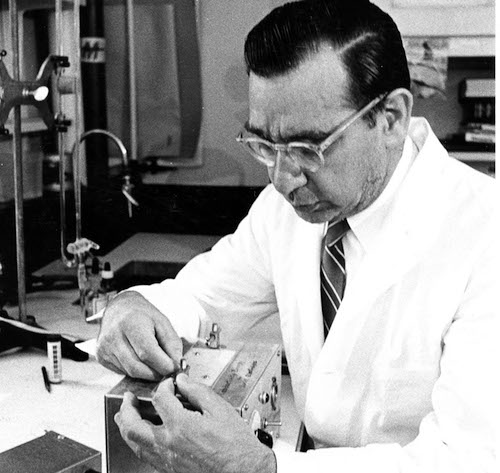
In 1955, Dr. Harry Shwachman, head of Boston Children’s Cystic Fibrosis Clinic, developed the first practical sweat test to diagnose cystic fibrosis (CF). It involved encasing the patient’s body in a plastic bag to collect sweat, then using the pictured device to measure levels of salt in the sample. Cystic fibrosis causes sweat to be 2-5 times saltier than average. The sweat test allowed for much simpler and earlier diagnosis of CF, crucial to effective treatment. A version of it is still the main diagnostic tool used today.
Learn more about Boston Children’s Archives Program.


