

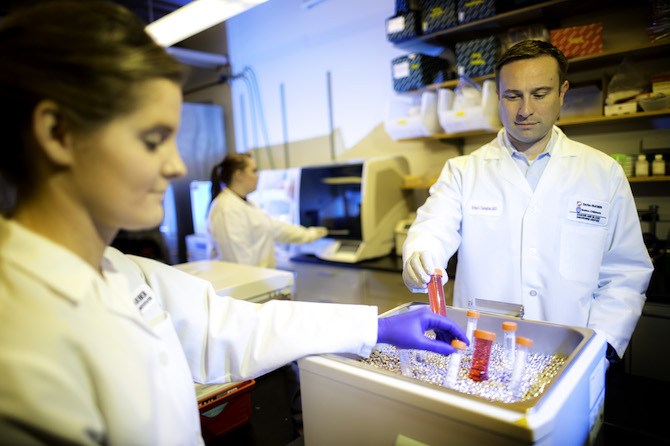
ctDNA: Bringing ‘liquid biopsies’ to pediatric solid tumors
Our blood carries tiny amounts of DNA from broken-up cells. If we have cancer, some of that DNA comes from tumor cells. Studies performed with adult cancers have shown that this circulating tumor DNA (ctDNA) may offer crucial clues about tumor genetic mutations and how tumors respond to treatment. Brian Crompton, MD, with colleagues at ... Read More about ctDNA: Bringing ‘liquid biopsies’ to pediatric solid tumors

Gene panel helps investigate sudden unexpected death in children
Almost 10 percent of pediatric deaths occur suddenly and without explanation. In this terrible situation, the first question many parents have is “Why?” For most, answers never come. Childhood deaths that cannot be explained by traditional autopsy and death-scene investigation are referred to as sudden unexplained deaths in pediatrics (SUDP). In children, these deaths are ... Read More about Gene panel helps investigate sudden unexpected death in children
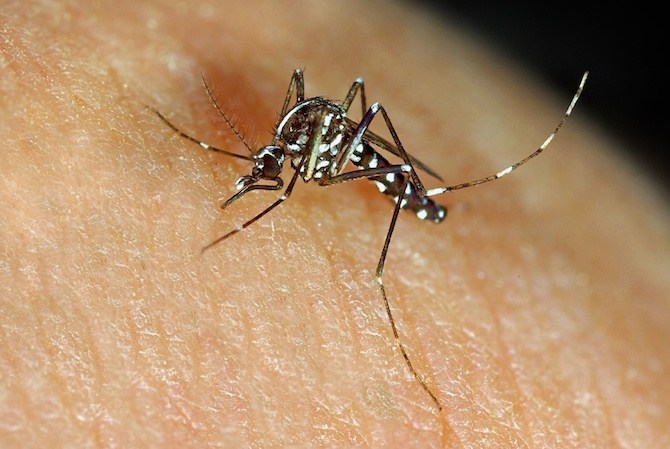
The threat from mosquito-borne diseases: Forecasting mosquitoes’ global spread
Outbreaks of mosquito-borne illnesses like yellow fever, dengue, Zika and chikungunya are rising around the world. Climate change has created conditions favorable to mosquitoes’ spread, but so have human travel and migration and accelerating urbanization, creating new mini-habitats for mosquitoes. In Nature Microbiology yesterday, a large group of international collaborators combined these factors into prediction models that ... Read More about The threat from mosquito-borne diseases: Forecasting mosquitoes’ global spread

Do antibiotic-impregnated shunts reduce infection in hydrocephalus?
Every year, nearly 400,000 children worldwide develop hydrocephalus, in which excess fluid accumulates in the brain. Many of these children have shunts placed to allow this fluid to drain. Antibiotic-impregnated shunts are widely championed as the best choice, but a recent study calls their necessity into question. The study, published in the Journal of Neurosurgery ... Read More about Do antibiotic-impregnated shunts reduce infection in hydrocephalus?
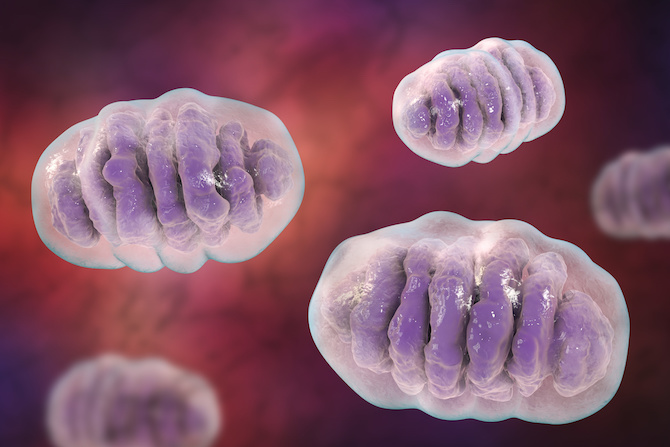
Eavesdropping on mitochondria, tissue by tissue
Mitochondria are essential to life: they produce energy, synthesize building blocks critical to cell function and help regulate cellular activity, including programmed cell death. Mitochondrial diseases can cause severe metabolic disorders in children and dysfunctional mitochondria are thought to play a role in cancer, diabetes, heart attack, stroke, Parkinson’s disease and more. A new research ... Read More about Eavesdropping on mitochondria, tissue by tissue

Blood stem cell transplants from any donor, without toxicity?
Many blood disorders, immune disorders and metabolic disorders can be cured with a transplant of hematopoietic (blood-forming) stem cells, also known as bone marrow transplant. But patients must first receive high-dose, whole-body chemotherapy and/or radiation to deplete their own defective stem cells, providing space for the donor cells to engraft. These “conditioning” regimens are highly ... Read More about Blood stem cell transplants from any donor, without toxicity?

Dually-targeted liposomes curb triple-negative breast cancer, metastases in mice
Some 15 to 20 percent of all breast cancers are triple-negative, meaning they lack receptors for estrogen, progesterone and human epidermal growth factor type 2. They have the worst prognosis of all breast cancers and very limited treatment options. Finding a treatment that distinguishes between cancer cells and normal cells has been especially challenging. A ... Read More about Dually-targeted liposomes curb triple-negative breast cancer, metastases in mice
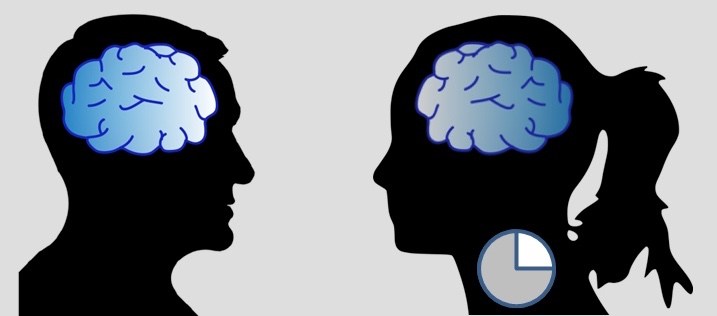
How the antidepressant ketamine rapidly awakens the brain, and why its effects vary more in women
In small doses, the anesthetic ketamine is a mildly hallucinogenic party drug known as “Special K.” In even smaller doses, ketamine relieves depression — abruptly and sometimes dramatically, steering some people away from suicidal thoughts. Studies indicate that ketamine works in 60 to 70 percent of people not helped by slower-acting SSRIs, the usual drugs ... Read More about How the antidepressant ketamine rapidly awakens the brain, and why its effects vary more in women
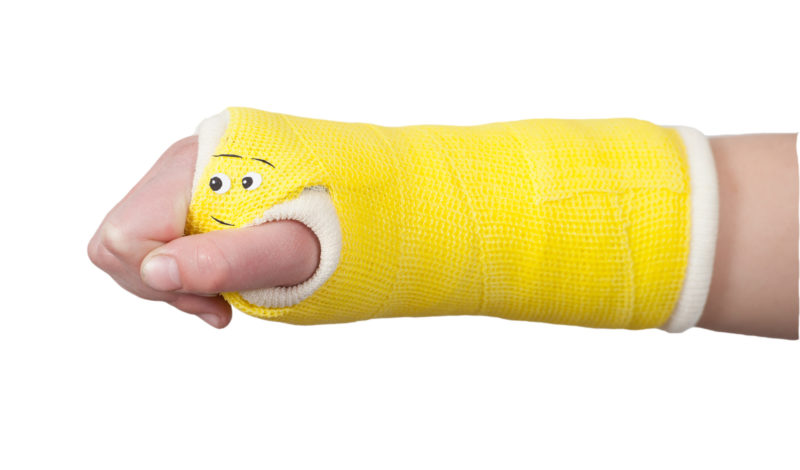
I-ACQUIRE: A new study for young stroke patients
Could I-ACQUIRE help your child?To qualify for this study, your child must meet the following criteria: · is 8 to 36 months old · had a perinatal arterial ischemic stroke confirmed by MRI · has weakness on one side of the body both arm and leg · is in good health · hasn’t had previous ... Read More about I-ACQUIRE: A new study for young stroke patients
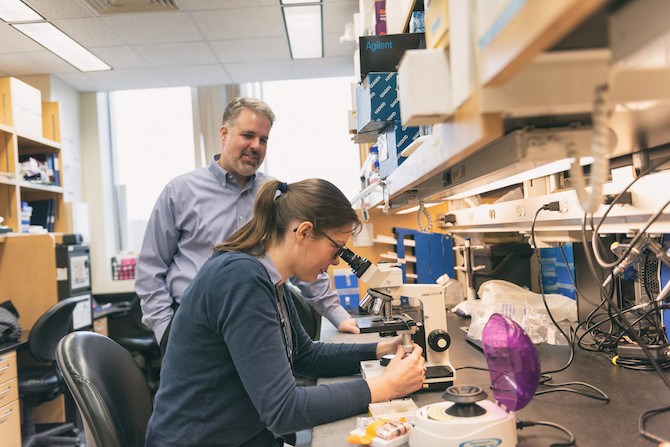
Drug repurposing and DNA mining: The hunt for new endometriosis treatments
Endometriosis is a common gynecological condition that may affect more than 1 in 10 reproductive-age women. Yet, there’s very little research into the disease and limited options for treatment. A team in the Vascular Biology Program at Boston Children’s Hospital is trying to change that. In endometriosis, tissue that normally grows inside the uterus grows outside of ... Read More about Drug repurposing and DNA mining: The hunt for new endometriosis treatments