


Sturdier spikes may explain SARS-CoV-2 variants’ faster spread
The fast-spreading U.K., South Africa, and Brazil variants are raising concerns and questions about whether current COVID-19 vaccines will protect against them. A structural biology study led by Bing Chen, PhD, at Boston Children’s Hospital now reveals how the D614G mutation — carried by all three variants — makes SARS-CoV-2 spread faster. Key takeaways: The main ... Read More about Sturdier spikes may explain SARS-CoV-2 variants’ faster spread

Looking for cancer’s Achilles heel: The Pediatric Cancer Dependency Map
Thanks to developments in precision medicine, some adult cancers are now treated with designer drugs that target the genetic mutations that caused them. But most children with cancer have not reaped the same benefits. Unlike adult cancers, childhood cancers carry few genetic mutations. And the mutations these tumors do have are typically harder to make ... Read More about Looking for cancer’s Achilles heel: The Pediatric Cancer Dependency Map

Soft stents, hardened in place by UV light, allow a snug, custom fit
Airway stents are often used when the trachea and bronchi need to be buttressed, as in children and adults with tracheobronchomalacia whose airways become “floppy” and collapse during normal breathing. This condition can occur in conjunction with congenital cardiac anomalies in which the major heart vessels compress the trachea, and with severe, recurrent bronchitis. But ... Read More about Soft stents, hardened in place by UV light, allow a snug, custom fit

Laparoscopic approach to cloacal malformation repair found safe in eligible patients
A minimally invasive surgical approach called laparoscopic rectal mobilization and urogenital separation appears to be a safe alternative to open surgery in eligible patients with cloacal malformations. That’s the conclusion of a recent study by the team in the Colorectal and Pelvic Malformation Center at Boston Children’s Hospital. A minimally invasive approach to urogenital separation ... Read More about Laparoscopic approach to cloacal malformation repair found safe in eligible patients

Neurological involvement common in kids and teens with acute COVID-19 and MIS-C
In the largest study of its kind, researchers from Boston Children’s Hospital found neurological involvement in 22 percent of children and adolescents hospitalized with acute COVID-19 or multisystem inflammatory syndrome in children (MIS-C). These symptoms included fatigue, headache, confusion, difficulty walking or crawling, or loss of taste and smell. However, 1 in 8 children with ... Read More about Neurological involvement common in kids and teens with acute COVID-19 and MIS-C

If another pandemic hits, our online ‘footprints’ may help the experts
When the new coronavirus hit early last year, little was known about it. As people started coming to the emergency room, doctors scrambled to understand COVID-19 and its trajectory of symptoms. Testing was limited, and only over a period of months did the full fury of the new virus make itself known. Community after community ... Read More about If another pandemic hits, our online ‘footprints’ may help the experts
Is it MIS-C or severe COVID-19? An update on multisystem inflammatory syndrome in children
In May 2020, multisystem inflammatory syndrome in children (MIS-C) was formally recognized as a post-infectious syndrome in children exposed to the SARS-CoV-2 coronavirus. In today’s JAMA, a study led by Boston Children’s Hospital refines the medical understanding of MIS-C. Its findings help distinguish this rare condition from severe, acute COVID-19 in children, with which it ... Read More about Is it MIS-C or severe COVID-19? An update on multisystem inflammatory syndrome in children
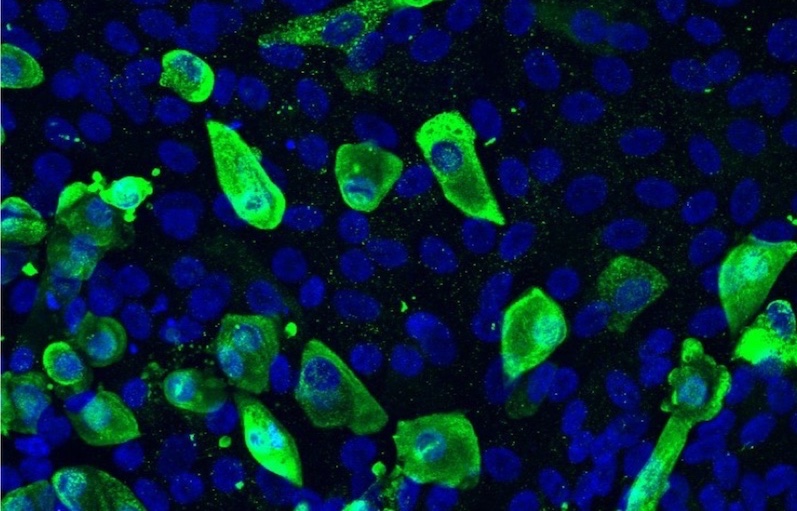
How do patients with cystic fibrosis respond to COVID-19? An ‘airway in a dish’ may give answers
So far, based on clinical data, patients with cystic fibrosis (CF) don’t appear to be especially susceptible to COVID-19. And when they do get infected, they don’t seem to get sicker. But Ruobing (Ruby) Wang, MD, who cares for patients with CF in the Division of Pulmonary Medicine at Boston Children’s Hospital, thinks there is ... Read More about How do patients with cystic fibrosis respond to COVID-19? An ‘airway in a dish’ may give answers

Tuber locations associated with infantile spasms map to a common brain network
About half of all babies with tuberous sclerosis complex (TSC) develop infantile spasms, a type of epilepsy that can have serious long-term neurologic consequences. Infantile spasms occur more often in children who have more brain tubers — groups of cells that do not divide into normal neurons and brain cells — but we haven’t known ... Read More about Tuber locations associated with infantile spasms map to a common brain network

Predicting pediatric seizures with a wristband: Study shows what’s possible
The ability to track seizures has a number of potential benefits: It could allow physicians to better determine optimal dosing and timing of medication, as well as enable timely interventions to help prevent impending seizures. Traditionally, electroencephalography (EEG) and electrocorticography have been used to evaluate and forecast seizures. However, more compact, portable approaches — such ... Read More about Predicting pediatric seizures with a wristband: Study shows what’s possible