

Patient Stories

Changing the world: Baby Denver leads the way after first-of-its-kind procedure for VOGM
Denver Coleman is less than 2 months old, but she’s already helped blaze a trail for other children and families, a feat she accomplished before she was even born. Denver, who was diagnosed with a vein of Galen malformation — a type of rare blood vessel abnormality inside the brain — in utero, is the ... Read More about Changing the world: Baby Denver leads the way after first-of-its-kind procedure for VOGM
Patient Stories

One athlete, two hip surgeries, three Ironmans
Trevor Spence grew up playing just about every sport he could. When he was 3, he laced up his first pair of hockey skates. When he was 10, he medaled in the Junior Olympics 1500-meter Track and Field event. Throughout middle and high school, he travelled to tournaments for hockey, lacrosse, and soccer. “I did ... Read More about One athlete, two hip surgeries, three Ironmans
Patient Stories
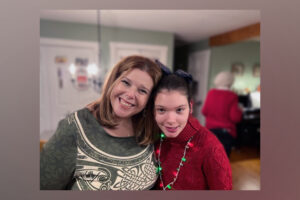
Inspired by her daughter, one mom helps families navigate complex epilepsy
Colleen Gagnon felt something wasn’t right soon after her daughter Niamh was born but tried to convince herself she was just overthinking. Fighting her instincts as a nurse and second-time mom, Colleen tried to link the dimple in Niamh’s forehead and darting eye movements to her being born six weeks early. But an eye doctor’s ... Read More about Inspired by her daughter, one mom helps families navigate complex epilepsy
Health and Parenting
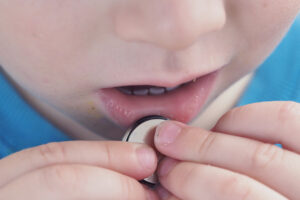
Tiny, shiny, and dangerous: What families should know about button batteries
Button batteries may be bright, shiny, and eye catching, but they also have a dark side — especially for kids. Look around your home and you’ll likely find these small discs hiding in plain sight, where they’re used to power everything from watches and scales to remote controls and toys. When curious children encounter them, ... Read More about Tiny, shiny, and dangerous: What families should know about button batteries
Research
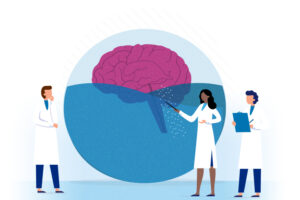
Another angle on Alzheimer’s: CSF, proteomics, and metabolic enzymes
Currently there are no objective, easily assessed diagnostic markers for Alzheimer’s disease, and no good therapeutic options. Taking an agnostic approach, proteomics expert Hanno Steen, PhD, and neurobiologist Judith Steen, PhD, who share a lab at Boston Children’s Hospital, teamed up to analyze proteomics data from the cerebrospinal fluid (CSF) that bathes the brain, combining ... Read More about Another angle on Alzheimer’s: CSF, proteomics, and metabolic enzymes
Research
BMI and the adolescent brain: A concerning connection
We all know that obesity is a growing epidemic in children and adults. A large national study now finds that preteens carrying excess weight have notable differences in cognitive performance, brain structures, and brain circuitry when compared to preteens with normal body-mass index (BMI). Funded by the National Science Foundation’s Harnessing the Data Revolution initiative, ... Read More about BMI and the adolescent brain: A concerning connection
Research

(Virtually) visiting the home to help control childhood asthma
Many children have difficulty taking their asthma medicine on a regular basis. Sometimes it’s a matter of feeling well and deciding not to take the medication; other times, it’s simply forgetting. But some children also don’t know how to properly use an asthma inhaler, or they can’t access their medicine in the first place. A ... Read More about (Virtually) visiting the home to help control childhood asthma
Research
Could we make blood anywhere in the body?
Our bodies make blood in a specialized niche — a “nursery” within our bone marrow that nurtures blood stem cells so they can replicate and make different kinds of blood cells. The lab of Leonard Zon, MD, has even shown how blood stem cells, once they settle in the niche, are “cuddled” by nearby cells. ... Read More about Could we make blood anywhere in the body?
Research

A new cancer mechanism: Failed cellular housekeeping
Cancer can stem from mutations in many different genes. New research from Boston Children’s Hospital and Dana-Farber Cancer Institute pinpoints a gene that, when mutated, causes cancer through a mechanism not before seen: Inability of cells to dispose of their trash, namely defective strands of RNA. This mechanism appears to cut across many different malignancies, ... Read More about A new cancer mechanism: Failed cellular housekeeping
Clinical Care
Rethinking cerebral arachnoid cysts through genomics
Cerebral arachnoid cysts are the most common mass-occupying brain lesion in humans. Some cause no noticeable symptoms and may just be incidental findings. Others are quite severe, causing hydrocephalus and potentially nerve damage; these clearly require surgery to drain the cyst fluid and relieve pressure on the brain. But a middle ground sits between these ... Read More about Rethinking cerebral arachnoid cysts through genomics