


Could ADHD be diagnosed genetically?
Despite it being very common, ADHD is often missed until a child reaches age 7 or older. By that time, they have likely been struggling socially and in school. Could early genetic testing be part of the solution? Anne Arnett, PhD, in partnership with Ryan Doan, PhD, at Boston Children’s Hospital, set out to see ... Read More about Could ADHD be diagnosed genetically?

Timing is everything: How circadian rhythms influence our brains
Why are we mentally sharper at certain times of day? A study led by Jonathan Lipton MD, PhD, at Boston Children’s Hospital spells out the relationship between circadian rhythms — the body’s natural day/night cycles — and the brain connections known as synapses. The work is the first to provide a cellular and molecular explanation ... Read More about Timing is everything: How circadian rhythms influence our brains

Naloxone on demand: Shining a light to reverse opioid overdose
Overdose deaths from fentanyl and other opioids are at record highs in the U.S. Naloxone, if delivered soon after an overdose, is proven to be life-saving. It binds to the same brain receptors that opioids use, thereby blocking opioids’ effects. A naloxone nasal spray (Narcan) is now available over the counter, but there are still problems ... Read More about Naloxone on demand: Shining a light to reverse opioid overdose

How genetic testing helped Wilson help other infants with epilepsy
In August 2021, after months of anticipating their son’s arrival, Emily and Nick felt as ready as they’d ever be to become parents. Happy and excited to finally have Wilson in their arms, they brought him home a few days after delivery. Just over 24 hours later, though, they found themselves back in a hospital ... Read More about How genetic testing helped Wilson help other infants with epilepsy

Finding a treatment option for tear duct obstruction that works for children
Congenital tear duct obstruction (a blocked tear duct) is the most common cause of excessive tearing in infants and young children. Fortunately, most children require minimal treatment, but those with persistent symptoms can have a procedure to clear the blockage either in a clinician’s office without anesthesia or in a surgical setting with anesthesia. Few ... Read More about Finding a treatment option for tear duct obstruction that works for children

Gold particles and light could melt venous malformations away
Venous malformations — tissues made up largely of abnormally shaped veins — are often difficult to treat, especially when located in sensitive areas like the eyes, face, and genitourinary organs. In the worst cases, the lesions are disfiguring and can crush or obstruct surrounding tissues, cause bleeding and clotting, interfere with breathing or vision, or ... Read More about Gold particles and light could melt venous malformations away

A new approach to C. diff? Targeting the inflammation, not the bacteria
Clostridium difficile (C. diff) intestinal infections can cause severe, debilitating diarrhea in patients who are hospitalized or on immunosuppressive therapies. The infections can be very hard to eradicate, roaring back when patients try to taper their antibiotics. Many people wind up on antibiotics for months and can become resistant to three or more of them. ... Read More about A new approach to C. diff? Targeting the inflammation, not the bacteria
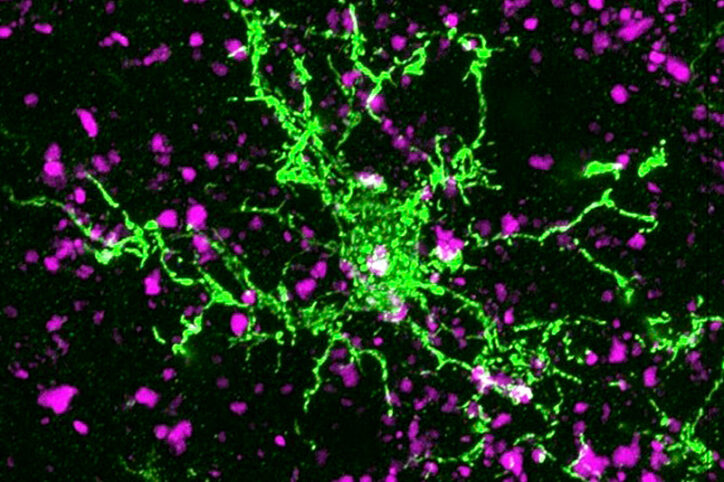
Could we intervene in Huntington’s disease before symptoms appear?
Huntington’s disease is the most common single-gene neurodegenerative disorder and is characterized by motor and cognitive deficits and psychiatric symptoms. Work led by Beth Stevens, PhD, and Dan Wilton, PhD, in the Department of Neurology at Boston Children’s Hospital, now shows that the disease process begins well before symptoms appear. That raises the possibility of ... Read More about Could we intervene in Huntington’s disease before symptoms appear?

Toddlers diagnosed with autism should be reevaluated over time
Parents whose child has been diagnosed with autism spectrum disorder (ASD) may feel it’s a lifelong label. But a new study offers hope: It found that 37 percent of children diagnosed as toddlers no longer met criteria for autism when they reached early school age. Findings were published October 2 in JAMA Pediatrics. Study leader ... Read More about Toddlers diagnosed with autism should be reevaluated over time

Unraveling the secret to attention, one brain cell at a time: Brielle Ferguson, PhD
In college, Dr. Brielle Ferguson was initially drawn to psychology. Witnessing the impact of schizophrenia on a family member, she was surprised how little was known about the condition. She majored in cognitive science, but she wanted to go deeper and understand what happens in the brain. Taking a required course in neuroscience, she thought, ... Read More about Unraveling the secret to attention, one brain cell at a time: Brielle Ferguson, PhD