


Could a GI bug’s toxin curb hard-to-treat breast cancer?
Clostridium difficile can cause devastating inflammatory gastrointestinal infections, with much of the damage inflicted by a toxin the bug produces. But research from Boston Children’s Hospital suggests that the same toxin could also be a useful tool for curbing highly aggressive triple-negative breast cancers that don’t respond to chemotherapy. Min Dong, PhD, in the Department ... Read More about Could a GI bug’s toxin curb hard-to-treat breast cancer?
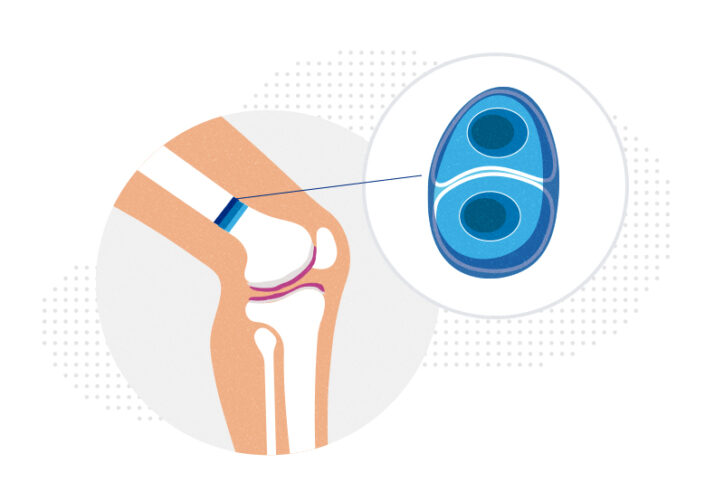
Researchers identify genes that could affect children’s bone growth
Many children anticipate reaching the next number on a measuring stick as they chart their growth. But measurements can be frustrating or stressful for children who have skeletal disorders that prevent bones from growing. Key findings Researchers used genome-wide association studies and CRISPR gene editing to see if alterations to cartilage cells, which are known ... Read More about Researchers identify genes that could affect children’s bone growth

Engineered cartilage could turn the tide for patients with osteoarthritis
About one in seven adults live with degenerative joint disease, also known as osteoarthritis (OA). In recent years, as anterior cruciate ligament (ACL) injury and other joint injuries have become more common among adolescent athletes, a growing number of 20- and 30-somethings have joined the ranks of aging baby boomers living with chronic OA pain. ... Read More about Engineered cartilage could turn the tide for patients with osteoarthritis

Infantile spasms: Speeding referrals for all infants
Infantile epileptic spasms syndrome (IESS), often called infantile spasms, is the most common form of epilepsy seen during infancy. Prompt diagnosis and referral to a neurologist are essential. Infantile spasms can present subtly, and research indicates that diagnosis is often delayed. Additionally, infants are especially likely to experience delays in referral to a neurologist if ... Read More about Infantile spasms: Speeding referrals for all infants
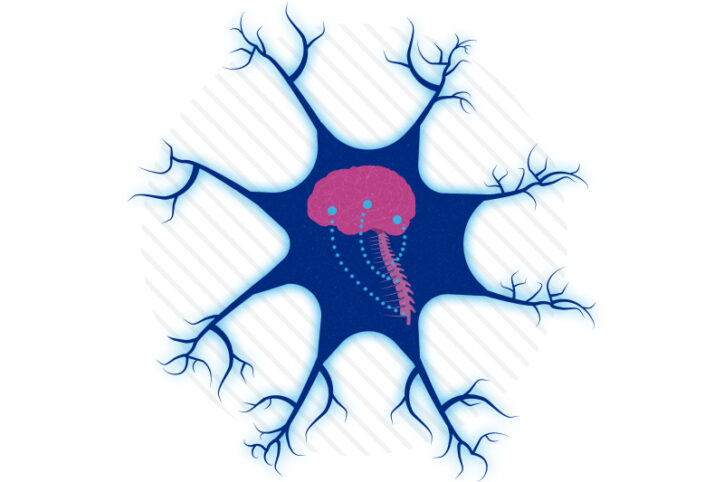
New leads for spinal cord injury: Mapping spinal-projecting neurons in the brain
Only a fraction of people who sustain a spinal cord injury fully regain their motor function. While rehabilitation can help, scientists have long looked for ways to regenerate injured nerve fibers — including, at Boston Children’s Hospital, Zhigang He, PhD, BM. As part of a collaborative effort by the BRAIN Initiative Cell Census Network, which ... Read More about New leads for spinal cord injury: Mapping spinal-projecting neurons in the brain

Helping aspiring clinicians understand a virtual heart before they work with a real one
Jonathan Awori, MD, MS, MFA, isn’t embarrassed to say it took him a long time to completely understand the intricate workings of the heart. He says he isn’t alone; many aspiring doctors and nurses don’t immediately grasp the heart’s complexity from two-dimensional textbooks or even 3D-printed models. Now that he’s a pediatric cardiology fellow at ... Read More about Helping aspiring clinicians understand a virtual heart before they work with a real one

Predicting brace adherence could change the game in scoliosis treatment
When it comes to preventing scoliosis progression, is it possible to make bracing more effective? For decades, spine specialists focused on improving the braces themselves, making them lighter, less obtrusive, and easier to put on and take off. (The Boston Brace, developed at Boston Children’s Hospital in the early 1970s, is one example.) Key takeaways ... Read More about Predicting brace adherence could change the game in scoliosis treatment

New hospital discharge practices could improve health of infants with bronchopulmonary dysplasia
The chronic lung disease bronchopulmonary dysplasia (BPD) affects a significant number of infants who were born early and have underdeveloped lungs. They typically require lengthy specialized care in a neonatal intensive care unit (NICU) before they can go home with their families. But getting home doesn’t mean health risks are behind them. Their parents are suddenly their ... Read More about New hospital discharge practices could improve health of infants with bronchopulmonary dysplasia

A state policy made it harder for families to find shelter. Research helped change the policy.
Physicians and policy makers usually work in separate worlds: those of medicine and government. But when a change in Massachusetts policy led to an unprecedented increase in the number of homeless families seeking shelter in the emergency department (ED), physicians at Boston Children’s Hospital set out to reverse that policy. What happened next shows that ... Read More about A state policy made it harder for families to find shelter. Research helped change the policy.
Sickle cell gene therapy and boosting fetal hemoglobin: A 75-year history
Ed. Note: This post updates an earlier post from 2018. In a landmark decision today, the Food and Drug Administration (FDA) approved two gene therapies for sickle cell disease. One of them, Casgevy, has deep scientific roots at Boston Children’s Hospital — and is also the first therapy using CRISPR gene editing to gain FDA ... Read More about Sickle cell gene therapy and boosting fetal hemoglobin: A 75-year history