


Lingering health problems in children and youth after COVID-19 and MIS-C
More than one in four children and adolescents hospitalized with COVID-19 or multisystem inflammatory syndrome in children (MIS-C) had persisting health problems two to four months later, finds a study led by Boston Children’s Hospital, one of the largest of its kind to date. Just published in the journal Pediatrics, the study tracked 358 patients ... Read More about Lingering health problems in children and youth after COVID-19 and MIS-C
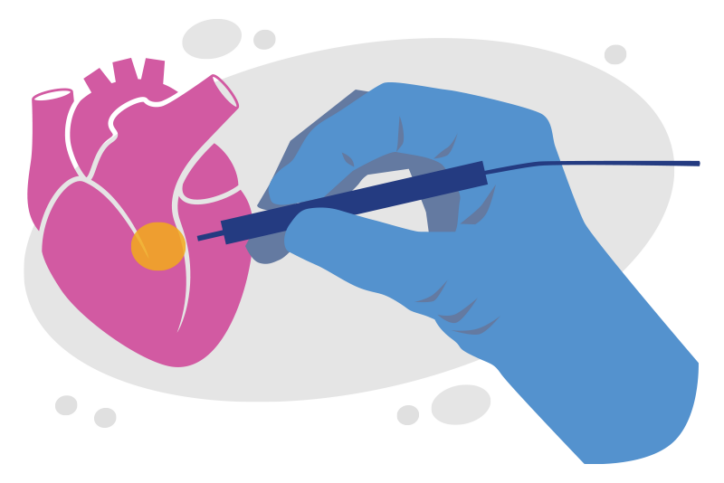
A new lens on cardiac surgery could help prevent arrhythmia
Sometimes, a change in perspective can lead to a medical breakthrough. A type of microscopy typically used to detect cancer and other diseases has been adapted to reveal the location of unseen conduction tissue around the heart. The Boston Children’s clinician behind this innovation now aims to prove the safety and effectiveness of fiber-optic confocal ... Read More about A new lens on cardiac surgery could help prevent arrhythmia

Genomic ‘fingerprinting’ yields better treatments for pediatric solid cancers
Genomic profiling is increasingly used for solid tumors in adults and for pediatric brain tumors and blood cancers, allowing treatments to be matched to patients’ mutations. But for children with solid tumors, genomic fingerprinting has been elusive, because these cancers are so varied and individually so rare. Therapies therefore remain non-specific: chemotherapy, surgery, and/or radiation. ... Read More about Genomic ‘fingerprinting’ yields better treatments for pediatric solid cancers
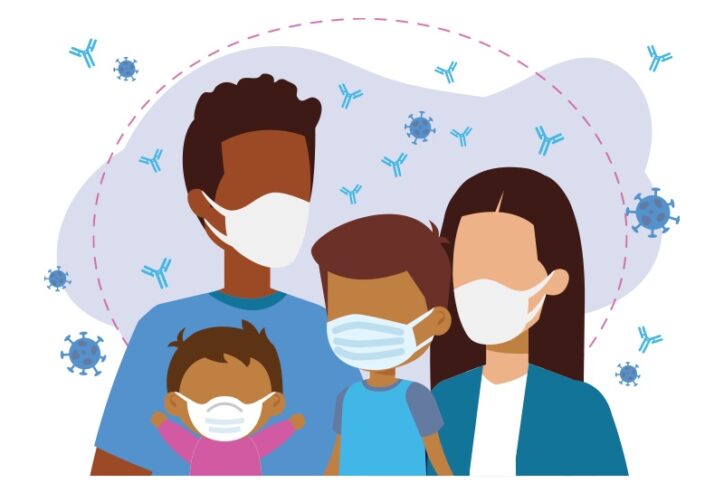
Previous COVID-19 or MIS-C does not protect kids from Omicron
You would think that having had COVID-19 once, you’d have antibodies that would protect you against repeat infections. But studies of adults have shown that Omicron doesn’t go by that logic. A new study, led by Dr. Adrienne Randolph of Boston Children’s Hospital and Dr. Surender Khurana of the Food and Drug Administration, confirms that ... Read More about Previous COVID-19 or MIS-C does not protect kids from Omicron
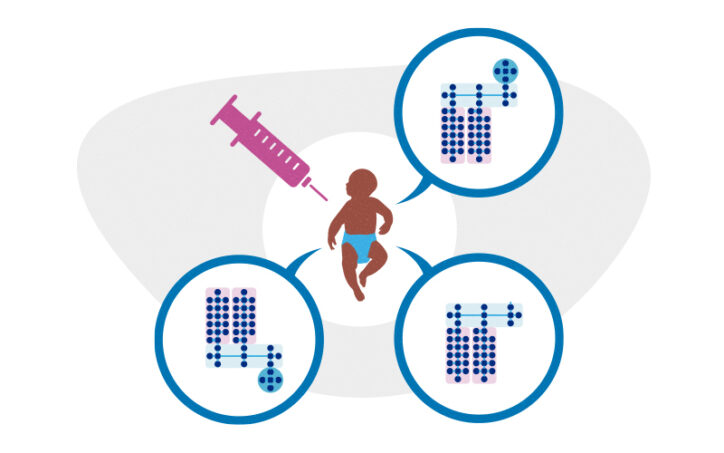
Old vaccine, new tricks? Unlocking the BCG vaccine’s potential
Could a century-old vaccine offer clues for designing the vaccines of tomorrow? Ofer Levy, MD, PhD, director of the Precision Vaccines Program at Boston Children’s Hospital, wants to find out. One of the world’s oldest and most widely used vaccines, the Bacille Calmette-Guérin (BCG) tuberculosis vaccine may at first seem like an unlikely source of ... Read More about Old vaccine, new tricks? Unlocking the BCG vaccine’s potential

COVID-19’s devastating toll: An increase in adolescent suicides and mental health crises
The past decade has seen worrisome increases in self-harm, suicidal ideation, and suicide attempts among adolescents. Two new studies from Boston Children’s Hospital show that the situation became even more acute with the onset of COVID-19. Epidemiologist Maimuna Majumder, PhD, and colleagues at the Computational Health Informatics Program (CHIP) at Boston Children’s partnered with public health ... Read More about COVID-19’s devastating toll: An increase in adolescent suicides and mental health crises
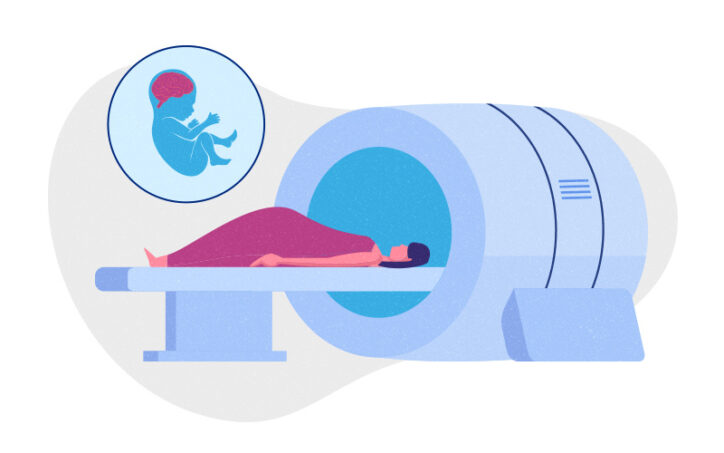
Fetal brain imaging predicts neurodevelopment of babies with congenital heart disease
Children with congenital heart disease (CHD) often have neurodevelopmental impairment. Until fairly recently, this was thought to stem from complications of cardiac surgery or reduced oxygen supply to the brain due to the heart defect. Now we know that some babies with CHD have impaired brain development in utero because of low oxygen supply to ... Read More about Fetal brain imaging predicts neurodevelopment of babies with congenital heart disease
“Seeing” the unseen: A way to pinpoint elusive cardiac conduction tissue
When patients with congenital heart issues have an operation, surgeons have to proceed with an “eye of faith” as they work around conduction tissue — a network of cells and electrical signals that control the beating of a heart. Not visible to the naked eye, conduction systems vary person to person, but they’re particularly difficult ... Read More about “Seeing” the unseen: A way to pinpoint elusive cardiac conduction tissue

Clinical trials in children: Is there racial equity?
The treatments and interventions used in medicine are often based on the results of clinical trials. But trials involving adults haven’t always represented the population as a whole, tending to recruit mostly white middle-class people. As a result, it’s not clear how well the findings apply to people of other racial and ethnic backgrounds. Do ... Read More about Clinical trials in children: Is there racial equity?

COVID vaccination in 5- to 11-year-olds: What does the science say?
The Pfizer–BioNTech COVID-19 vaccine was approved for children ages 5 to 11 in October, but many parents have been hesitant to get them vaccinated. A national study in The New England Journal of Medicine provides reassuring data, showing that the vaccine strongly protected this age group against severe COVID-19. Dr. Adrienne Randolph at Boston Children’s ... Read More about COVID vaccination in 5- to 11-year-olds: What does the science say?