

Patient Stories

Beating the odds and neuromuscular scoliosis: Colin’s story
Colin Newton has a way of surprising people. Born with a rare neuromuscular disorder, he spent the first three months of his life in the intensive care unit (ICU) struggling to breathe. Two and a half years later, and eight months after he underwent spinal surgery for neuromuscular scoliosis, Colin went skiing for the first ... Read More about Beating the odds and neuromuscular scoliosis: Colin’s story
Health and Parenting

HPV vaccine: What families should know
Nearly 42 million Americans are currently infected with human papillomavirus (HPV), and most adults will be infected at least once in their lives. For most, HPV goes away on its own. If it doesn’t, it can lead to certain cancers. HPV can be transmitted sexually or by nonpenetrative skin-to-skin contact. Often, HPV does not have signs or symptoms, ... Read More about HPV vaccine: What families should know
Our Community
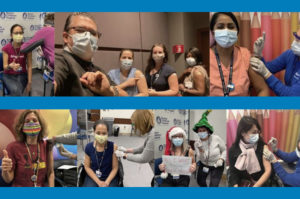
The COVID-19 vaccine: Why some people of color hesitate
The COVID-19 pandemic has been especially hard on people of color. In addition to higher rates of infection, serious illness, and death, many Black and Latino communities have experienced profound economic hardship and increased anxiety and depression during the pandemic. Against this backdrop, the COVID-19 vaccines developed by Pfizer and Moderna might seem like great ... Read More about The COVID-19 vaccine: Why some people of color hesitate
Clinical Care
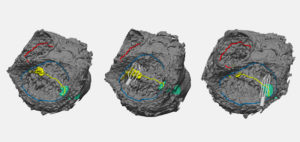
Two new approaches to identifying conduction tissue
Conduction cells in the heart are responsible for initiating contraction of the heart muscle. The inability to properly identify the location of conduction tissue in patients with congenital heart defects during heart surgery can lead to post-operative conduction abnormalities such as heart block or conduction delays. This necessitates the need for pacemakers, which leads to ... Read More about Two new approaches to identifying conduction tissue
Research
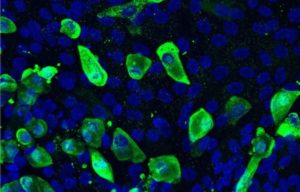
How do patients with cystic fibrosis respond to COVID-19? An ‘airway in a dish’ may give answers
So far, based on clinical data, patients with cystic fibrosis (CF) don’t appear to be especially susceptible to COVID-19. And when they do get infected, they don’t seem to get sicker. But Ruobing (Ruby) Wang, MD, who cares for patients with CF in the Division of Pulmonary Medicine at Boston Children’s Hospital, thinks there is ... Read More about How do patients with cystic fibrosis respond to COVID-19? An ‘airway in a dish’ may give answers
Patient Stories

Treating vascular rings: Sisters travel more than 3,000 miles for care
Nicky Dickerhoff is no stranger to caring for children: Not only is she a neonatal nurse practitioner, but she and her husband, Jake, have eight kids themselves. “We’re experienced parents,” she laughs. So when their daughter Harper briefly stopped breathing at just 3 weeks old, Nicky was skeptical at the initial diagnosis of reflux. Repeated ... Read More about Treating vascular rings: Sisters travel more than 3,000 miles for care
Health and Parenting

Surgery during COVID-19: Answers for parents
Any time a child needs surgery, safety is a natural concern. With COVID-19, many parents are feeling more concerned than ever. “As a parent myself, one of the scariest things about this pandemic is that you’re often having to make decisions based on incomplete information, says Dr. Prathima Nandivada, an attending surgeon in the Department ... Read More about Surgery during COVID-19: Answers for parents
Health and Parenting

Getting COVID-19 vaccines to medically fragile children
As COVID-19 vaccines slowly roll out, should children who need complex care or have serious medical conditions be vaccinated? We asked experts around Boston Children’s Hospital, and their resounding answer is: Yes, if they are age 16 or older. Boston Children’s is actively planning to make vaccination happen for as many patients as possible, as ... Read More about Getting COVID-19 vaccines to medically fragile children
Patient Stories

Brachial plexus birth injury: Harper’s right arm
When Harper Jane Stalker was born with a limp, unmoving right arm in 2016, her parents had never heard of brachial plexus birth injury. Their situation was not unusual. Although this type of nerve injury is relatively common, most parents haven’t heard the term and don’t know what it is. “In the beginning, we were ... Read More about Brachial plexus birth injury: Harper’s right arm
Research

Tuber locations associated with infantile spasms map to a common brain network
About half of all babies with tuberous sclerosis complex (TSC) develop infantile spasms, a type of epilepsy that can have serious long-term neurologic consequences. Infantile spasms occur more often in children who have more brain tubers — groups of cells that do not divide into normal neurons and brain cells — but we haven’t known ... Read More about Tuber locations associated with infantile spasms map to a common brain network