

Research

Brain juice and stem cells: Revisiting an ancient view of cerebrospinal fluid
Christopher Walsh, MD, PhD, is chief of Genetics and a Howard Hughes Medical Institute Investigator at Children’s Hospital Boston, where his research focuses on genes that regulate the development and function of the human cerebral cortex. Mutations in these genes are known to cause autism and epilepsy, as well as intellectual disabilities and other learning ... Read More about Brain juice and stem cells: Revisiting an ancient view of cerebrospinal fluid
Research

With algae blooms hope for a long-acting local anesthetic
For decades, Chile’s shoreline has had problems with periodic algal blooms – referred to as Red Tide, but actually containing a mix of microorganisms including bluegreen algae. Their toxins accumulate in shellfish, landing seafood consumers in the hospital, partially paralyzed, sometimes needing ventilators to breathe. The nerve block caused by the toxins is reversible, so ... Read More about With algae blooms hope for a long-acting local anesthetic
Our Community
The neurology resident that could
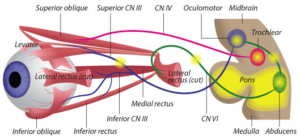
Elizabeth Engle used to wait in peoples’ driveways until midnight, hoping to enroll them in her genetic studies of eye-movement disorders. She landed there by chance: during her neurology residency, she saw a little boy whose eyes were frozen in a downward gaze. Wanting to find a solution to a disorder that others had written ... Read More about The neurology resident that could
Clinical Care

The birth of ShuntCheck: Family, love, passion, death—and ice
The year was 2002, and 10-year-old Spencer Neff was a spunky boy with hydrocephalus, a buildup of cerebrospinal fluid inside his brain. A surgically implanted shunt – a tube to drain the fluid – was in place. Like all children with shunts, he was at risk for having the shunt plug up and malfunction, and ... Read More about The birth of ShuntCheck: Family, love, passion, death—and ice
Research

Neurogenetic disorders: Dreaming the impossible dream
People with autism and most other disorders of brain development have never had medications to treat their core behavioral and cognitive symptoms. The best they can get are drugs targeting secondary problems, like irritability or aggression. But now, a new wave of clinical trials aims to change this. In the last decade, scientists have discovered ... Read More about Neurogenetic disorders: Dreaming the impossible dream
Research

Alzheimer’s drugs for “lazy eye”?
When my parents told me I should walk around with my right eye patched like a pirate—on regular days, not just Halloween—I wondered if they were joking. They weren’t: those really were the doctor’s orders. As a child, I had amblyopia, or “lazy eye”: my left eye had much poorer vision than my right eye. The ... Read More about Alzheimer’s drugs for “lazy eye”?
Research
Childhood brain cancer: Learning to divide and conquer
Diversity is good in populations of people, but when it comes to cancer, it’s bad news. In the case of medulloblastoma—the most common malignant brain cancer in children—tumor diversity has been one of the greatest barriers to designing effective treatments. Now, in the largest genomic study of human medulloblastomas ever, Children’s researchers and their collaborators ... Read More about Childhood brain cancer: Learning to divide and conquer
Research

Messenger RNA: A game-changing advance in regenerative medicine
A new way to reprogram ordinary human cells into stem cells, using RNAs, appears safer and much more efficient than current methods — and can much more readily transform stem cells into specialized cells to treat disease. We now know that scientists can take one of your cells, perhaps a skin cell, and transform it into ... Read More about Messenger RNA: A game-changing advance in regenerative medicine
Research
A new target in polycystic kidney disease
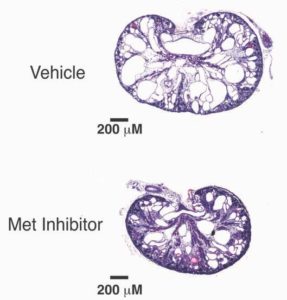
In polycystic kidney disease, fluid-filled cysts gradually take over the kidneys, forcing patients to go on chronic dialysis — or wait for a kidney transplant. Hopes for a cure were raised when animal models showed promise in drugs inhibiting mTOR, a protein that coordinates cell growth and is over-active in PKD. But recent clinical trials ... Read More about A new target in polycystic kidney disease
Research

Drug-testing alternative: a lung on a chip
Combining microfabrication techniques from the computer industry with modern tissue engineering, a team at Children’s Hospital Boston and Harvard’s Wyss Institute for Biologically Inspired Engineering has created a device that mimics the function of a human lung. This living “lung-on-a-chip,” which incorporates human lung and blood-vessel cells, reproduces the all-important interface between the lung’s tiny ... Read More about Drug-testing alternative: a lung on a chip