

Research
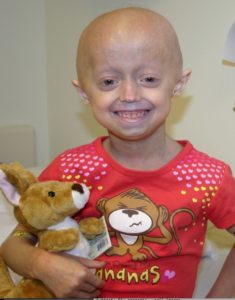
First-ever drug trial reverses some signs of aging in progeria
The children came from all over the world: 28 families from 16 countries, speaking over a dozen languages. They faced a grim prognosis: death at an average age of 13 from cardiovascular disease. Not the congenital heart defects we so commonly see in babies coming to Boston Children’s Hospital, but the kind of disease you ... Read More about First-ever drug trial reverses some signs of aging in progeria
Research

Not all brain tumors are made the same, and that’s important
When you look at an apple, no matter what variety, on the surface you can be pretty sure it’s actually an apple. From there, you can make lots of assumptions about it, like how it will taste when you bite into it and what will happen if you plant the seeds in your yard. With ... Read More about Not all brain tumors are made the same, and that’s important
Research
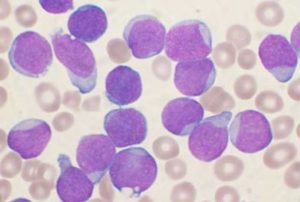
Taking a targeted approach when leukemia comes back
The news that your child has cancer always comes as a shock, but for one cancer, acute lymphoblastic leukemia (ALL), parents can take comfort in the fact that doctors are really good at treating it. The cure rate for ALL has, over the last 40 years, climbed to nearly 90 percent. Less comforting is the fact ... Read More about Taking a targeted approach when leukemia comes back
Research
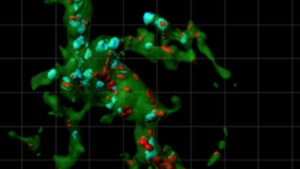
Immune cells “sculpt” brain circuits — by eating excess connections
The image above and the movie below show an immune cell caught in the act of tending the brain. The cell below has just eaten away unnecessary connections, or synapses, between neurons. That’s not something these cells, known as microglia, were previously thought to do. As immune cells, it was thought that their job was ... Read More about Immune cells “sculpt” brain circuits — by eating excess connections
Clinical Care

Is rapamycin the new aspirin?
I’ve heard it said that if aspirin had to go through today’s FDA approval process, it would never be approved for over-the-counter use because it just does so many things. Lately, it’s been hard to cover biomedical research at Children’s without stumbling on another drug that’s also FDA-approved and also seems to have multiple uses: ... Read More about Is rapamycin the new aspirin?
Research

Gene-therapy trial will attempt to restore hearing in deaf mice
Sound waves produce the sensation of hearing by vibrating hair-like structures on the inner ear’s sensory hair cells. But how this mechanical motion gets converted into electrical signals that go to our brains has long been a mystery. Scientists have believed some undiscovered protein is involved. Such proteins have been identified for taste, smell and ... Read More about Gene-therapy trial will attempt to restore hearing in deaf mice
Research
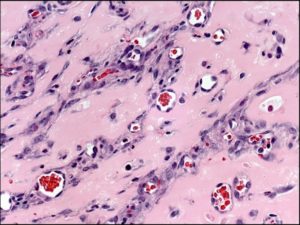
Avoiding the needle: Engineering blood vessels to secrete drugs
People who rely on protein-based drugs often have to endure IV hookups or frequent injections, sometimes several times a week. And protein drugs – like Factor VIII and Factor IX for patients with hemophilia, alpha interferon for hepatitis C, interferon beta for multiple sclerosis — are very expensive. What if they could be made by people’s own ... Read More about Avoiding the needle: Engineering blood vessels to secrete drugs

Orphan diseases: Bringing academia, industry, and government into the game
“If you build it, he will come,” the ghosts of baseball players past tell a farmer in Field of Dreams. But it’s not that easy. To put people in the seats you have to have all of the right pieces: the right team, including players and managers; the right park, one that works for both ... Read More about Orphan diseases: Bringing academia, industry, and government into the game
Research

A new start for gene therapy for ‘bubble boy’ disease: First U.S.-treated patient doing well
Until this month, Agustín Cáceres’s baptism was the only time his family could come close to him. Everyone had to wear masks, gloves and gowns. After that, he went into isolation, along with his mother Marcela, who came out only for meals. His father Alberto, and his four-year-old brother Jeremías, kept to a separate bedroom. ... Read More about A new start for gene therapy for ‘bubble boy’ disease: First U.S.-treated patient doing well
Clinical Care
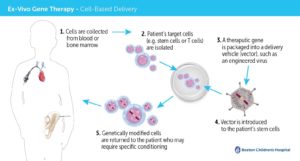
Moving gene therapy into high gear
Gene therapy, still experimental but beginning to enter the clinic, attempts to utilize advanced molecular methods to treat and even reverse genetic diseases. The field started in earnest about 25 years ago and has had many setbacks along the way to its recent earliest successes. International collaboration has been critical. Children’s Hospital Boston is one ... Read More about Moving gene therapy into high gear