

Research
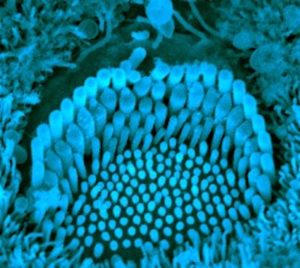
How things work: Scientists find cellular channels vital for hearing
Ending a 30-year search by scientists, researchers have identified two proteins in the inner ear that are critical for hearing, which, when damaged by genetic mutations, cause a form of delayed, progressive hearing loss. The proteins are essentially transducers: They form channels that convert mechanical sound waves entering the inner ear into electrical signals that ... Read More about How things work: Scientists find cellular channels vital for hearing
Research
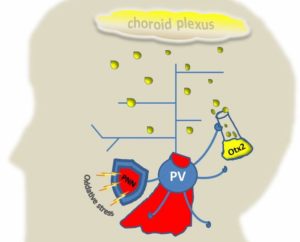
Parvalbumin neurons—new insight into the workings of a superhero brain cell
Say you’re a scientist in a movie, and you want to find out what gives a superhero his powers. You’d investigate any special suits he wears, whether he drinks any potions and what they are, right? Real-life scientists are following the same strategy to understand a powerful group of specialized brain cells. Parvalbumin cells (PV-cells) ... Read More about Parvalbumin neurons—new insight into the workings of a superhero brain cell
Research
Catching platelets with NETs: Neutrophils and deep vein thrombosis
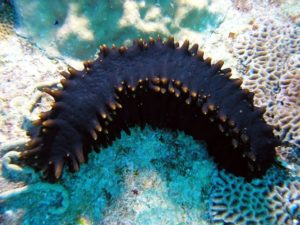
Sea cucumbers have an unusual way of defending themselves. When threatened, they ensnare their foes with sticky threads. Some even expel their own internal organs to repel attackers. Immune system cells called neutrophils sometimes do much the same: When confronted with bacteria, they unravel and shoot out their chromatin—the tightly wound mix of DNA and proteins that ... Read More about Catching platelets with NETs: Neutrophils and deep vein thrombosis
Research
Restoring muscle function in a rare, devastating disease: Part 1
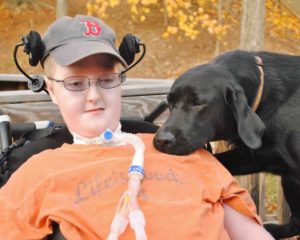
Part 1 of a two-part series. (Read part 2.) Sixth-grader William Ward cruises the hallways at school with a thumb-driven power chair and participates in class with the help of a DynaVox speech device. Although born with a rare, muscle-weakening disease called X-linked myotubular myopathy, or MTM, leaving him virtually immobile, he hasn’t given up. Neither has Alan Beggs, ... Read More about Restoring muscle function in a rare, devastating disease: Part 1
Research

Restoring muscle function in a rare, devastating disease: Part 2
Part 2 of a two-part series. (Read part 1.) Back in the 1990s, rheumatologist Richard Weisbart, MD, of University of California, Los Angeles (UCLA), was studying lupus in a mouse model and found that the mice were making an antibody that had the intriguing ability to get inside tissues and cells. Weisbart shifted his work away ... Read More about Restoring muscle function in a rare, devastating disease: Part 2
Research
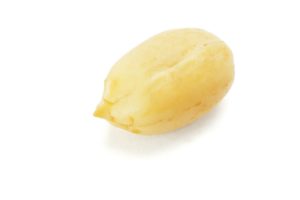
This post may contain peanuts: Two-pronged treatment may ease severe allergies
Tripp Underwood contributed to this post. Families with peanut-allergic children live in fear that their child will ingest peanuts—even minute amounts—accidentally. Now, a small pilot study published in the Journal of Allergy and Clinical Immunology offers hope for peanut allergy. In the year-long study, immunologist Dale Umetsu, MD, PhD, and colleagues in the Division of Allergy and Immunology at ... Read More about This post may contain peanuts: Two-pronged treatment may ease severe allergies
Research
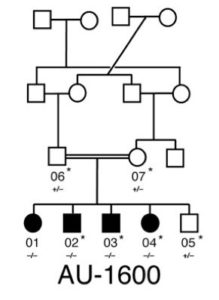
Inherited autism mutations found via genomic sequencing in Mideast families
Autism clearly runs in some families, yet few inherited genetic causes have been found. A major reason is that these causes are so varied that it’s hard to find enough people with a given mutation to establish a clear pattern. Now, three large Middle Eastern families with autism spectrum disorders (ASDs) have led the way ... Read More about Inherited autism mutations found via genomic sequencing in Mideast families
Research
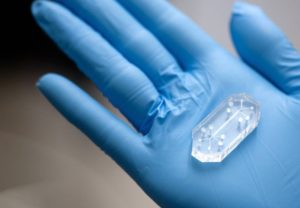
Building a body, one organ chip at a time
They don’t look like much sitting in your hand. A few pieces of clear plastic, each smaller than an Altoids tin, with channels visible inside and holes for plugging tubing into them. But fill them with cells and treat those cells the right way, and they turn into something amazing: tiny hearts, lungs, guts, kidneys. ... Read More about Building a body, one organ chip at a time
Clinical Care
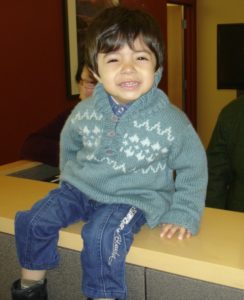
Gene therapy: Two years and holding
For the Cáceres family of Argentina, it’s a joyous holiday homecoming. Agustín, who received gene therapy at 5½ months of age, journeyed with his family to Boston for a check-up and got a clean bill of health. Agustín was born with the rare immune-deficiency disorder SCID-X1. More popularly known as “bubble boy” disease, it left him defenseless against ... Read More about Gene therapy: Two years and holding
Clinical Care
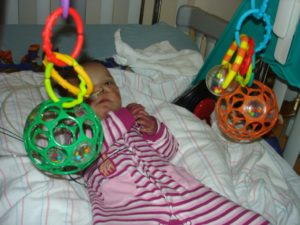
Pediatric complex care: A day in the life
This is the first post of a two-part series on children with complex medical needs. Details on some patients have been changed for privacy reasons. This morning, as every morning, the Complex Care Service (CCS) team huddles in a tiny office deep inside Boston Children’s Hospital. They have 14 patients to discuss, each with a ... Read More about Pediatric complex care: A day in the life