

Patient Stories

‘Going for it’ with a congenital hand difference
“People ask me if it’s harder to do certain things, and I always tell them, ‘I don’t know, this is all I’ve ever had.’” Despite being born with symbrachydactyly — a condition in which the middle three fingers of her left hand never fully developed — 12-year-old Ashley makes most things look easy. She runs ... Read More about ‘Going for it’ with a congenital hand difference
Clinical Care

How to prevent ACL injuries in female athletes
An ACL (anterior cruciate ligament) tear is a devastating injury that can end an athlete’s season and sometimes take up to a year to fully recover. Along with the pain and long rehab process, it also carries the consequences of a high rate of re-tear and increased risk for osteoarthritis. But what if you could ... Read More about How to prevent ACL injuries in female athletes
Research
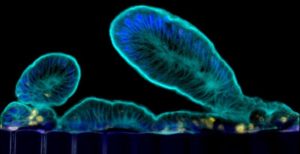
Intestine chip models gut function, in disease and in health
The small intestine is much more than a digestive organ. It’s a major home to our microbiome, it’s a key site where mucosal immunity develops and it provides a protective barrier against a variety of infections. Animal models don’t do justice to the human intestine in all its complexity. Attempts to better model human intestinal function ... Read More about Intestine chip models gut function, in disease and in health
Research
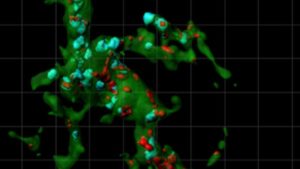
Beth Stevens: A transformative thinker in neuroscience
When 2015 MacArthur “genius” grant winner Beth Stevens, PhD, began studying the role of glia in the brain in the 1990s, these cells—“glue” from the Greek—weren’t given much thought. Traditionally, glia were thought to merely protect and support neurons, the brain’s real players. But Stevens, from the Department of Neurology and the F.M. Kirby Neurobiology ... Read More about Beth Stevens: A transformative thinker in neuroscience
Research
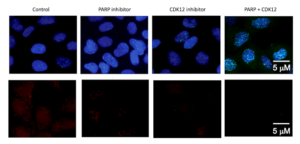
Cancer researchers hit a bullseye with a new drug target for Ewing sarcoma
Screening a class of recently-developed drug compounds — so-called “CDK inhibitors” capable of blocking CDK7/12/13 proteins — against hundreds of different human cancer cell lines, researchers at Dana-Farber/Boston Children’s Cancer and Blood Disorders Center have found that CDK12 inhibitors pack a particularly lethal punch to Ewing sarcoma, a rare cancer typically affecting children and young adults. “No one ... Read More about Cancer researchers hit a bullseye with a new drug target for Ewing sarcoma
Patient Stories

Daphne’s story: Lifting the fog on bladder exstrophy
The day of their 18-week prenatal appointment was the first day of the most difficult 18 months of Pam and Jon’s life. When the ultrasound technician couldn’t see their baby’s bladder, they were sent home to try again later. They had so many questions, plus a 2-year-old daughter, their careers, and a house to take ... Read More about Daphne’s story: Lifting the fog on bladder exstrophy
Research

Sickle cell gene therapy to boost fetal hemoglobin: A 70-year timeline of discovery
Boston Children’s Hospital is now enrolling patients age 3 to 35 in a clinical trial of gene therapy for sickle cell disease. Based on technology developed in its own labs, it differs from other gene therapy approaches by having a two-pronged action. It represses production of the mutated beta hemoglobin that causes red blood cells to ... Read More about Sickle cell gene therapy to boost fetal hemoglobin: A 70-year timeline of discovery
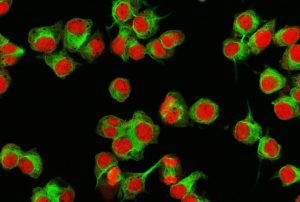
Taking a sideswipe at high-risk neuroblastoma
Cancer and other diseases are now understood to spring from a complex interplay of biological factors rather than any one isolated origin. New research reveals that an equally-nuanced approach to treating high-risk neuroblastoma may be the most effective way to curb tumor growth. One challenge in treating pediatric cancers like neuroblastoma is that they are ... Read More about Taking a sideswipe at high-risk neuroblastoma
Patient Stories

Teagan’s triumphant return: Dancing after Perthes disease
Teagan has lived and breathed dance — ballet, jazz, tap, and more — since she was 5 years old. “It’s what makes me happy,” the now 12-year-old says. But two years ago, she started to feel pain in her hip that persisted after dance class and worsened over time. As her spring dance season wrapped ... Read More about Teagan’s triumphant return: Dancing after Perthes disease
Patient Stories

Enjoying life, finally free of seizures
Kristen Grip stood in the middle of the basketball court, motionless. Around her, the action continued as usual — the smack of the ball on the polished wood floor, the rush of her teammates as they darted back and forth, the satisfying swish and shout of victory as someone made a basket. Yet the high ... Read More about Enjoying life, finally free of seizures