


New insights on medulloblastoma from single-cell sequencing
Medulloblastoma, a malignant tumor in the cerebellum, is one of the most common malignant brain cancers in children. Survival rates range from 20 to 90 percent, depending on the genetic subtype. There are at least four: WNT and Sonic Hedgehog (named for the signaling pathways that drive them), Group 3, and Group 4. Group 3 ... Read More about New insights on medulloblastoma from single-cell sequencing
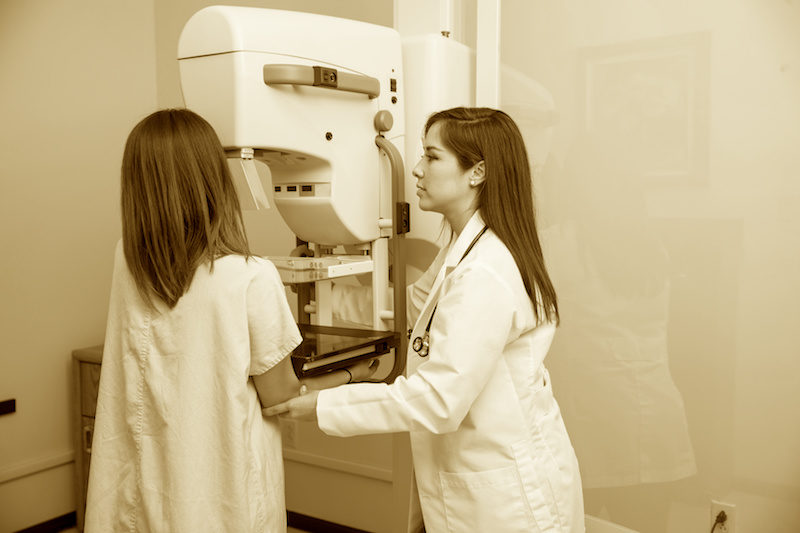
Novel CRISPR system could halt growth of triple-negative breast cancer
Triple-negative breast cancer (TNBC), lacking estrogen, progesterone and HER2 receptors, has the highest mortality rate of all breast cancers. It more frequently strikes women under age 50, African American women, and women carrying a BRCA1 gene mutation. The highly aggressive, frequently metastatic cancer is in urgent need of more effective targeted therapeutics. A new tumor-targeted ... Read More about Novel CRISPR system could halt growth of triple-negative breast cancer
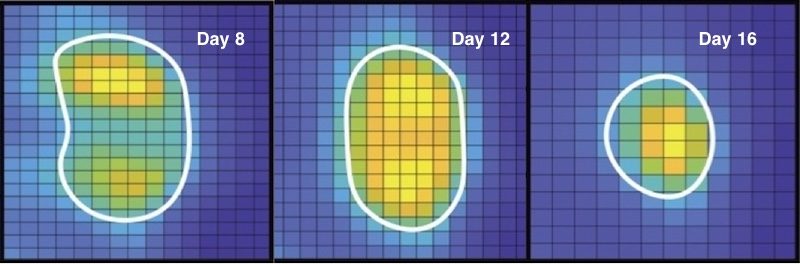
PET imaging shows if PD-1 cancer immunotherapy is working
PD-1 is a protein on our T cells that normally keeps these immune cells from running amok. A growing number of cancer drugs are designed to inhibit PD-1, enabling patients’ T-cells to attack and kill cancerous cells. PD-1 blockers such as pembrolizumab (Keytruda) have been helpful in treating several cancers including melanoma, non-small cell lung ... Read More about PET imaging shows if PD-1 cancer immunotherapy is working

Existing anti-parasitic drug could offer a treatment for Ebola
Amid the worsening Ebola outbreak in the Congo, now threatening to spill into Rwanda, a new study suggests that an existing, FDA-approved drug called nitazoxanide could potentially help contain this deadly, highly contagious infection. In meticulous experiments in human cells, described today in iScience, the drug significantly amplified immune responses to the virus and inhibited ... Read More about Existing anti-parasitic drug could offer a treatment for Ebola

A vaccine to prevent opioid overdose?
Sharon Levy, MD, MPH, who directs the Adolescent Substance Use and Addiction Program (ASAP) at Boston Children’s Hospital, was getting her youngest son ready for school, when her husband Ofer, an infectious disease physician at the same hospital, came to her with an offer. The NIH was soliciting proposals to develop an opioid vaccine. Would ... Read More about A vaccine to prevent opioid overdose?
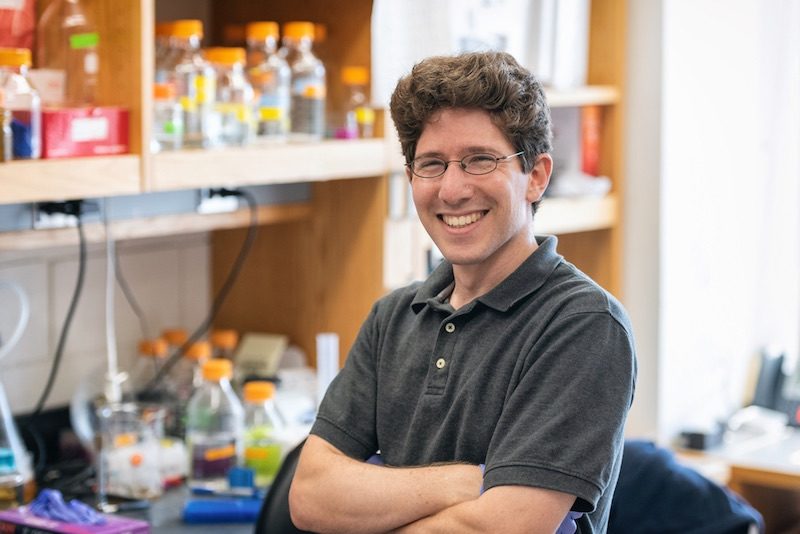
Presidential awardee explores epigenetics via slime molds, worms, and more
Pretty much all of your cells have the same DNA code. Yet they come in an astonishing number of forms. Some cells contract so that your heart can beat or your muscles flex. Others have jobs in your immune system, tuned to recognize different threats. And cells can change their behavior, altering their metabolism for ... Read More about Presidential awardee explores epigenetics via slime molds, worms, and more

Single-cell sequencing reveals glioblastoma’s shape-shifting nature
Glioblastoma, a cancer that arises in the brain’s supporting glial cells, is one of the worst diagnoses a child can receive. The grade IV, highly malignant tumor aggressively infiltrates healthy brain tissue, and most children die of the disease within one to two years of diagnosis, similar to adults. “The current approach is surgical removal, ... Read More about Single-cell sequencing reveals glioblastoma’s shape-shifting nature

Pupil dilation and heart rate, analyzed by AI, may offer early autism diagnosis
Autism and other neurodevelopmental disorders often aren’t diagnosed until a child is a few years of age, when behavioral interventions and speech/occupational therapy become less effective. But new research this week in PNAS suggests that two simple, quantifiable measures — spontaneous fluctuations in pupil dilation or heart rate — could enable much earlier diagnosis of ... Read More about Pupil dilation and heart rate, analyzed by AI, may offer early autism diagnosis

Tissue models and a gene therapy for a deadly heart arrhythmia
Catecholaminergic polymorphic ventricular tachycardia (CPVT) is a leading cause of sudden death from cardiac arrest in children and young adults. Marked by racing, irregular heartbeats, the inherited arrhythmia is typically silent until a child suddenly collapses and faints, at an average age of 12. The trigger is an adrenaline surge, caused by exercise or emotional ... Read More about Tissue models and a gene therapy for a deadly heart arrhythmia

New stem cell pipeline makes more lifelike cell products
Researchers in many fields of science and medicine engineer different types of human cells for drug testing and other purposes. They often begin with stem cells — unspecialized cells that have the potential to form many different types of tissue. By turning on certain genes, the scientists attempt to coax the stem cells into becoming ... Read More about New stem cell pipeline makes more lifelike cell products