

Health and Parenting

Behavioral health: What parents should know
Even before a worldwide pandemic uprooted life as we knew it, our children have been grappling with an unprecedented health crisis. In the span of 10 years, emergency rooms have seen a 60 percent increase in mental-health-related visits in patients under age 18. COVID-19’s disruption of routines and social outlets has only worsened this problem. ... Read More about Behavioral health: What parents should know
Research

Diversifying therapeutic antibodies: From one, come many with potential different uses
A new method for producing antibodies against disease could result in a wider variety of drugs for infectious diseases, immune disease, and even cancer. The immune system naturally produces enormous varieties of antibodies to fight diseases. Therapeutic antibodies — antibodies created against specific therapeutic targets — have been used for decades to either rev up ... Read More about Diversifying therapeutic antibodies: From one, come many with potential different uses
Research
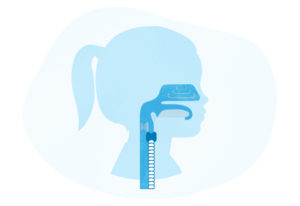
Game-changing surgical procedure results in zero-percent TEF re-recurrence rate
A tracheaesophageal fistula (TEF) is a congenital defect in which an abnormal connection forms between a child’s esophagus and trachea. It often occurs with esophageal atresia. Even after surgical repair, TEFs recur in about 10 to 15 percent of infants and children. They rarely close spontaneously and typically require surgical or endoscopic intervention. Key takeaways: ... Read More about Game-changing surgical procedure results in zero-percent TEF re-recurrence rate
Patient Stories

Maisie’s story: Our journey with Apert syndrome
Our daughter Maisie is 4 years old. She loves riding her bike, baking, jumping on the trampoline, and keeping up with her older sister, Eliza. She’s also especially skilled at peeling hard boiled eggs. We learned prenatally at 18 weeks that something was going on with Maisie’s development. My doctors suspected craniosynostosis, a condition where the ... Read More about Maisie’s story: Our journey with Apert syndrome
Health and Parenting
COVID-19 vaccines for kids: What has to happen first
Now that adults and older teens are receiving COVID-19 vaccines, some younger kids are wondering why they can’t get vaccinated too. While testing has begun in children 6 months to age 12, we aren’t ready to begin vaccinating most kids yet. But we do know the steps the companies are taking to be sure their ... Read More about COVID-19 vaccines for kids: What has to happen first
Clinical Care
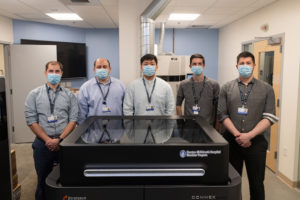
Boston Children’s Simulator Program steps up during COVID-19
In the early days of the COVID-19 pandemic, hospitals scrambled to adapt and prepare. Amid the chaos, the Boston Children’s Hospital Simulator Program, SIMPeds, sprang into action. SIMPeds is a world leader in running live simulations of care scenarios, allowing health care providers to rehearse tough or unanticipated situations in advance. Its SIMEngineering division is ... Read More about Boston Children’s Simulator Program steps up during COVID-19
Patient Stories

Interventional techniques help Molly thrive with chronic pain
Molly McGowan loves baking, sewing, and taking daily walks in the woods with her goldendoodle, Cooper. But Cooper isn’t just any pet. He’s her service dog and a significant source of support. “I credit him with helping me get up and move every day,” she says. It isn’t always easy. For Molly, pain has been ... Read More about Interventional techniques help Molly thrive with chronic pain
Health and Parenting

You’ve had the COVID-19 vaccine. What now?
As more and more people across the country get vaccinated for COVID-19, the rules for social distancing are also slowly shifting. Recently, the Centers for Disease Control and Prevention (CDC) rolled out new guidelines for those who are fully vaccinated. But these rules can still be a bit confusing for families, especially when some family ... Read More about You’ve had the COVID-19 vaccine. What now?
Research
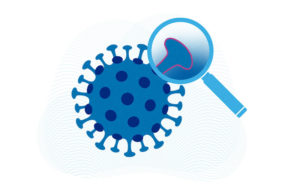
Sturdier spikes may explain SARS-CoV-2 variants’ faster spread
The fast-spreading U.K., South Africa, and Brazil variants are raising concerns and questions about whether current COVID-19 vaccines will protect against them. A structural biology study led by Bing Chen, PhD, at Boston Children’s Hospital now reveals how the D614G mutation — carried by all three variants — makes SARS-CoV-2 spread faster. Key takeaways: The main ... Read More about Sturdier spikes may explain SARS-CoV-2 variants’ faster spread
Research

Looking for cancer’s Achilles heel: The Pediatric Cancer Dependency Map
Thanks to developments in precision medicine, some adult cancers are now treated with designer drugs that target the genetic mutations that caused them. But most children with cancer have not reaped the same benefits. Unlike adult cancers, childhood cancers carry few genetic mutations. And the mutations these tumors do have are typically harder to make ... Read More about Looking for cancer’s Achilles heel: The Pediatric Cancer Dependency Map