

Clinical Care

Recurrent UTIs in boys
Painful, frequent and urgent urination — they’re the telltale signs of a urinary tract infection, or UTI, something most pediatricians see on a regular basis. The approach to care is usually simple: urinalysis, a course of antibiotics, plenty of fluids and a discussion about proper hygiene. Most of the time, the infection clears up with no ... Read More about Recurrent UTIs in boys
Patient Stories

Living his best life: Caring for Christian
Christian Jaspersen was wet, muddy — and having the time of his life. After an ATV ride around his family’s rural Oklahoma farm with their grandfather, he and his two older brothers plopped themselves into a nearby mud puddle, playing with toy trucks and getting wonderfully messy. “For a while, we didn’t know if Christian ... Read More about Living his best life: Caring for Christian
Research
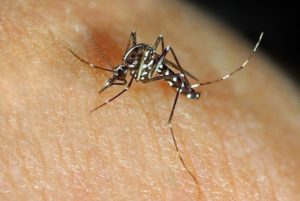
The threat from mosquito-borne diseases: Forecasting mosquitoes’ global spread
Outbreaks of mosquito-borne illnesses like yellow fever, dengue, Zika and chikungunya are rising around the world. Climate change has created conditions favorable to mosquitoes’ spread, but so have human travel and migration and accelerating urbanization, creating new mini-habitats for mosquitoes. In Nature Microbiology yesterday, a large group of international collaborators combined these factors into prediction models that ... Read More about The threat from mosquito-borne diseases: Forecasting mosquitoes’ global spread
Health and Parenting

Talking with your child about suicide
For three weeks in late spring of 2018, it seemed like suicide dominated the media. On May 18, the second season of the controversial series 13 Reasons Why began airing on Netflix. Eighteen days later, fashion designer Kate Spade died by suicide, followed three days later by celebrity chef Anthony Bourdain. Such news came on the heels ... Read More about Talking with your child about suicide
Research

Do antibiotic-impregnated shunts reduce infection in hydrocephalus?
Every year, nearly 400,000 children worldwide develop hydrocephalus, in which excess fluid accumulates in the brain. Many of these children have shunts placed to allow this fluid to drain. Antibiotic-impregnated shunts are widely championed as the best choice, but a recent study calls their necessity into question. The study, published in the Journal of Neurosurgery ... Read More about Do antibiotic-impregnated shunts reduce infection in hydrocephalus?
Research

Eavesdropping on mitochondria, tissue by tissue
Mitochondria are essential to life: they produce energy, synthesize building blocks critical to cell function and help regulate cellular activity, including programmed cell death. Mitochondrial diseases can cause severe metabolic disorders in children and dysfunctional mitochondria are thought to play a role in cancer, diabetes, heart attack, stroke, Parkinson’s disease and more. A new research ... Read More about Eavesdropping on mitochondria, tissue by tissue
Patient Stories

Having Faith: A novel approach to heart surgery
When Rachel and Rudy Fasano of New Haven, Connecticut learned they were having their first baby after three years of trying, they were overjoyed, as were their families. At Rachel’s 15-week ultrasound to learn their baby’s sex, both grandmothers were also in tow, eager to hear the news. But the visit delivered some unexpected results. ... Read More about Having Faith: A novel approach to heart surgery
Research

Blood stem cell transplants from any donor, without toxicity?
Many blood disorders, immune disorders and metabolic disorders can be cured with a transplant of hematopoietic (blood-forming) stem cells, also known as bone marrow transplant. But patients must first receive high-dose, whole-body chemotherapy and/or radiation to deplete their own defective stem cells, providing space for the donor cells to engraft. These “conditioning” regimens are highly ... Read More about Blood stem cell transplants from any donor, without toxicity?
Our Community

Gun violence and children: Why it’s a public health issue
“There have been more than 52,000 pediatric firearm deaths in the past 18 years,” says Dr. Eric Fleegler, a pediatric emergency physician at Boston Children’s Hospital as he kicks off his talk. It’s May 3, 2018, and he’s sharing the startling statistic with a rapt audience at the hospital’s Special Grand Rounds on Trauma and Gun ... Read More about Gun violence and children: Why it’s a public health issue
Clinical Care

Partnering with families to minimize exposure to anesthesia
In medicine, the best imaging can mean the difference between the right diagnosis and the wrong one. A successful treatment and an ineffective one. The radiology team at Boston Children’s Hospital carries out more than 200,000 imaging exams on children each year. Ranging in length from five minutes to two hours, all MRI scans require children to ... Read More about Partnering with families to minimize exposure to anesthesia