


Gene therapy to boost fetal hemoglobin continues to do well in sickle cell trial
A pilot gene therapy treatment for sickle cell disease, restoring patients’ ability to make fetal hemoglobin, has produced good results in the first three patients to receive it. Investigators at Boston Children’s Hospital reported the findings of their ongoing clinical trial this week at the American Society of Hematology (ASH) annual meeting. The three adult ... Read More about Gene therapy to boost fetal hemoglobin continues to do well in sickle cell trial
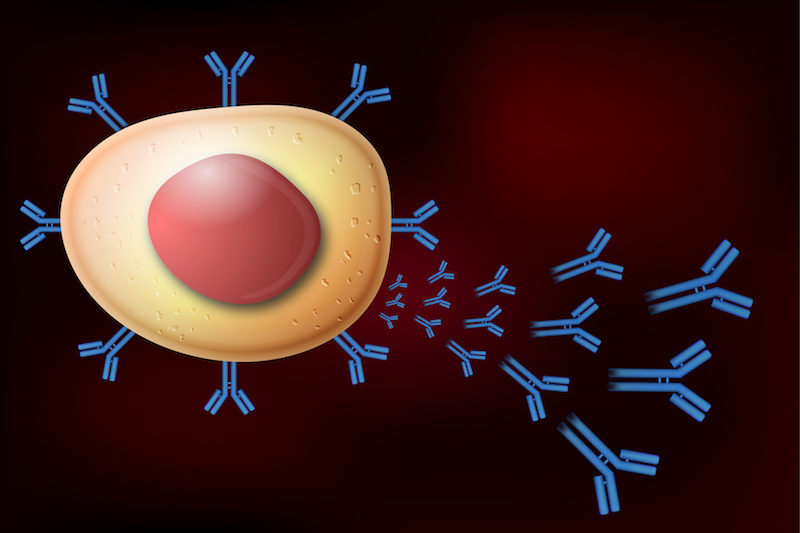
Protecting against HIV by tricking the immune system
In making an HIV vaccine, a major goal is to stimulate production of broadly neutralizing antibodies that can fight multiple strains of the frequently changing virus. To date, experimental HIV vaccines haven’t been able to induce these kinds of antibodies. In fact, the immune system actively stops their production, seeing them as a threat. Another ... Read More about Protecting against HIV by tricking the immune system

A potential Diamond-Blackfan anemia treatment swims into view
Zebrafish, besides being popular in aquariums, make good stand-ins for studying human diseases. They share about 70 percent of their genes with humans, and can be studied at a mass scale, enabling scientists to test hundreds, even thousands of drugs at a time simply by adding the drug to their water. One such test came ... Read More about A potential Diamond-Blackfan anemia treatment swims into view

Identifying specific markers in blood may improve diagnosis of IBD in children
New research may lead to improved methods to diagnose inflammatory bowel disease (IBD) in children. This could be especially beneficial for those experiencing malnutrition and impaired growth as a result of this condition, since it could shorten their wait time to access needed treatments. Identifying a common gene in blood and colon tissue samples Scientists from Boston ... Read More about Identifying specific markers in blood may improve diagnosis of IBD in children

A nimbler way to track alcohol use: mining Twitter and Google searches
Large, survey-based studies are a slow, expensive way to collect rigorous public health data. New research, focusing on alcohol use, shows that mining Twitter and online searches could enable public health professionals to get immediate, localized insights, spot emerging trends, and even measure the effects of interventions. “Online user-generated data are fluid and nimble — ... Read More about A nimbler way to track alcohol use: mining Twitter and Google searches

Internal brain timers linked with motivation and behavior
Time can be measured in many ways: a watch, a sundial, or the body’s natural circadian rhythms. But what about the sexual behavior of a fruit fly? “If you ask a bunch of scientists whether animals can keep time, many would say they cannot, that things happen over time—but time itself is not measured,” says ... Read More about Internal brain timers linked with motivation and behavior

Unlocking a treatment for diffuse intrinsic pontine glioma
Diffuse intrinsic pontine glioma (DIPG) is a highly aggressive and one of the most difficult-to-treat childhood tumors. It’s the second most common malignant brain tumor, as well as the leading cause of brain tumor death among children. “It’s essentially 100 percent fatal,” says Katherine Warren, MD, clinical director for Pediatric Neuro-Oncology at Dana-Farber/Boston Children’s Cancer and ... Read More about Unlocking a treatment for diffuse intrinsic pontine glioma

Low enrollment stymies completion of rare disease clinical trials
Rare diseases are anything but rare when taken together. In the United States alone, they affect nearly 30 million people. Yet clinical trials for rare diseases are frequently incomplete or go unpublished in the medical literature, finds a study published today in the journal PLOS Medicine. Analyzing 659 trials, researchers at Boston Children’s Hospital found ... Read More about Low enrollment stymies completion of rare disease clinical trials
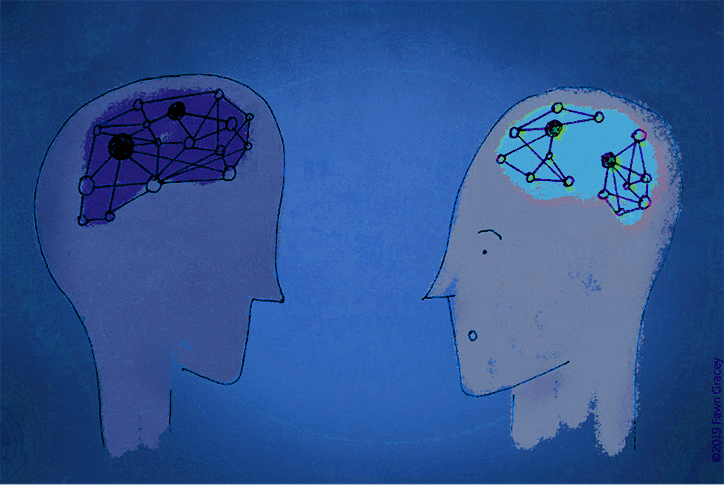
‘Face blindness’ may represent a failed brain network — and could shed light on autism
People with prosopagnosia, or “face blindness,” have trouble recognizing faces — even those of close friends and family members. While some people can compensate by using clothing and other cues, face blindness often creates serious social problems. It often becomes apparent in early childhood, but, rarely, people can acquire face blindness later in life after ... Read More about ‘Face blindness’ may represent a failed brain network — and could shed light on autism

Healing hearts under a watchful eye
Cardiac surgery is performed using visual landmarks inside the heart. There are specialized conduction tissues that run underneath the surface, which are important for the heart’s rhythmic beating. Cardiac surgeons operate with these landmarks in mind to avoid injury to conduction tissue, but locating these tissues can be challenging. Fiberoptic confocal microscopy technology inside the ... Read More about Healing hearts under a watchful eye