


Exploring targeted treatments for children with low-grade brain tumors
Children diagnosed with low-grade astrocytomas, the most common type of pediatric brain tumor, have close to 90 percent overall survival rates. However, the growth of the tumors, as well as the standard treatments (neurosurgery and chemotherapy) required to control them, can cause serious side effects, including damaging developing brains and bodies. Researchers at Dana-Farber/Boston Children’s Cancer and Blood ... Read More about Exploring targeted treatments for children with low-grade brain tumors

Chemical screening suggests a two-pronged treatment for pediatric Ewing sarcoma
For children with Ewing sarcoma, an aggressive bone cancer, a combination of two different classes of drugs may work synergistically to turn off the drivers fueling this disease, finds a new study. The combination appears to be more powerful than relying on either treatment alone. The study, published online last month in Clinical Cancer Research, is the latest in a ... Read More about Chemical screening suggests a two-pronged treatment for pediatric Ewing sarcoma

Children wait for new cancer drugs 6.5 years longer than adults
A 20-year analysis finds that FDA-approved cancer drugs took a median of 6.5 years to go from the first clinical trial in adults to the first trial in children. That’s not good enough for researchers at Dana-Farber/Boston Children’s Cancer and Blood Disorders Center, who are calling for expanding children’s access to experimental cancer therapies. “It’s ... Read More about Children wait for new cancer drugs 6.5 years longer than adults
Solving genetic mysteries – in the NICU and beyond
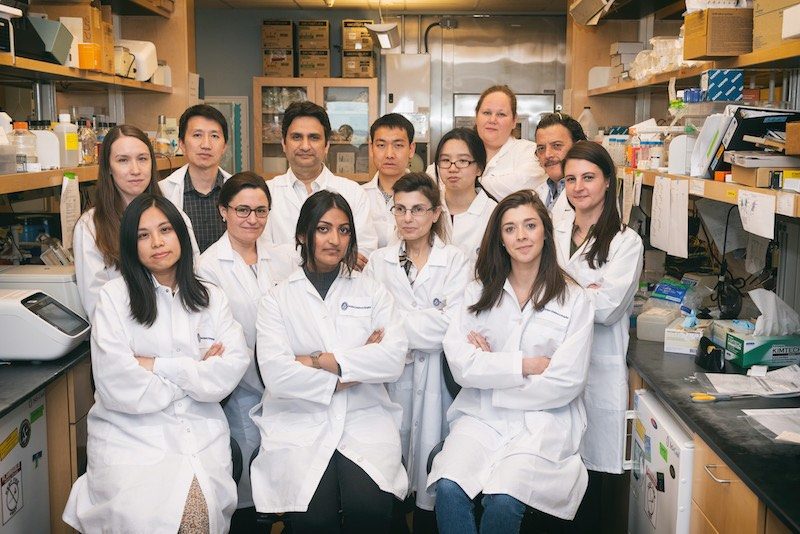
A growing number of children with suspected genetic disorders are having their complete exomes sequenced, since it’s now often faster and cheaper to sequence all the protein-coding genes at once rather than test limited groups of genes. But even after whole-exome sequencing, 70 to 75 percent of children come away without a genetic explanation for ... Read More about Solving genetic mysteries – in the NICU and beyond

Small samples, big data: A systems-biology look at a newborn’s first week of life
The first week of a baby’s life is a time of rapid biological change. The newborn must adapt to living outside the womb, suddenly exposed to new bacteria and viruses. Yet scientists know surprisingly little about these early changes. Reporting in Nature Communications, an international research team provides the most detailed accounting to date of the ... Read More about Small samples, big data: A systems-biology look at a newborn’s first week of life
ctDNA: Bringing ‘liquid biopsies’ to pediatric solid tumors
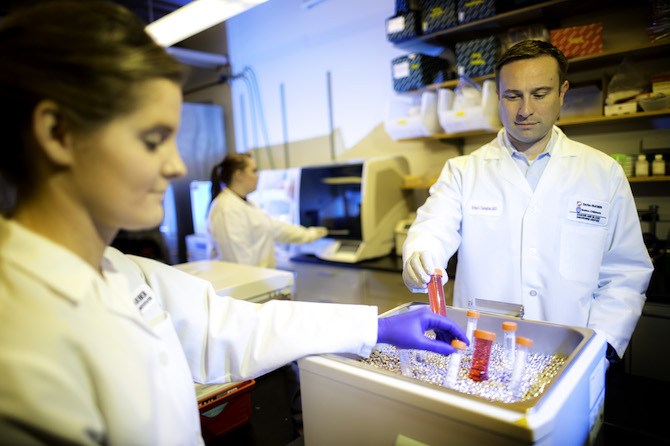
Our blood carries tiny amounts of DNA from broken-up cells. If we have cancer, some of that DNA comes from tumor cells. Studies performed with adult cancers have shown that this circulating tumor DNA (ctDNA) may offer crucial clues about tumor genetic mutations and how tumors respond to treatment. Brian Crompton, MD, with colleagues at ... Read More about ctDNA: Bringing ‘liquid biopsies’ to pediatric solid tumors

Gene panel helps investigate sudden unexpected death in children
Almost 10 percent of pediatric deaths occur suddenly and without explanation. In this terrible situation, the first question many parents have is “Why?” For most, answers never come. Childhood deaths that cannot be explained by traditional autopsy and death-scene investigation are referred to as sudden unexplained deaths in pediatrics (SUDP). In children, these deaths are ... Read More about Gene panel helps investigate sudden unexpected death in children

Do antibiotic-impregnated shunts reduce infection in hydrocephalus?
Every year, nearly 400,000 children worldwide develop hydrocephalus, in which excess fluid accumulates in the brain. Many of these children have shunts placed to allow this fluid to drain. Antibiotic-impregnated shunts are widely championed as the best choice, but a recent study calls their necessity into question. The study, published in the Journal of Neurosurgery ... Read More about Do antibiotic-impregnated shunts reduce infection in hydrocephalus?

I-ACQUIRE: A new study for young stroke patients
Could I-ACQUIRE help your child?To qualify for this study, your child must meet the following criteria: · is 8 to 36 months old · had a perinatal arterial ischemic stroke confirmed by MRI · has weakness on one side of the body both arm and leg · is in good health · hasn’t had previous ... Read More about I-ACQUIRE: A new study for young stroke patients

Reviving fetal hemoglobin in sickle cell disease: First patient is symptom-free
Manny Johnson of Boston, 21, previously required monthly blood transfusions to keep his severe sickle cell disease under control. After receiving a new gene therapy treatment, he’s been symptom-free for six months. Researchers at the Dana-Farber/Boston Children’s Cancer and Blood Disorders Center reported Manny’s case Saturday at the American Society of Hematology meeting in San Diego. Manny ... Read More about Reviving fetal hemoglobin in sickle cell disease: First patient is symptom-free