

Research

Forty years waiting for a cure: ALD gene therapy trial shows early promise
A small piece of notepaper, folded twice, sits tucked in a slot of the secretary desk in the living room. Every so often, I pull it out, read it, then reread. Addressed to my mom, the paper has a question and two boxes, one “yes” and one “no,” written with the careful precision of a ... Read More about Forty years waiting for a cure: ALD gene therapy trial shows early promise
Patient Stories
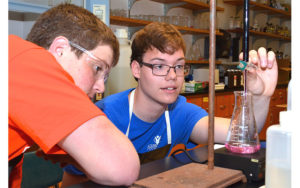
George the unstoppable conquers leg-length discrepancy
George Davies, a senior at Bancroft School in Worcester, Massachusetts, faces every challenge, every obstacle and every situation with a sense of what’s possible. He rows varsity crew, plays the electric guitar, and after two years of independent research he’s off to Scotland’s University of St. Andrews to study biochemistry. Dr. James Kasser, Boston Children’s ... Read More about George the unstoppable conquers leg-length discrepancy
Research

20-week treatment makes life safer for kids with peanut allergy
A study last week in The New England Journal of Medicine suggests that exposing infants to peanuts can provide lasting protection against peanut allergy. But what about peanut-allergic children right now? They and their parents live a life of precautions — from pre-screening birthday party menus to segregation at the school lunch table — to ... Read More about 20-week treatment makes life safer for kids with peanut allergy
Research
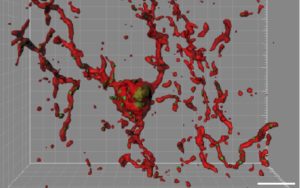
Targeting synapse loss in Alzheimer’s to preserve cognition — before plaques appear
Currently, there are five FDA-approved drugs for Alzheimer’s disease, but these only boost cognition temporarily and don’t address the root causes of Alzheimer’s dementia. Many newer drugs in the pipeline seek to eliminate amyloid plaque deposits or reduce inflammation in the brain, but by the time this pathology is detectable, it’s unlikely medications can do much to slow ... Read More about Targeting synapse loss in Alzheimer’s to preserve cognition — before plaques appear
Research
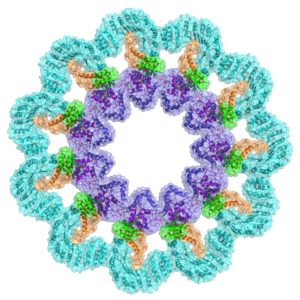
Science seen: A “wheel of death” for bacteria
The innate immune system acts like a border patrol for the body, picking up bacteria and other invading pathogens using molecular sensors. One key player is the inflammasome, a multi-protein complex depicted here through cryo-electron microscopy (cryo-EM). Using structural biology tools like cryo-EM and X-ray crystallography, the Wu lab in Boston Children’s Hospital’s Program in Cellular and Molecular ... Read More about Science seen: A “wheel of death” for bacteria
Research
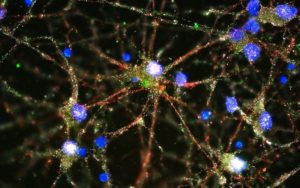
Genetic analysis backs a neuroimmune view of schizophrenia: Complement gone amok
A deep genetic analysis, involving nearly 65,000 people, finds a surprising risk factor for schizophrenia: variation in an immune molecule best known for its role in containing infection, known as complement component 4 or C4. The findings, published this week in Nature, also support the emerging idea that schizophrenia is a disease of synaptic pruning, ... Read More about Genetic analysis backs a neuroimmune view of schizophrenia: Complement gone amok
Clinical Care
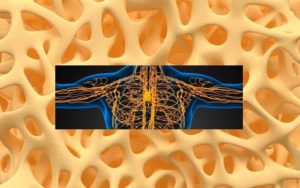
Another use for mTOR inhibitors: Preserving vanishing bones in Gorham-Stout syndrome
The mTOR pathway is fundamental to nearly every cell in the body. It drives processes related to cell growth, protein production and metabolism, influencing everything from neurocognition to tumor growth. Because of this broad role, indications for drugs targeting the mTOR pathway are also remarkably broad. Alexander Malloy, 14, is one of the first patients ... Read More about Another use for mTOR inhibitors: Preserving vanishing bones in Gorham-Stout syndrome
Research
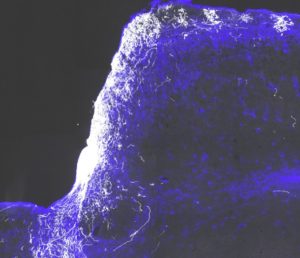
Drug ‘cocktail’ could restore vision in optic nerve injury
When Zhigang He, PhD, started a lab at Boston Children’s Hospital 15 years ago, he hoped to find a way to regenerate nerve fibers in people with spinal cord injury. As a proxy, he studied optic nerve injury, which causes blindness in glaucoma — a condition affecting more than four million Americans — and sometimes ... Read More about Drug ‘cocktail’ could restore vision in optic nerve injury
Clinical Care

Cloud-based complex care platform empowers clinicians and families alike
For children with complex medical needs, care coordination across medical specialties is a major pain point, as is communication across multiple provider systems. And patients aren’t the only ones feeling the burden. Consider these startling statistics: $25-$45 billion is wasted annually in the U.S. due to poor communication in health care.$45 billion has been invested in ... Read More about Cloud-based complex care platform empowers clinicians and families alike
Clinical Care
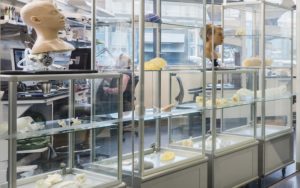
Surgical 3-D printing: 300 prints, 16 specialties and counting
3-D printing is rapidly becoming a part of surgical planning. Since July 2013, Boston Children’s Hospital’s 3-D printing service, part of the Simulator Program, has received about 200 requests from 16 departments around the hospital. It’s generated a total of about 300 prints, most of them replicating parts of the body to be operated on. Most ... Read More about Surgical 3-D printing: 300 prints, 16 specialties and counting