

Patient Stories
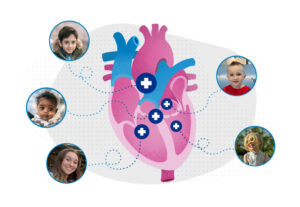
Every heart has a story. See how we care for them all.
It’s easy to think of the heart as a common denominator — everyone has one — but no two hearts are alike. Every heart is different. Every heart has a story. For many children and adults, that story includes coming to Boston Children’s for specialized heart care. Some were born with complex congenital heart defects, while ... Read More about Every heart has a story. See how we care for them all.
Research

It’s all in the PV loops: New analytical model could improve circulation assessments before heart surgery
The double-switch operation corrects the congenital reversal of the heart’s ventricles and its two main arteries. It’s a practical way of putting the ventricles into the position they belong so that children with congenitally corrected transposition of the great arteries (CC-TGA) can benefit from enhanced circulation. Surgery, though, doesn’t come without risks. Some children’s left ventricles — ... Read More about It’s all in the PV loops: New analytical model could improve circulation assessments before heart surgery
Research
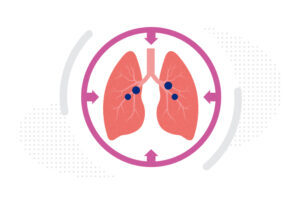
Modifying macrophages in the lung could head off pulmonary hypertension
In the 1980s, when Stella Kourembanas, MD, began her career in neonatology, she cared for newborns with pulmonary hypertension, a disease that results in abnormally high blood pressure in the lung arteries and can lead to heart failure. Since then, treatments like inhaled nitric oxide, new vasodilators, new modalities of mechanical ventilation, and extracorporeal membrane ... Read More about Modifying macrophages in the lung could head off pulmonary hypertension
Research
A new tool could exponentially expand our understanding of bacteria
How do bacteria — harmless ones living in our bodies, or those that cause disease — organize their activities? A new study, combining powerful genomic-scale microscopy with a technical innovation, captured which genes bacteria turn on in different situations and in different spatial environments. The technology, described January 23 in Science, promises to take the ... Read More about A new tool could exponentially expand our understanding of bacteria
Research

MRI could reduce the mystery of brachial plexus injuries in infants
About one in 1,000 children are born with brachial plexus birth injury (BPBI), upper extremity weakness or paralysis resulting from trauma to the brachial plexus nerves during childbirth. Most children with BPBI recover with observation and minimally invasive care, but about 30 percent have injuries severe enough to lead to long-term impairment. Thanks to recent ... Read More about MRI could reduce the mystery of brachial plexus injuries in infants
Patient Stories

Unstoppable: Flatfoot correction helps Jacob take control
The first time Dr. Susan Mahan examined Jacob’s feet, she pressed on a tender spot near one of his arches. “You see that?” Jacob’s mother, Lucie, remembers her saying. “That bone isn’t supposed to be there.” Jacob was 13 and had spent a frustrating year trying to figure out why basketball, his greatest source of ... Read More about Unstoppable: Flatfoot correction helps Jacob take control
Research
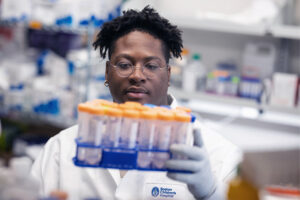
Bringing order to disorder: Jhullian Alston, PhD
Proteins typically fold into orderly, predictable three-dimensional structures that dictate how they will interact with other molecules. Jhulian Alston, PhD, is drawn to intrinsically disordered proteins, whose key feature is a lack of structure. They are difficult to study and far less explored. “They’re floppy, they don’t have specific folds, they can’t slot into each ... Read More about Bringing order to disorder: Jhullian Alston, PhD
Patient Stories
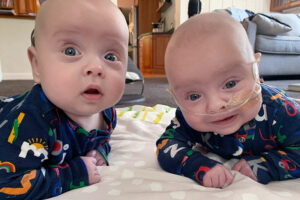
My son is a NICU GraD: Here’s what I’ve learned
My husband and I aren’t first-time parents, but when our twins were born nine weeks early a year ago, everything we thought we knew went out the window. The thing is, it wasn’t Cal and Theo’s early arrival that was the biggest shock; it was the challenges that came afterward. Life with newborns and a ... Read More about My son is a NICU GraD: Here’s what I’ve learned
Clinical Care
Status epilepticus: What’s changed, what to know, and a global perspective
Status epilepticus, or a prolonged seizure lasting more than five minutes, is a rare complication of epilepsy and a medical emergency that can occur even in people without a diagnosis of epilepsy. If not treated quickly, it can cause brain damage, lifelong complications, and even death. “A prolonged seizure is a race against time to ... Read More about Status epilepticus: What’s changed, what to know, and a global perspective
Clinical Care

Phenylketonuria: Giving treatment a second chance
Phenylketonuria (PKU) was once a common cause of intellectual disability. Children born with this metabolic condition lack phenylalanine hydroxylase (PAH), the enzyme needed to break down the amino acid phenylalanine (phe). Instead, phe builds up to levels harmful to the brain. PKU was the original condition tested for when newborn screening was piloted in Massachusetts ... Read More about Phenylketonuria: Giving treatment a second chance