

Patient Stories

Walter’s world: ‘Warrior’ toddler doesn’t let a brain tumor stop him
When Walter Merck attempts an obstacle course at his physical therapy appointment, “he just does what he wants,” laughs his mother, Amber. “It’s Walter’s world; we just live in it.” Like many 2-year-olds, Walter can be stubborn — but in his case, it may be a stubbornness born of necessity. Since infancy, he’s been overcoming ... Read More about Walter’s world: ‘Warrior’ toddler doesn’t let a brain tumor stop him
Clinical Care
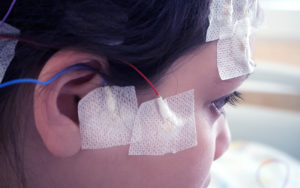
A path forward for genetic testing in unexplained epilepsy
The number of genes implicated in epilepsy has grown rapidly in the past decade. This raises questions about what tests to offer to people with unexplained epilepsy and whether those tests would yield actionable information. Now, practice guidelines developed by genetic counselors at Boston Children’s Hospital offer a way forward. In the first systematic evidence ... Read More about A path forward for genetic testing in unexplained epilepsy
Research

A heart valve that grows along with a child could reduce invasive surgeries
Clinical trials have started for the first prosthetic pulmonary valve replacement that is specifically designed for pediatric patients and can expand over time inside a child’s anatomy. Instead of having invasive replacement surgeries every few years, as is the practice now, a child can have the valve fitted to their individual body size and, if ... Read More about A heart valve that grows along with a child could reduce invasive surgeries
Research

Research 2022: Tackling disease in new ways
Researchers across Boston Children’s spent 2022 imagining new solutions to old challenges in health and medicine, opening the door to brand-new treatments. Here are a few areas where research is poised to make a difference in children’s — and even adults’ — lives. Rethinking disease through genetics Genetic sequencing is becoming a fundamental tool for discovering ... Read More about Research 2022: Tackling disease in new ways
Health and Parenting

New Year’s resolutions and kids: what to know
With a new year upon us, we’re once again bombarded with messages about getting healthier, skinnier, and more disciplined come January 1. We couldn’t help but wonder what this means for kids, so we turned to Andrew Richards, a psychologist with Boston Children’s Martha Eliot Center, for answers. Are New Year’s resolutions a good idea ... Read More about New Year’s resolutions and kids: what to know
Patient Stories

Weathering the storm of Apert syndrome: João’s story
After a “perfect” pregnancy in 2017, Natalia and Igor of Brazil were excited to meet their third child. They were shocked when João was whisked away moments after delivery. “Up until the day before he was born, everything seemed very normal,” says Natalia. “But once he arrived, we could see immediately that something was wrong: ... Read More about Weathering the storm of Apert syndrome: João’s story
Research

How a leukemia hijacks the genes needed by blood stem cells
As a child, Lynn Aureli didn’t know that a particular genetic change contributed to her acute myeloid leukemia (AML) — an alteration that eventually would help explain the cancer’s lack of response to chemotherapy. Nor was she aware that her cancer had hijacked the genetic mechanism for maintaining the stem cells that form blood, like ... Read More about How a leukemia hijacks the genes needed by blood stem cells
Patient Stories

‘Life-changing’ appointment helps Georgia cope with motility issues
Five-year-old Georgia MacAloney loves dancing, cheerleading, and riding her bike. “She’s just a happy, regular kid,” says her mother, Justine. “You would never know what she’s been through just by looking at her.” Yet just a few years ago, the family had put life on hold due to Georgia’s illness. “We didn’t plan trips and ... Read More about ‘Life-changing’ appointment helps Georgia cope with motility issues
Research

Research opens a window into understanding deadly brain tumors
Formerly known as diffuse intrinsic pontine gliomas, diffuse midline gliomas (DMGs) are highly aggressive tumors found in the midline of the brain. Their prognosis is very poor, in part because they don’t respond well to treatments such as chemotherapy and radiation. Now, research by Mariella Filbin, MD, PhD, and others in the Brain Tumor Center ... Read More about Research opens a window into understanding deadly brain tumors
Patient Stories

Superando as dificuldades da síndrome de Apert: a história do João
Depois de uma gravidez “perfeita” em 2017, os brasileiros Natália e Igor estavam emocionados por conhecer seu terceiro filho. Eles ficaram chocados quando os médicos arrebataram João uns instantes após o parto. “Até o momento em que ele nasceu, tudo parecia muito normal”, afirma Natália. “Mas quando ele chegou, imediatamente percebemos que havia algo errado: ... Read More about Superando as dificuldades da síndrome de Apert: a história do João