

Clinical Care
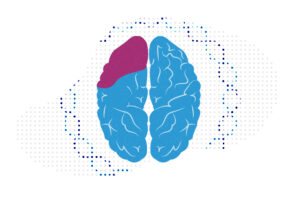
Rethinking cerebral arachnoid cysts through genomics
Cerebral arachnoid cysts are the most common mass-occupying brain lesion in humans. Some cause no noticeable symptoms and may just be incidental findings. Others are quite severe, causing hydrocephalus and potentially nerve damage; these clearly require surgery to drain the cyst fluid and relieve pressure on the brain. But a middle ground sits between these ... Read More about Rethinking cerebral arachnoid cysts through genomics
Research
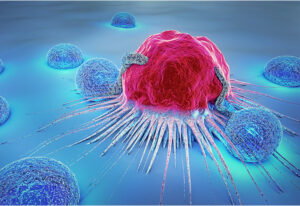
An unexpected journey reveals a potent way to attack tumors
Research on the effects of prenatal exposure to the Zika virus has yielded an unexpected dividend: a potentially promising way to trigger natural killer (NK) cells to fight cancer. NK cells are first-responder immune cells. When enough of their activating receptors are triggered, they mobilize to kill infected, stressed, or cancerous cells at an early ... Read More about An unexpected journey reveals a potent way to attack tumors
Research
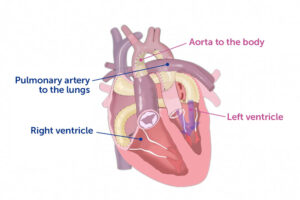
Experience and innovation create a safer type of heart surgery
The Eureka moment came the day before heart surgery. Easton Schlein wasn’t an ideal candidate for a full-scale surgical repair of an underdeveloped left ventricle. But his cardiac surgeons weren’t satisfied that they instead had to use the Fontan procedure, the only other option for that condition, but one associated with long-term liver complications. Reviewing ... Read More about Experience and innovation create a safer type of heart surgery
Research

Deep plasma proteomics: Back to the future
Blood plasma is collected from people routinely during clinical care and for research. It is potentially a rich source of protein biomarkers for diagnostic and prognostic purposes, for measuring response to treatment, and for revealing disease biology. Yet identifying such biomarkers in plasma with proteomics, our best available tool, has been a challenge: Ninety-nine percent ... Read More about Deep plasma proteomics: Back to the future
Research

Conquering a rare metabolic condition: A family, a pediatrician, and two labs join forces
As a newborn, Sam Hoffman never cried or made a sound. His mother, Carolyn, often had to wake him up to feed him. He missed many of his infant milestones. At one visit, his pediatrician tapped his leg and couldn’t get a reflex. A urine test found extremely high levels of 4-hydrobutyric acid or GHB ... Read More about Conquering a rare metabolic condition: A family, a pediatrician, and two labs join forces
Research

Robotics, spinal fusion, and the quest for 100 percent accuracy
In any spinal fusion surgery, accurate screw placement is a top priority, and for good reason. Incorrectly positioned screws are the number one cause of surgical complications and revision surgeries according to the Scoliosis Research Society. While the vast majority of malpositioned screws — between four and 15 percent of all screws placed — do not ... Read More about Robotics, spinal fusion, and the quest for 100 percent accuracy
Research
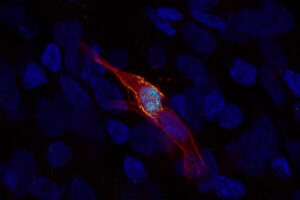
Making ionocytes: A step toward cell or gene therapy for cystic fibrosis
Cystic fibrosis transmembrane conductance regulator (CFTR) modulators were a breakthrough for cystic fibrosis, improving the movement of chloride and water and moistening mucus secretions. But these drugs are expensive, don’t work in all patients with cystic fibrosis, and have side effects and interactions with other drugs. People who do respond to CFTR modulators must take ... Read More about Making ionocytes: A step toward cell or gene therapy for cystic fibrosis
Patient Stories

Making history: Gene therapy for CCALD gives Conner a second chance
Like a lot of 6-year-olds, Conner Hess finds joy in simple acts: drawing pictures, cuddling his two cats, and playing video games with his father. When his fun times at home in New York are interrupted by trips to Boston Children’s Hospital, he knows it’s to help fix a “boo-boo” in his brain. What he ... Read More about Making history: Gene therapy for CCALD gives Conner a second chance
Patient Stories

Running the Boston Marathon with a purpose: Ben’s liver transplant journey
Ben is no stranger to sports — in fact he’s probably the most excited when he’s able to get on a soccer field or with his team. This April, he’ll be running alongside the Boston Children’s Hospital team at the Boston Marathon! At 18 years old, Ben has already overcome incredible challenges, so taking on ... Read More about Running the Boston Marathon with a purpose: Ben’s liver transplant journey
Patient Stories

‘Sami’s trach helps him breathe’: Living with laryngeal cleft
Today, Sami is a playful toddler with so much energy that his parents need to remind him to take breaks. It’s a big change from just four years ago when he struggled to eat, drink, and breathe before being diagnosed with a laryngeal cleft. Sami’s parents, Ala’a and Mohamad, knew before he was even born ... Read More about ‘Sami’s trach helps him breathe’: Living with laryngeal cleft