Rethinking platelet transfusions in newborns
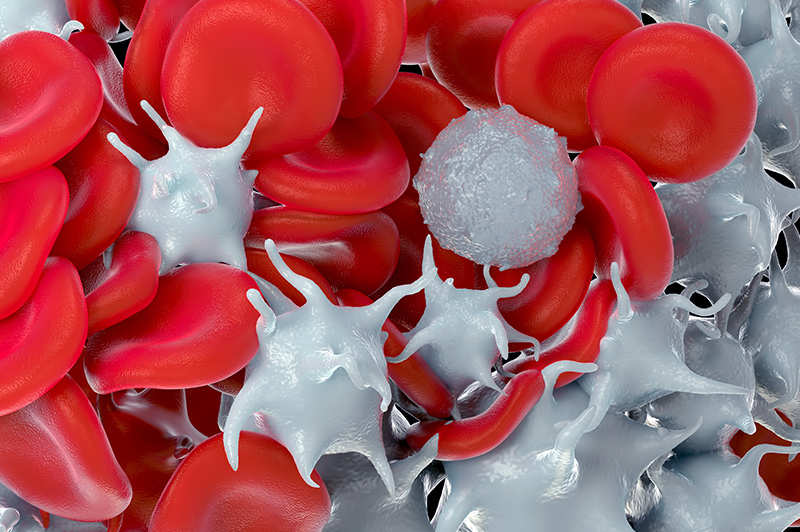
Platelet transfusions have long been central to neonatal intensive care. Between 15 and 35 percent of hospitalized newborns receive at least one, with rates highest (about one in three) among the most premature due to thrombocytopenia and their elevated risk of intraventricular hemorrhage. For decades, the logic has been sound: transfuse platelets, typically from adult donors, to reduce bleeding risk. However, emerging research is challenging this long-held approach.
At Boston Children’s Hospital, work led by Martha Sola-Visner, MD, and Patricia Davenport, MD, may be reshaping how clinicians think about platelet transfusions in newborns entirely.
“What we’ve been finding is really something counterintuitive,” says Sola-Visner. “That this treatment designed to protect vulnerable infants might, in some cases, be causing harm.”
Early concerns from observational studies
Observational studies first raised concerns about transfusions by showing that infants receiving higher volumes of platelet transfusions experienced more complications such as chronic lung disease. Then, a randomized controlled trial published in 2019 in the New England Journal of Medicine found that infants transfused at higher platelet counts had worse outcomes, including increased bleeding and mortality.
In response, clinicians have reserved transfusions for infants at the highest risk of bleeding. But this creates a new challenge: infants who ultimately still require transfusions are often the most fragile. Understanding and reducing transfusion-related risk has become a central focus of Sola-Visner and Davenport’s research.
Uncovering biological differences
Sola-Visner says a key insight driving their work is approaching platelets not just as clotting agents, but as active parts of the immune system that help regulate inflammation and interact with white blood cells. This raises a critical question: could the immune functions of platelets be contributing to adverse effects in transfused infants?
Further complicating matters, neonatal platelets are less reactive and uniquely adapted to the neonatal environment, while adult platelets are more active in hemostatic and immune responses. To better understand the mismatch caused by introducing adult cells into a developing immune system, Sola-Visner, Davenport, and their team compared the protein composition of adult and neonatal platelets and found striking differences.
Over 180 proteins were present at higher concentrations in adult platelets compared to neonatal platelets, with many of these proteins being involved in immune and inflammatory responses. This suggests that when adult platelets are transfused into newborns, they may trigger stronger and potentially abnormal immune reactions. The next step was to determine whether platelet transfusions were associated with immune responses in newborn patients.

In a clinical study conducted in the neonatal intensive care units (NICUs) at Boston Children’s and Beth Israel Deaconess Medical Center, Davenport and colleagues collected blood samples from infants before and after transfusion, along with samples from the donor platelets. They found that platelet transfusions triggered a distinct immune response. Neutrophils, key cells that fight infection, became activated following transfusion, providing evidence that transfusions can alter immune function in newborns.
The team also found that the characteristics of the platelet products themselves influenced responses. For example, platelets stored longer in the blood bank were associated with stronger inflammatory responses, pointing to the role of collection and storage practices.
Identifying a mechanism
Building on this work, the researchers began identifying specific molecules that may drive these responses. One such molecule, P-selectin, which is found at higher levels in adult platelets, appears to play a role in triggering some of the inflammatory responses.
In mouse studies, transfusing platelets lacking P-selectin into thrombocytopenic newborn pups reduced some inflammatory responses, offering a glimpse at how transfusions could be modified to improve safety.
“It’s only part of the picture,” says Davenport. “But it’s meaningful progress toward understanding the mechanisms behind transfusion-related harm.”
Toward safer transfusions
Sola-Visner and Davenport are hoping that their discoveries can help redefine what makes a platelet transfusion “successful.”
At Boston Children’s, they’re exploring multiple strategies to improve safety. These include studying how donor variability and blood bank practices such as processing and storage conditions affect platelet behavior, as well as therapies that could block harmful inflammatory pathways. In addition, Sola-Visner is co-principal investigator of a large multicenter randomized trial aimed at identifying safe and effective platelet transfusion thresholds in the most premature infants with the highest bleeding risk.
Through these combined efforts, and by defining the immune effects of platelet transfusions, Sola-Visner, Davenport, and their colleagues are helping guide more precise, safer use of this treatment for the most vulnerable newborns.
Discover more research taking place within Boston Children’s Division of Newborn Medicine.
Related Posts :
-

Female leadership in neonatology: The value of mentorship
While the majority of neonatologists are women, women make up a far smaller proportion of neonatologists in leadership positions. A ...
-
Beyond average-based medicine: HIE as a blueprint for data-informed care
Historically, outcome prediction in medicine has followed a familiar formula: run a clinical trial, publish the results, guide care based ...
-
Mending injured hearts: Lessons from newborns?
When the heart is injured, as in a myocardial infarction, the damaged heart muscle cannot regenerate — instead, scar tissue forms. ...
-
Living fully: Kristin’s life with blue rubber bleb nevus syndrome
More than 25 years ago, I spent 11 hours in surgery while a surgeon removed hundreds of abnormal blood vessels from my ...