Living fully: Kristin’s life with blue rubber bleb nevus syndrome
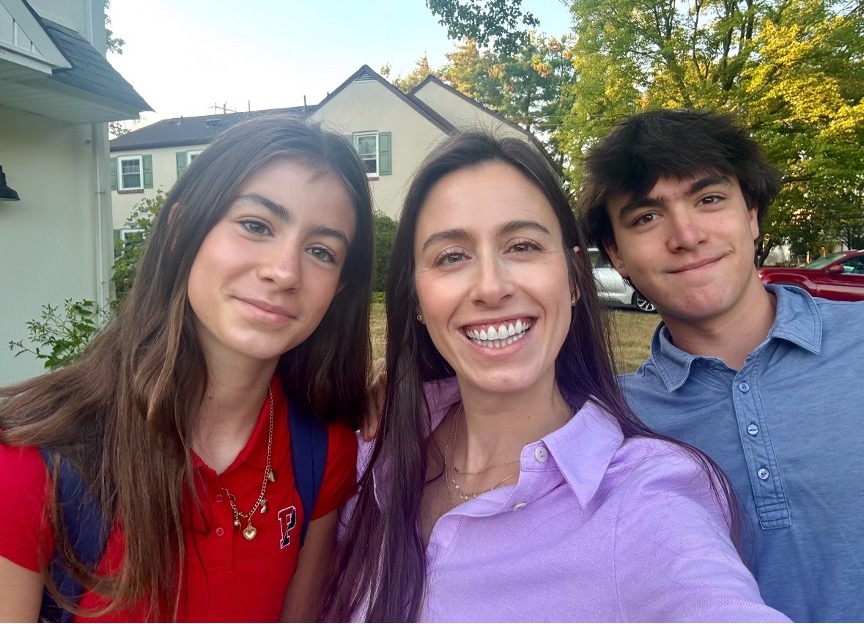
More than 25 years ago, I spent 11 hours in surgery while a surgeon removed hundreds of abnormal blood vessels from my body.
A lot has happened since. Today, I’m a mom raising two driven kids: a daughter who is a skilled athlete, and a son who’s taking two math classes just for fun. I also teach special education, working one-on-one with high-achieving students who have learning differences.
My life is full and busy — and that complex surgery for blue rubber bleb nevus syndrome (BRBNS) is a major reason I get to enjoy it.
A rare condition
BRBNS is a vascular anomaly in which venous malformations (“blebs”) appear both on the skin and on internal organs. It’s extremely rare, with only around 300 cases reported worldwide to date.
When I was born, the only visible sign of BRBNS was a small blue-purple bump on my foot where a bleb had formed. At first, doctors weren’t even sure it was a problem; after all, I seemed fine. But I already had other malformations that no one could see.
Over time, the bleb on my foot became so painful that I couldn’t wear shoes. That’s when doctors began trying treatments like sclerotherapy and other procedures to manage the most visible and uncomfortable blebs. I was finally diagnosed around age three, but even then, doctors focused on managing the condition rather than stopping it from getting worse.
As I got older, the hidden malformations inside my body began to cause internal bleeding, which showed up in my bloodwork as anemia. Doctors first noticed the anemia when I was in elementary school, but by seventh grade it had become severe. By that time, I was getting blood transfusions once or twice a week. It became routine: I would go to the emergency room, get blood, and then go right back to school. It wasn’t sustainable. Something had to change.
Finding the right surgeon
By the time the weekly transfusions had become routine, doctors were suggesting a series of surgeries to remove pieces of my intestines in stages over months or even years.
My parents wouldn’t accept that.
My mom started calling hospital after hospital, looking for anyone who had experience with BRBNS. After weeks of calls, she finally found Dr. Steven Fishman, co-director of the Vascular Anomalies Center at Boston Children’s. And what he described was different.
Meet the surgeon behind my 11-hour procedure
Instead of another staged approach, Dr. Fishman described a single, comprehensive surgery that could remove the malformations throughout my body and stop the bleeding at its source. My mom followed up with lots of questions, and he answered them all with total confidence.
When the call ended, she burst into tears, turned to my dad, and said, “He’s the one. Let’s do it.”
An 11-hour turning point
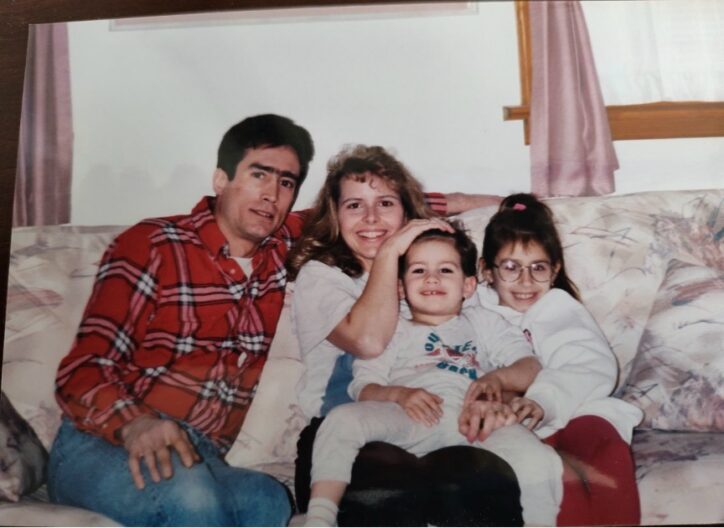
Two weeks before my surgery, we flew from our home in Pennsylvania to Boston so my team could run a series of tests, including MRIs, endoscopies, and colonoscopies, to see exactly where the blebs were hiding inside my body.
Then came the procedure: Over the course of 11 hours with no breaks, Dr. Fishman removed nearly all my malformations.
I was surrounded by support throughout my time in Boston. I spent my birthday in the hospital that year, and the staff arranged to have a clown stop by to celebrate. My mom stayed by my side the entire time. My dad flew back and forth between Boston and our home in Philadelphia to be with us whenever he could. And my care team helped us out every step of the way.
Life after surgery
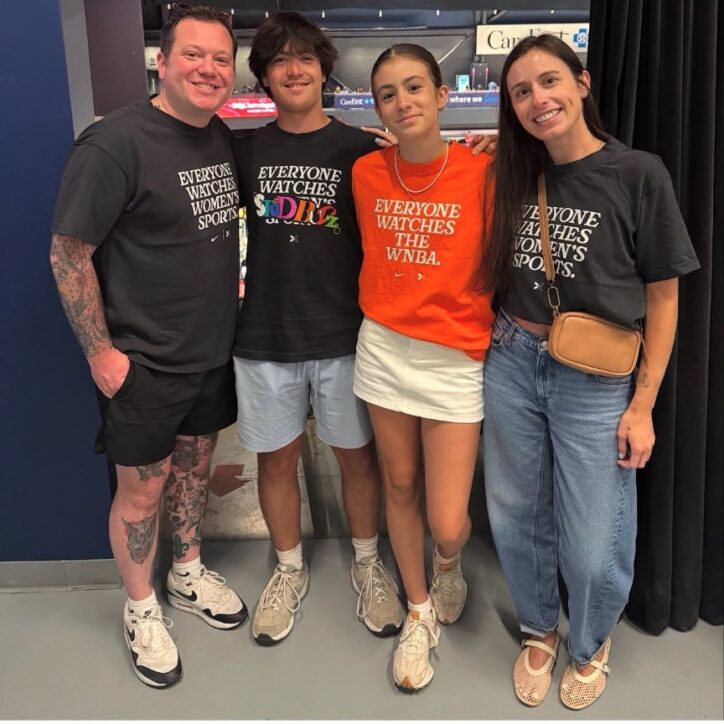
My life changed almost immediately after I left the hospital. From that moment on, there were no weekly transfusions or rushed trips to the emergency room. In fact, in over 25 years, I haven’t had any major issues whatsoever.
In all that time, I’ve had one constant: Dr. Fishman. He’s the person I still turn to whenever something feels even a little bit off, because he understands my condition in a way almost no one else does.
When I first became pregnant, Dr. Fishman was the first person I told (after my parents). I hadn’t had imaging in years, and suddenly I was worried about any blebs that might still be inside my body.
Years later, when my hemoglobin dropped unexpectedly, I called my mom, cried, and then emailed Dr. Fishman. He told me exactly what to do, and that everything was fine. Having him in my corner has meant that even when something feels scary, I’ve never had to face it alone.
My parents never made BRBNS my identity. They let me be a kid, their daughter, a whole person. My diagnosis has always just been one part of my story. The rest of my life has grown into something full.
Learn more about the Vascular Anomalies Center
Related Posts :
-

Provider Spotlight: Meet Dr. Steve Fishman
How did you become interested in pediatric surgery? I became interested in pediatric surgery when I was first exposed ...
-
Answers for Isaac: A family’s journey to treat vascular anomalies
Early on, Jinah and her husband knew their son Isaac was battling something complex, but they couldn’t figure out ...
-
Advocating for herself: Drew takes lymphedema in stride
Five-year-old Drew Rossi has no problem explaining why she wears a daily compression garment. “I have lymphedema,” she tells anyone ...
-
Breaking records and setting goals: Grant charts his own course with Bockenheimer syndrome
Grant Pierce has his sights on premed when he arrives at the University of Illinois this fall. He hopes to ...