

Patient Stories

A legend for Zora: How genomic testing provides answers in the face of grief
So often after a perinatal loss, parents are left with uncertainty about what caused their baby’s death and the haunting question, “what if.” To help grieving families find answers to these questions, Dr. Monica Wojcik and her colleagues in the Division of Newborn Medicine are conducting genomic autopsies to learn if and what genetic factors ... Read More about A legend for Zora: How genomic testing provides answers in the face of grief
Patient Stories

Jada’s story: After cloacal exstrophy repair, an unexpected gift
Koda Wilder Ladchuk was born slightly premature, healthy, and happy. But this isn’t just a story about 4-month-old Koda. It’s also a story about his mother, Jada, and an incredible outcome no one could have predicted — not even Jada herself. Jada, now 25, was born with cloacal exstrophy (also known as OEIS syndrome), a ... Read More about Jada’s story: After cloacal exstrophy repair, an unexpected gift
Patient Stories

Surgery for Chiari malformation: “I was just happy to have an answer”
Abby Buckley loves being active, whether that means hiking, cycling, or playing sports like javelin, shotput, and discus. But in eighth grade, a bad concussion sidelined her — and led to an unexpected diagnosis. A magnetic resonance imaging (MRI) scan showed that she didn’t just have a concussion. She also had a Chiari malformation, a ... Read More about Surgery for Chiari malformation: “I was just happy to have an answer”
Health and Parenting

How to help your child make and rekindle friendships at any age
Childhood friendships are key for mental and physical health. But friends come and go as a child ages, as they keep some longstanding relationships, makes new ones, and lose some. No matter the age and circumstance, friendships help children develop social and emotional skills, feel a sense of belonging, and decrease stress. “Our earliest friendships ... Read More about How to help your child make and rekindle friendships at any age
Research

RNA-modifying protein offers a possible lead for treating aggressive cancers
A protein that modifies RNAs, called METTL1, could be a target for treating some aggressive, difficult-to-treat cancers, suggests new research in Molecular Cell. The study provides evidence that blocking METTL1 curbs cancer cells’ ability to grow, selectively killing them, and the researchers believe it could be targeted with drugs. METTL1 and related proteins had previously ... Read More about RNA-modifying protein offers a possible lead for treating aggressive cancers
Patient Stories

I tried the keto diet to help my epilepsy and it changed my life
My name is Dennis. I’m 15 years old and live in East Greenwich, Rhode Island. Two years ago, I started the keto diet to help my epilepsy and it changed my life. Here’s my story… I was 7 when I was diagnosed with epilepsy. I was too young to know what that really meant or ... Read More about I tried the keto diet to help my epilepsy and it changed my life
Clinical Care

Generations of excellence in lower extremity care: Dr. Kasser and Dr. May
As an orthopedic surgeon and professor of surgery, Dr. James Kasser has spent several decades sharing his expertise in limb reconstruction with students of Harvard Medical School. Dr. Collin May was one of his students and later joined the surgical team in the Lower Extremity Program at Boston Children’s Hospital. He has spent the past ... Read More about Generations of excellence in lower extremity care: Dr. Kasser and Dr. May
Patient Stories
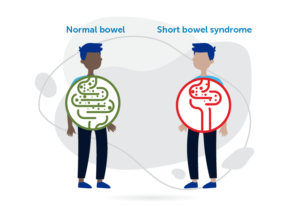
A taste of childhood: One family’s journey to an IV-free diet
Children with short bowel syndrome often miss out on childhood’s simple and delicious pleasures, like birthday cake, pizza, and ice cream. But Dr. Lissette Jimenez and the team at the Center for Advanced Intestinal Rehabilitation (CAIR) at Boston Children’s Hospital are working to change that. Short bowel syndrome is caused by the loss or lack of function of the small intestine, ... Read More about A taste of childhood: One family’s journey to an IV-free diet
Research

Risdiplam improves motor function in infants with spinal muscular atrophy
Until recently, babies and children with spinal muscular atrophy (SMA) lacked any type of treatment capable of stopping the neuromuscular disease from progressing. In SMA, damaged motor neurons in the spinal cord fail to correctly send messages to the muscle cells. As a result, infants and children with SMA may not be able to hold ... Read More about Risdiplam improves motor function in infants with spinal muscular atrophy
Patient Stories
A lot better than surgery: Jesse’s treatment for pectus excavatum
Like many growing boys, Jesse Zuniga went through a growth spurt when he was 12. Around that time, his pediatrician noticed an indentation in his chest. Neither he nor his mother, Sarah, had heard of pectus excavatum or vacuum bell therapy before. Soon they would be experts in both. Also known as concave chest or ... Read More about A lot better than surgery: Jesse’s treatment for pectus excavatum