


Orphan diseases: Bringing academia, industry, and government into the game
“If you build it, he will come,” the ghosts of baseball players past tell a farmer in Field of Dreams. But it’s not that easy. To put people in the seats you have to have all of the right pieces: the right team, including players and managers; the right park, one that works for both ... Read More about Orphan diseases: Bringing academia, industry, and government into the game

Brain juice and stem cells: Revisiting an ancient view of cerebrospinal fluid
Christopher Walsh, MD, PhD, is chief of Genetics and a Howard Hughes Medical Institute Investigator at Children’s Hospital Boston, where his research focuses on genes that regulate the development and function of the human cerebral cortex. Mutations in these genes are known to cause autism and epilepsy, as well as intellectual disabilities and other learning ... Read More about Brain juice and stem cells: Revisiting an ancient view of cerebrospinal fluid

With algae blooms hope for a long-acting local anesthetic
For decades, Chile’s shoreline has had problems with periodic algal blooms – referred to as Red Tide, but actually containing a mix of microorganisms including bluegreen algae. Their toxins accumulate in shellfish, landing seafood consumers in the hospital, partially paralyzed, sometimes needing ventilators to breathe. The nerve block caused by the toxins is reversible, so ... Read More about With algae blooms hope for a long-acting local anesthetic

Alzheimer’s drugs for “lazy eye”?
When my parents told me I should walk around with my right eye patched like a pirate—on regular days, not just Halloween—I wondered if they were joking. They weren’t: those really were the doctor’s orders. As a child, I had amblyopia, or “lazy eye”: my left eye had much poorer vision than my right eye. The ... Read More about Alzheimer’s drugs for “lazy eye”?
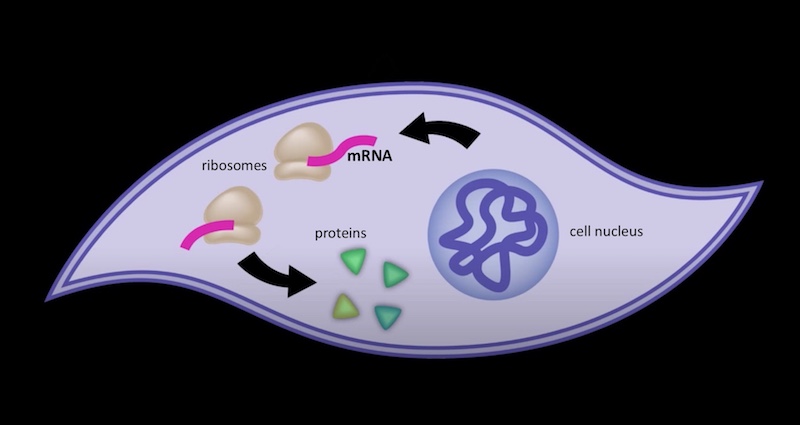
Messenger RNA: A game-changing advance in regenerative medicine
A new way to reprogram ordinary human cells into stem cells, using RNAs, appears safer and much more efficient than current methods — and can much more readily transform stem cells into specialized cells to treat disease. We now know that scientists can take one of your cells, perhaps a skin cell, and transform it into ... Read More about Messenger RNA: A game-changing advance in regenerative medicine
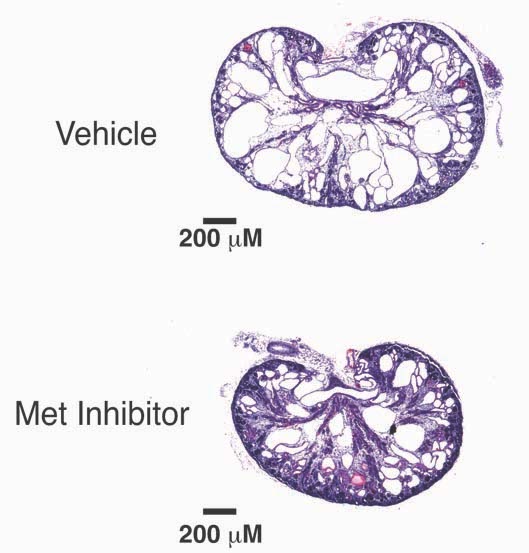
A new target in polycystic kidney disease
In polycystic kidney disease, fluid-filled cysts gradually take over the kidneys, forcing patients to go on chronic dialysis — or wait for a kidney transplant. Hopes for a cure were raised when animal models showed promise in drugs inhibiting mTOR, a protein that coordinates cell growth and is over-active in PKD. But recent clinical trials ... Read More about A new target in polycystic kidney disease
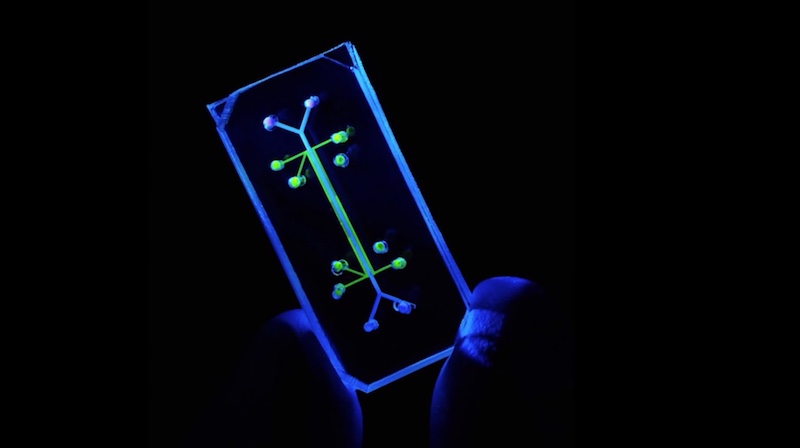
Drug-testing alternative: a lung on a chip
Combining microfabrication techniques from the computer industry with modern tissue engineering, a team at Children’s Hospital Boston and Harvard’s Wyss Institute for Biologically Inspired Engineering has created a device that mimics the function of a human lung. This living “lung-on-a-chip,” which incorporates human lung and blood-vessel cells, reproduces the all-important interface between the lung’s tiny ... Read More about Drug-testing alternative: a lung on a chip