‘Comfortable in my own skin’: Grace thrives after weight loss surgery
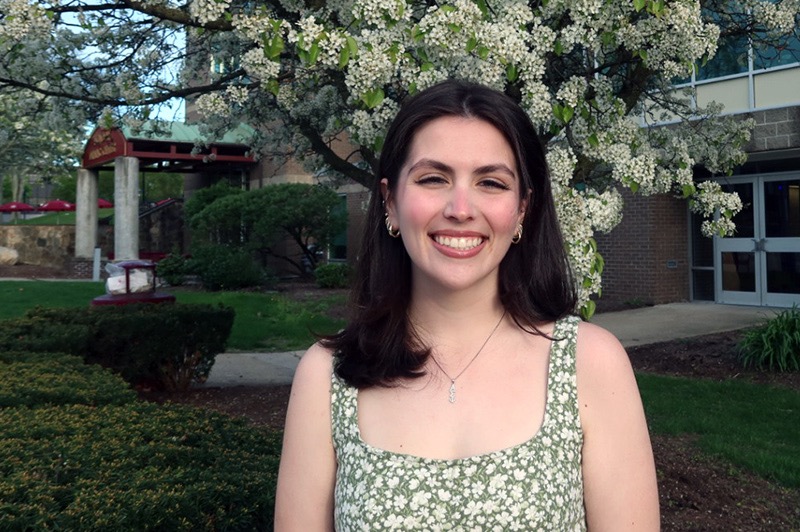
Grace Rocha has a favorite fun fact: She had weight loss surgery at 16. And when it comes to sharing her story, she’s an open book. “Why wouldn’t you want to tell people about that?” she asks.
Grace credits her parents for her candor: Both have had gastric bypass surgery and have always been open about their experiences.
“It wasn’t this big scary thing,” she says. “I grew up seeing it.”
Doing everything right
Since childhood, Grace has lived with obesity, as well as polyendocrine metabolic ovary syndrome (PMOS), asthma, high blood pressure (hypertension), and back and joint pain. She met with specialists, changed her nutrition and exercise, and tracked what she ate. She tried a prescribed weight management medication but couldn’t tolerate it. Nothing was helping her get her health on track.
“I was doing everything I was supposed to,” she says. “It sucked.”
The social pressure of being a teenager made things even harder: While her friends swapped outfits from the teen department, Grace could only find clothes that fit in the women’s section — “kind of what my grandma was wearing,” she says. As time went on, she began to feel defeated. Something had to change.
A breath of fresh air

Despite how hard Grace worked to manage her health, she kept hearing the same message from doctors: it wasn’t enough. But at age 15, when she was referred to the Adolescent Weight Loss (Bariatric) Surgery Program at Boston Children’s Hospital, that pattern finally broke.
“It was a breath of fresh air,” Grace says. “Everybody at Boston Children’s was so caring in the language that they used. They acknowledge that you’re trying and don’t make you feel bad.”
Grace spent eight months in the preoperative program, where a team of specialists worked with her on nutrition, exercise, and the health conditions she’d been managing for years. Her team also prescribed a GLP-1 receptor agonist, a type of medication that helps regulate appetite and support weight management. This time, she was able to tolerate it.
“I was on a GLP-1 before it was ‘cool,’” she laughs.
When Grace and her care team decided to move forward with surgery, Dr. Brian Carmine performed a minimally invasive Roux-en-Y gastric bypass: a procedure that reduces how much food the stomach can hold and how the body absorbs it. After a short stay in the hospital, Grace was home.
Life after surgery
In the months after her gastric bypass, Grace lost a significant amount of weight. And like most people who have had the procedure, Grace eventually gained some of it back, right around the time she was settling into college.
“The ‘freshman 15’ is a real thing,” she explains. But her care team was with her along the way, continuing to monitor her progress and adjust her plan. That included starting a different GLP-1 medication to support her long-term health.
Nearly three years after surgery, Grace’s health conditions have all but resolved. Her blood pressure and labs are normal, her back pain is gone, and she has not had an asthma flare in over a year.
The effects of weight loss on her health matter more to her than a specific number on the scale. “As long as I’m healthy and I feel good and I’m comfortable in my own skin, that’s really all I care about,” she explains.
Grace comes back to Boston Children’s every six months for checkups. Whenever she does, she looks for two people who have been central to her care: Annemarie Fayemi, a nurse practitioner and coordinator in the Adolescent Weight Loss (Bariatric) Surgery program, and Leslie Mattimore, a clinical nutrition specialist.
“Those are my girls. I love them to bits,” she says. “I get hugs when I see them.”
Comfortable in her own skin
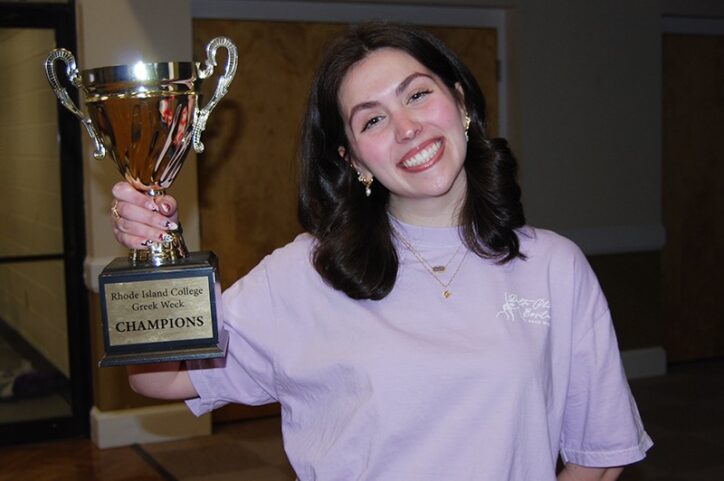
Today, Grace is thriving. She’s a rising junior at Rhode Island College studying psychology, a resident assistant. She’s also the vice president of philanthropy for her sorority, supporting the National Association of Anorexia Nervosa and Associated Disorders and the Cystic Fibrosis Foundation. On the weekends, she’s a barista; in summer, she’s a camp counselor. She’s got a social calendar loaded with concerts, and she’s finally excited for beach season.
“I’m livin’ large,” she laughs.
And Grace has a message for other teenagers who are struggling to achieve a healthy weight. “Everyone’s body is different,” she says. “Your efforts don’t go unnoticed, and they really do matter.”
Learn more about our Adolescent Weight Loss (Bariatric) Surgery Program
Related Posts :
-

Muriel's story: Choosing life after loss
I was with my mom when she had a heart attack. I was only 3 years old, but I remember her ...
-
Asthma, softball, and COVID-19: Gwen’s story
Gwendolyn Castro has a competitive streak. Whether playing softball or debating topics like universal health care, the 15-year-old wants to ...
-
New genetic insights could change how we treat, and talk about, polycystic ovary syndrome
Polycystic ovary syndrome (PCOS) has long been viewed as a hormonal disorder affecting women of reproductive age. However, ongoing research ...
-
Solving the mystery of Sophie’s high blood pressure
Sophie Lawrence loves “Baby Shark.” Like many other toddlers, she listens to the popular children’s song on repeat, bopping ...