Testosterone’s role in gut motility could open the door to targeting treatments for IBS and more
Irritable bowel syndrome (IBS) and other motility disorders can be challenging to treat, with current therapies focused mainly on easing symptoms. Now, recent research led by Meenakshi Rao, MD, PhD, a gastroenterologist in Boston Children’s Division of Gastroenterology, Hepatology and Nutrition, has identified a remarkable way that gut microbes and sex hormones regulate gut motility. The findings could point to new targets for treating motility disorders, while also providing more insight about why antibiotics disrupt gut function.
In a new study using mouse models and human metagenomics, Rao and her collaborators show that microbes play a newly appreciated role in the gut, pumping out enzymes that produce an unlikely intermediary — the sex hormone testosterone. The research also shows how treatment with antibiotics temporarily disrupts interrupts this process.
“This exciting finding suggests perhaps we can target the gut bacteria as a treatment for digestive disorders without causing systemic side effects,” says Rao.
The link: testosterone and microbes
Earlier work by Rao’s team investigated why men were less likely to have IBS. In an intriguing result, they showed that people with IBS have lower bioavailable levels of the androgen sex hormone testosterone. In that same study, the team observed that lowering testosterone in mice slowed gut motility. Additionally, the testosterone-detecting androgen receptors turned out to reside in the nerves of the gut.
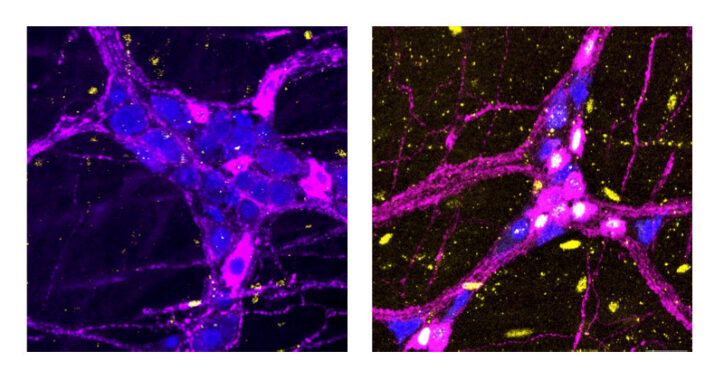
Building upon this work for their latest study, the researchers determined that specific neurons in the the colon important for relaxing the colon muscles require testosterone to function. Blocking testosterone receptor signaling in these neurons slowed gut motility.
When the body finishes using sex hormones or other steroids, liver enzymes chemically inactivate the circulating hormones for excretion. However, microbes release an enzyme, β-glucuronidase, or GUS, that can revert hormones like testosterone back to their usable forms. Connecting the dots, Rao’s team figured out that the microbes in the gut make GUS, which converts hormone waste into active testosterone that signals to the nerves in the colon.
This discovery suggests that it’s possible microbial enzymes like GUS or targeted hormones could potentially treat certain kinds of gut motility disorders.
Another surprising finding: antibiotics disrupt testosterone
Researchers had known that antibiotics slow movement through the colon, but not why. Rao and her colleagues determined that when antibiotic treatment kills most of the microbes in the gut, it means they can’t supply the enzyme GUS to make gut testosterone. Without the signal to relax the colon, gut motility slows.
“Now that we know bacteria affect basic aspects of health, including the gut’s nervous system and hormones, we need to be judicious about the routine use of antibiotics — only using them when absolutely required,” says Rao.
The researchers have some early evidence that antibiotics disrupt estrogen, as well. The researchers suspect that women have a separate gut motility mechanism that use female hormones, which they plan to follow up on next.
Learn more about Boston Children’s Division of Gastroenterology, Hepatology and Nutrition.
Related Posts :
-

A new approach to C. diff? Targeting the inflammation, not the bacteria
Clostridium difficile (C. diff) intestinal infections can cause severe, debilitating diarrhea in patients who are hospitalized or on immunosuppressive therapies. ...
-
Open-label placebo offers new treatment for disorders of gut-brain interaction in children
Pain-predominant disorders of gut-brain interaction (DGBIs) in children — such as functional abdominal pain (FAP) and irritable bowel syndrome (IBS) — can ...
-
‘Never stop looking for answers’: Andrea’s journey with dysmotility
As a volunteer at Caritas Internationalis, Andrea Hernandez loves helping feed the hungry. Yet, until recently, Andrea herself was unable ...
-
Partnering diet and intestinal microbes to protect against GI disease
Despite being an everyday necessity, nutrition is something of a black box. We know that many plant-based foods are good ...