My own secret superpower: Jocelyn’s journey with C3 glomerulopathy
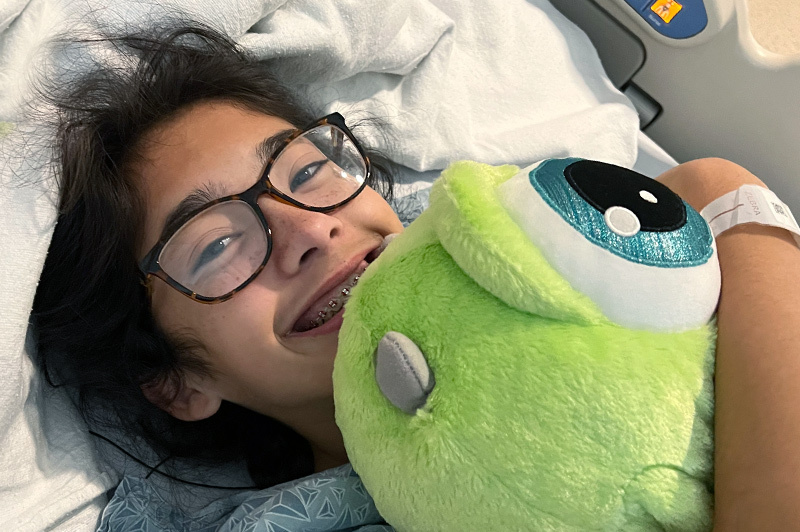
When Jocelyn Bush was 13, she started noticing minor swelling around her eyes. Not thinking much of it, she went about her life as usual.
But by the start of her freshman year of high school, the swelling had spread all over her body. As a multisport athlete in soccer, track, and volleyball, not being able to run at her usual capacity got her attention. She went to see her athletic trainer, assuming her ankle might be the culprit. “She told me, ‘Your ankle is fine, go see a doctor!’”
A visit with her pediatrician led to a referral to Dr. Avram Traum in the Division of Nephrology at Boston Children’s Hospital. After laboratory testing and a kidney biopsy in December 2021, Jocelyn was diagnosed with C3 glomerulopathy. With C3 glomerulopathy, part of the immune system called the complement system works harder than normal, which causes kidney damage and loss of protein in the urine. Untreated, the condition leads to poor kidney function and the need for dialysis. It also commonly causes swelling and water weight.
A new regimen of medication and care from Dr. Traum and his colleagues kept her condition stable. Then, she received an offer she ultimately couldn’t refuse.
Hope in the form of a clinical trial
During Jocelyn’s sophomore year, her care team suggested she join a research study called VALIANT. VALIANT was investigating a new drug named pegcetacoplan that blocks the complement system from damaging the kidneys. Dr. Traum worked with Dr. Ankana Daga, co-director of the GlomCare Clinic, to introduce the study to Jocelyn. While nervous at first about the idea of participating in research, she decided to join the study due to the opportunity to prevent further damage to her kidneys.
After a few months on the study drug, Jocelyn began to see improvements. She lost all the water weight, regained her muscle, and her test results were excellent. Most notably, her C3 complement levels returned to normal. In other words, the kidney damage had stopped.
‘They make me feel special’
Jocelyn says her visits to Boston Children’s are fun because the staff and her team of doctors and nurses make her feel special and appreciated. “I’m picky and particular about my people, and I get excited about going. I love my doctors; we keep in touch! I walk around there and feel like a celebrity.” She has check-ins with her care team every three months.
Now a sophomore at the University of Connecticut, Jocelyn is still participating in the clinical trial and administers the medication, which has since been FDA approved, herself twice a week. She says it’s easy to work into her schedule.
‘It’s not something to be ashamed of’
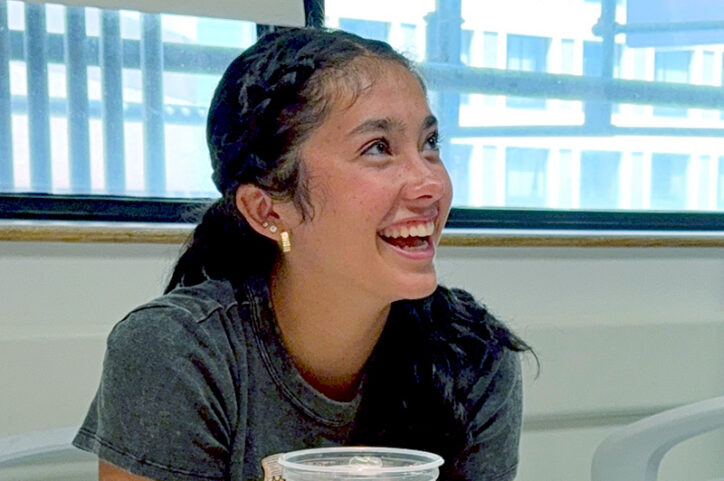
Jocelyn is now thriving. She’s so grateful for the experience that she and Dr. Daga both got tattoos relating to C3 glomerulopathy and the trial on Jocelyn’s 18th birthday!
Jocelyn has inspiring advice for other kids and families going through a similar journey: “Try to own it; it’s not something to be ashamed of. Rather than being scared or upset, be proud that you’re able to do all these things and still be you. I call it my own secret superpower. You are strong for getting through this — there are down times but then you get back up.”
Learn more about Boston Children’s GlomCare Clinic.
Related Posts :
-

A master regulator of kidney health?
End-stage kidney disease often begins with injury to podocytes. These highly specialized cells are a critical part of the glomeruli, ...
-
A new kidney for Kira
Kira Walker knows how to turn a Zoom call into a party. Soon after her mom starts talking, the 8-year-old ...
-
Precision medicine for end-stage kidney failure? 40 percent of kids needing transplants have identifiable mutations
In adults, end-stage renal disease, or ESRD, is most commonly a complication of diabetes or hypertension. In children, teens and ...
-
How ‘good’ bacteria from fecal transplants reduce peanut allergy
Some 33 million Americans have severe food allergies. Now, researchers at Boston Children’s Hospital may have found a promising solution. ...