The Pediatric Transplant Center celebrates 20 years of collaboration and innovation
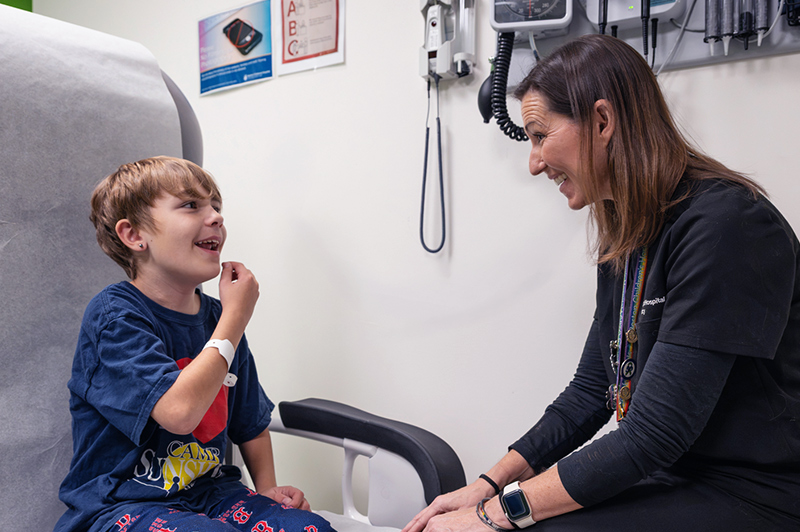
When Dr. Heung Bae Kim learned that Boston Children’s wanted to organize a hospital-wide transplant center, he had a full plate. He was busy revamping the Liver Transplant Program and starting the Intestinal and Multivisceral Transplant Program, so he initially didn’t give the idea of a center a lot of thought, let alone consider being its director.
But hospital leaders had other plans. In 2006, they thought he’d be the best candidate to lead the new Pediatric Transplant Center (PTC) that would unite Boston Children’s transplant programs — which were once likened to “mom-and-pop shops.”
Now, as the PTC celebrates its 20th anniversary, Dr. Kim (who is still the center’s director) and his colleagues across the PTC’s five programs are thankful for what pooling resources and brainpower have meant for their patients.
“Having the administrative burden off your back when you’re running a busy clinical program is huge. You can focus on patient care,” he says. “You have time to think about how you can care, in the most optimal way, for patients who don’t have good options, and that leads to innovation.” Here, Dr. Kim and his colleagues look back on those first 20 years.
Tearing down silos with collaboration
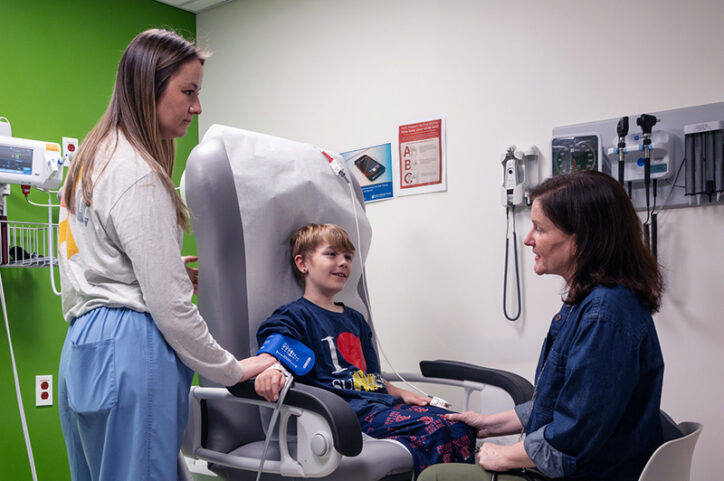
Jennifer Gilarde, PTC clinical pharmacy specialist: We all work great as individual teams, but before the PTC we practiced in silos. Sometimes I would see the way the Heart Transplant team did something, but the Kidney Transplant team might not have known that. Now, we’re using each other’s ideas and collaborating all the time.
Dr. Tanvi Sharma, PTC director of infectious diseases: If we talk about an infectious disease consideration for the Kidney Transplant Program, it’s being shared with the Heart Transplant, Lung Transplant, and Liver Transplant programs through our PTC meetings. We are sharing data, vaccination rates, and things that we might learn from patients who have a complicated infection. We are putting all of that together to say, “How do we make this better for the next patient?”
From “mom-and-pop shops” to a strong team
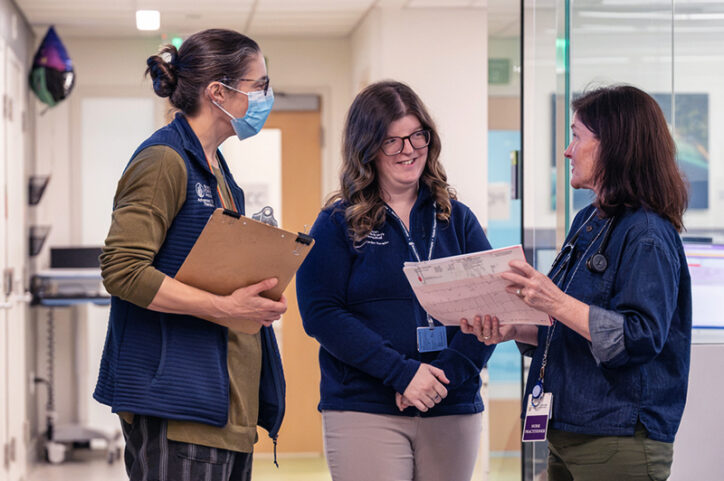
Heather Bastardi, lead nurse practitioner for the Advanced Cardiac Therapies (ACT) team: When regulatory requirements come out, the PTC team makes it as simple and seamless as possible. During compliance and quality visits, the Centers for Medicare & Medicaid Services (CMS) or the Organ Procurement and Transplantation Network (OPTN) are amazed by how organized and ahead we are. Before the PTC, those visits would be tough. After, one CMS surveyor told us, “Wow. Look at you guys. Look at what you’re doing!”
In a position to redefine transplant care
Dr. Kim: Nationally, transplantation has changed a lot in the last 20 years, including how organs get allocated from the OPTN waiting list, how technology has preserved organs during transport, and how transplants are performed. The Pediatric Transplant Center was a critical part of those kinds of changes. The programs were willing to take on more difficult cases and push the envelope in their respective fields because they have support.
Laura O’Melia, PTC director and advanced practice registered nurse: We have been able to support and encourage our staff to be on national and international committees at the forefront of innovation and change.
Dr. Sharma: An infectious diseases program is not often considered part of a transplant center. But we built it in from the start, because infection is one of the biggest risks for transplant recipients, whose immune systems are suppressed. We see patients for pre-transplant infectious diseases evaluations. We optimize their vaccines. We look at what they’ve been exposed to or any infectious risk mitigation we might need to address upfront.
Heather Bastardi: A great collaborative project was ACT’s BRAVE (Building Readiness and Autonomy for Vocation and Education) Clinic. It developed from one of our PTC meetings where we talked about the transition of care. We’re now in the third year of giving young heart transplant patients the skills and confidence to transition into adult care. I just raised my hand and we got started. PTC has supported that, and BRAVE has expanded to the Kidney Transplant Program, and we are starting one now for the Liver Transplant Program.
Being there for children and their families
Dr. Sharma: When I started my career, transplants were for the most critically ill patients who had no other options. Now, we think about transplant as one of several treatment options for various conditions.
Jennifer Gilarde: Something that’s special about the care that children receive here is it’s multidisciplinary in every aspect: from the dietitian to the social worker; from the pharmacist to the bedside nurse. Everyone, including the family, contributes to the best outcome and decision-making for a patient.
Laura O’Melia: The work that we do is unbelievable. I love honoring families who, at the worst time of their lives, when their child has died, consider helping someone else and giving that gift of life. And that is why I do this work: to honor those patients and families.
Learn more about the Pediatric Transplant Center.
Related Posts :
-

Accepting kindness and happiness: Ways Spencer's family navigated his heart transplant
Spencer Brock and his family recently vacationed in Ireland. They caught up with aunts, uncles, and cousins, and Spencer enjoyed ...
-
Catching up with Lucas eight years after his multivisceral transplant
Lucas and his mom, Heather, aren’t shy talking about his health journey and his multivisceral transplant. “If other families ...
-
First-of-its-kind clinical trial aims to improve outcomes in pediatric transplant patients
For the last 20 years, pediatric kidney transplant patients have been treated with the same immunosuppressive medication combinations and have been ...
-
An act of kindness — Raul and Larry's journey to a non-directed transplant donation
Acts of kindness can come in many forms, like volunteering or donating to a charity of choice. At 52, Larry loves ...