Leaning into Sydney: A team approach to renovascular hypertension

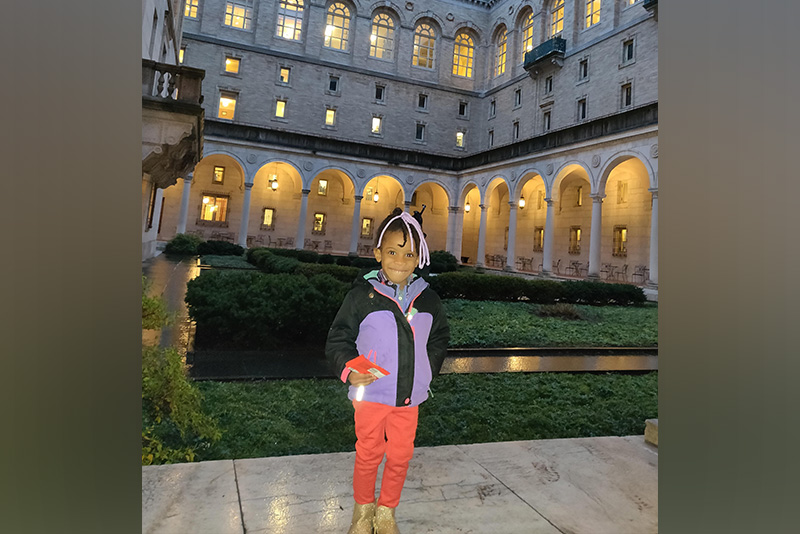
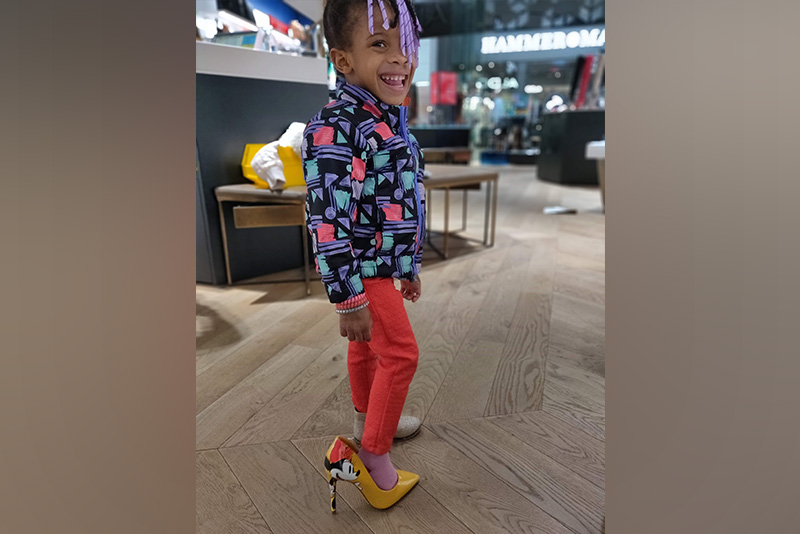
In most ways, Sydney Murphy is a typical 3-year-old girl: She watches the movie The Princess and the Frog on repeat, names most of her dolls after the main character, Tiana, and loves the color pink. But she’s also wise beyond her years. “She knows how to use a blood pressure cuff and is really involved in her own care,” says her mother, Kim. She’s already had plenty of experience. Diagnosed with sickle cell disease at birth, the toddler is no stranger to doctors.
But it was an unrelated problem that brought Sydney and her parents to Boston Children’s Hospital. When she was about 18 months old, clinicians at her local hospital in St. Louis, Missouri, noticed that her blood pressure was consistently high. A slew of tests didn’t initially shed light on the problem. “Things just didn’t line up,” says Kim. “Nothing made sense.”
Collaborating for renovascular hypertension
Testing was somewhat delayed because Sydney’s kidney function was so poor that her organs couldn’t handle the dye required to visualize them during angiography. Ultimately, Sydney was diagnosed with renovascular hypertension, or high blood pressure that results from decreased blood flow to the kidneys.
What happened next was a collaboration between Boston Children’s Midaortic Syndrome and Renovascular Hypertension Center and St. Louis Children’s Hospital that Kim calls “just divine.” As it turned out, Sydney’s nephrologist in St. Louis had trained at Boston Children’s, as had her radiologist and hematologist. “They were naturally inclined to work with the doctors in Boston because they already had,” Kim explains. “It was amazing how everything just fell into place.”
An emotional journey
Back in Boston, the center’s co-director Dr. Deborah Stein, surgeon Dr. Khashayar Vakili, and the rest of the team continued to correspond with Sydney’s clinicians in St. Louis, keeping each other updated as they planned her treatment. When she was ready, she and her parents traveled north for surgery — a bilateral autotransplant that relocated her kidneys from the back of her pelvis to the front to preserve their function and improve blood flow.
With the procedure a success, Sydney won’t have to return to Boston for a year. But her family remains grateful for the ongoing relationship that her clinicians have forged with each other. And her own resilience has inspired others. “It’s a very emotional journey, but we’ve learned to lean into Sydney’s strength and draw from that,” says Kim. “Even when things get hard, she just really wants to be a kid.”
Learn about the Midaortic Syndrome and Renovascular Hypertension Center.
Related Posts :
-

New approach to gene therapy helps smooth road for people with sickle cell disease
Gene therapy has been transformative for individuals with sickle cell disease, a genetic condition caused by a mutation in the ...
-
A promising step toward safer, less toxic stem cell transplants
Stem cell transplantation (also called bone marrow transplantation) and gene therapy are among the most powerful treatment approaches for blood ...
-
‘Comfortable in my own skin’: Grace thrives after weight loss surgery
Grace Rocha has a favorite fun fact: She had weight loss surgery at 16. And when it comes to sharing her ...
-
Could a pill treat sickle cell disease?
The new gene therapies for sickle cell disease — including the gene-editing treatment Casgevy, based on research at Boston Children’s ...