The ‘Trach Chapter’: Isabella’s journey with bronchopulmonary dysplasia
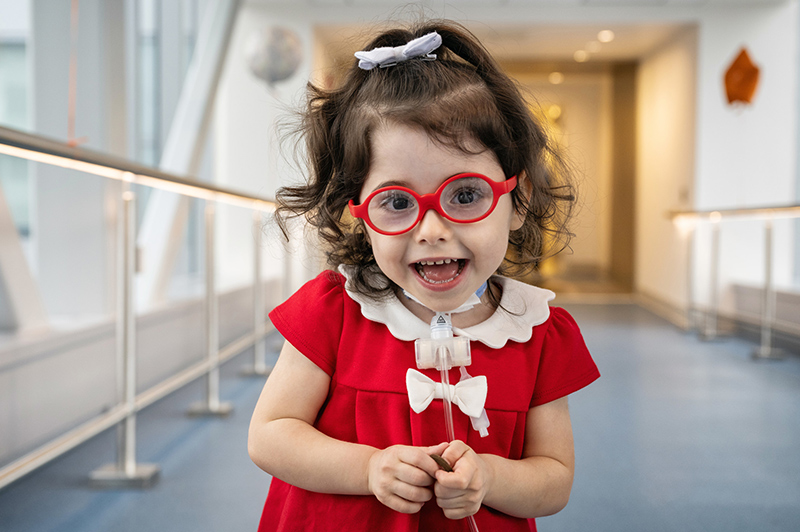
Isabella’s life has been anything but ordinary.
Born at just 27 weeks gestation and weighing only 1 pound, 4 ounces, Isabella has faced uncertainty from the very start. But as her parents, Hrach and Kimberly, will tell you, she’s conquered every challenge life has thrown her way. And in spite of her bronchopulmonary dysplasia (BPD) diagnosis, she’s growing stronger every day, and she’s taking on life with a great, big smile.
“She’s a miracle baby,” Kimberly says.
Small baby, big impact: Isabella is born at 27 weeks
During Kimberly’s pregnancy, doctors discovered that a reverse placental blood flow was restricting baby Isabella’s growth. Kimberly was immediately admitted to a local Boston hospital, where further complications emerged. Shortly thereafter, just one day shy of her third trimester, Isabella was delivered by emergency C-section.
“I remember her being so small,” says Kimberly. “[But] I knew she was going to be okay. She just needed time to grow.”
Isabella was whisked away to the hospital’s neonatal intensive care unit (NICU), where she was placed on a ventilator to support her breathing. Over time, she developed BPD, a long-term respiratory disease common in premature babies who need prolonged respiratory support.
Comfort and specialized care at Boston Children’s Hospital
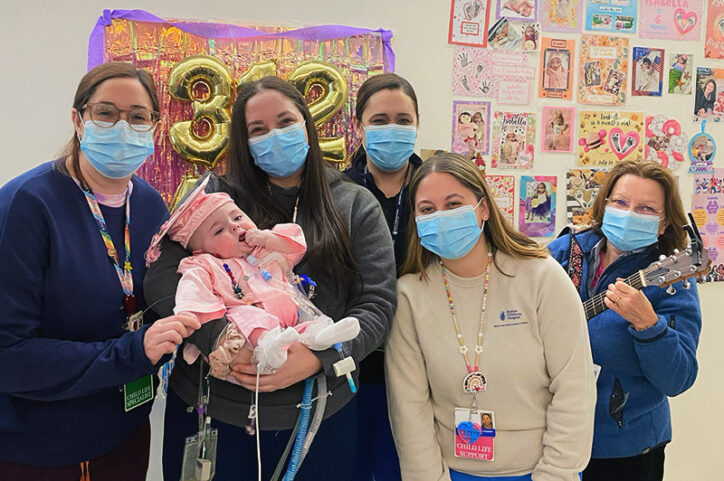
At 3 months old, Isabella was transferred to the Boston Children’s NICU for more specialized care. There, pediatric pulmonologist and neonatoloigist Dr. Jonathan Levin, neonatologist Dr. Philip Levy, cardiologist Dr. Kathy Jenkins, and cardiac surgeon Dr. Christopher Baird, worked together to address Isabella’s complex medical needs. In addition to severe BPD, Isabella had also been diagnosed with pulmonary vein stenosis (PVS), a rare narrowing of the veins that carry blood from the lungs to the heart, and pulmonary hypertension, a dangerous elevation of blood pressure in her lung vessels.
Using an approach unique to Boston Children’s — pairing carefully selected chemotherapy medicines to slow the growth behind PVS — the team stabilized Isabella for open-heart surgery to repair the veins and close an atrial septal defect. In the weeks before surgery, she was kept sedated and comfortable to preserve her strength and prevent dangerous drops in her oxygen and heart rate.
As Isabella recovered from surgery, her care team and family turned their attention to her breathing. Her parents had to make a difficult decision: whether or not to opt for a tracheostomy — where surgeons would create an opening in her windpipe to help her breathe without spending as much time on the ventilator. A trach was a major procedure, but it would give Isabella stable, long-term respiratory support. And because she wouldn’t always be hooked up to her ventilator, she’d be free to snuggle, play, and interact with the world around her.
Kimberly and Hrach decided a trach was right for Isabella, and the results spoke for themselves. “As soon as she got the trach, she just started smiling,” says Kimberly. “She started becoming a baby.”
Isabella gets to be a baby
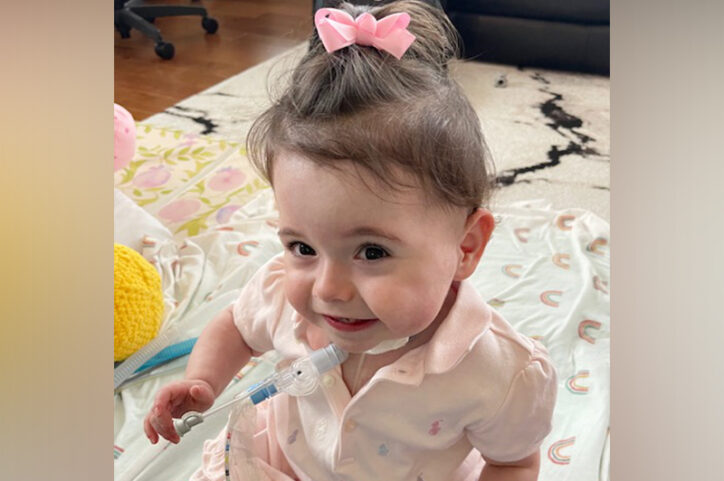
With her trach in place, Isabella thrived. She started moving and exploring. She was playing. And for the first time in her life, her parents could hold her in their arms without worrying.
Over the next few months, Isabella’s team worked around the clock to optimize her care. She received a gastrojejunostomy tube (also called a “G-tube”), which helped her get the nutrition she needed. She needed less and less oxygen. And she started hitting developmental milestones that once felt out of reach.
Caring for Isabella at home
After 312 days in the hospital, Isabella was ready to go home. And after learning how to manage her care at home, her parents were, too. As Kimberly explains, the team at Boston Children’s made sure they had extensive training so they felt prepared before leaving the hospital. “We did classes on the ventilator and in a simulation lab,” Kimberly says. “And the people who taught us were great.”
At first, caring for Isabella at home was hard. “The first month, we had no nursing at home, and
we had to figure out a routine that worked for us while trying to do all the right things to keep Isabella home,” Kimberly says. “That was the hardest part — but once we got more comfortable, we just took it day by day.”
“But we never felt alone,” she adds. “Boston Children’s was always just a call away and quick to respond to any concern we had.”
Today, Kimberly and Hrach manage Isabella’s care with help from nurses, music therapists, and
other developmental experts from Boston Children’s. “Caring for a ‘trach baby’ looks scary at
first, but you get in a rhythm and it does get easier over time,” Kimberly says. “Building a strong home care team and having all those extra hands helps.”
Life beyond the ‘Trach Chapter’
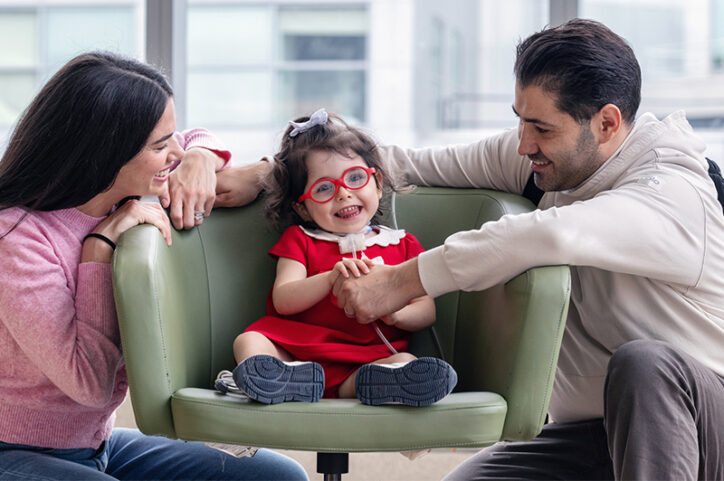
Today, Isabella is a bright, inquisitive, joyful toddler. She loves music, books, dancing, and the Trolls movie. And medically, she’s doing better than ever — she needs less oxygen than ever before, is spending more time off her ventilator, and no longer needs medication for her PVS. She continues regular follow-up with her heart team, as well as her lung team through the PIVOT program.
Isabella’s story is still being written. But one thing is for sure: Her resilience will carry her through anything the future brings. Her parents lovingly call this time in their lives “The Trach Chapter,” knowing that one day, this will just be a small part of Isabella’s extraordinary life.
“It’s temporary. It’s not going to be forever,” says Kimberly. “So we have to put all our efforts in right now and just get it done. Whatever is best for Isabella is what we’re doing.”
Learn more about our Bronchopulmonary Dysplasia Program.
Related Posts :
-

Bringing Xavien home: One family’s journey with bronchopulmonary dysplasia
Xavien Velazquez is getting ready to celebrate his first birthday. It’s a milestone for every child but especially meaningful ...
-
New hospital discharge practices could improve health of infants with bronchopulmonary dysplasia
The chronic lung disease bronchopulmonary dysplasia (BPD) affects a significant number of infants who were born early and ...
-
Optimizing care for bronchopulmonary dysplasia, infant by infant
Preterm newborns with bronchopulmonary dysplasia (BPD) can require ongoing mechanical ventilation to support their lungs. But babies with BPD aren't ...
-
An unbreakable bond: Brothers turn medical complexities into superpowers
“Look! Is that one JetBlue? I think that one’s Delta!” Running through the grass, climbing on the jungle gym, ...