‘They had a plan’: How Sophia’s parents found care for ROHHAD syndrome
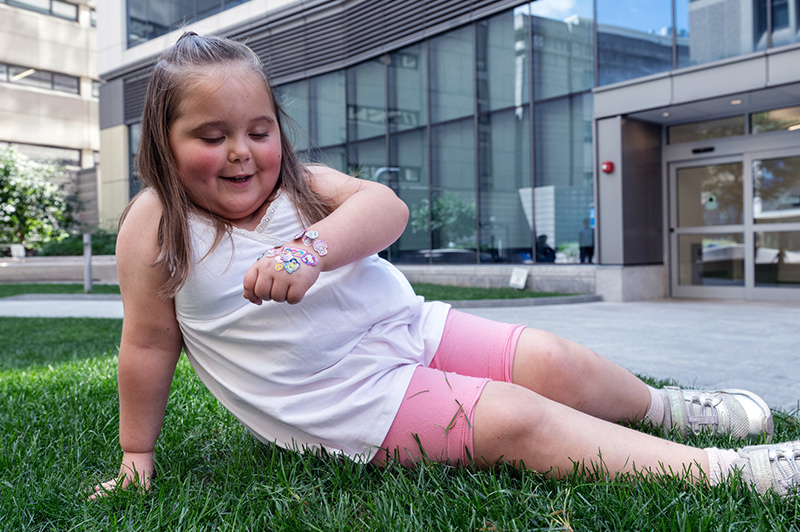
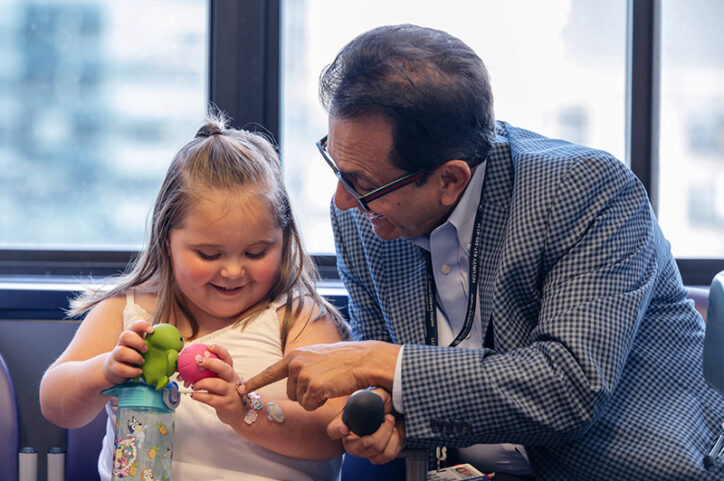
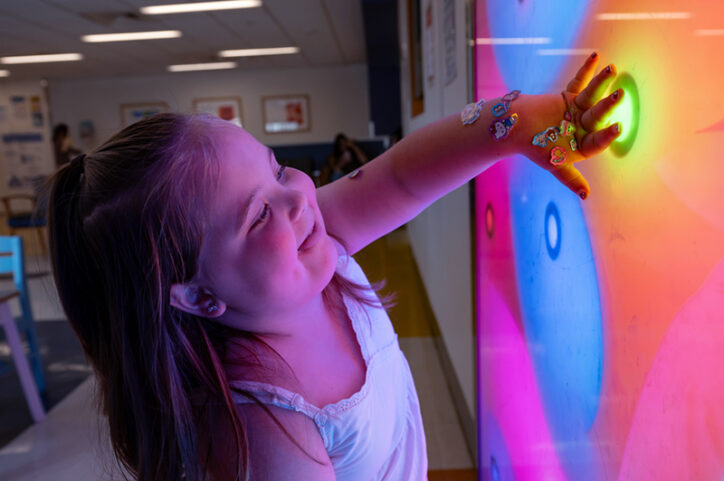
Five-year-old Sophia is a big fan of stickers: At a recent visit to Boston Children’s Hospital, she eagerly covered her hands, bag, and water bottle with shiny stickers of everything from Hello Kitty to a whale. From her shy, silly demeanor and big smile, you’d never know that she’s been coping with a rare neuroimmunological condition for almost half her life.
Three years ago, Sophia began to experience sudden and rapid weight gain, which her parents, Kelly and Joseph, initially thought might stem from the stress and excitement of becoming a big sister to her twin siblings. A visit with their pediatrician in Western New York led to referrals to an endocrinologist and a nutritionist.
“They said everything seemed fine,” remembers Kelly.
But within the year, routine bloodwork showed that Sophia’s sodium levels were high — a sign of diabetes insipidus. Unlike with other types of diabetes, children with this rare condition have normal sugar levels but release too much water in their urine, which can lead to severe dehydration and even seizures.
A silver lining — and a diagnosis
In fact, Sophia did experience a seizure, which resulted in a weeklong hospital stay. Further testing showed that her oxygen levels were dipping, and her doctors recommended a sleep study to monitor her breathing. The experience, while frightening, ultimately had a silver lining, says Kelly: It helped confirm what the family’s research had already suggested.
“We had started looking up Sophia’s symptoms and they were all symptoms of ROHHAD syndrome,” she says.
Rapid-onset obesity with hypothalamic dysfunction, hypoventilation, and autonomic dysregulation (ROHHAD) syndrome is an extremely rare and life-threatening condition marked by rapid and dramatic weight gain, along with other symptoms — including diabetes insipidus, strabismus, and difficulty breathing.
Working off the assumption that Sophia might have ROHHAD syndrome, her parents had also already researched where to go for treatment. When they learned that Dr. Leslie Benson, co-director of Boston Children’s Neuroimmunology Center, is a leading expert in ROHHAD syndrome, they knew it was time to travel for Sophia’s care.
Ongoing treatment for ROHHAD
Although coping with Sophia’s diagnosis was overwhelming, her parents found reassurance and a confirmed diagnosis at Boston Children’s.
“We love our doctors back home, but they aren’t as well-versed in ROHHAD syndrome,” says Joseph. “It was such a relief to arrive in Boston and be told that not only had they treated kids with ROHHAD before but that they also had a plan.”
That plan included a full-body MRI scan, more-extensive sleep studies, and a lumbar puncture. The results of those tests led to ongoing treatment with intravenous immunoglobulin (IVIG) and the monoclonal antibody medication rituximab, as well as monthly steroid medication. So far, she’s responded well to this approach.
‘A happy kid’
In addition to regular appointments with Dr. Benson and clinical fellow Dr. Celia Greenlaw, Sophia has returned to Boston Children’s to have a benign tumor removed from her abdomen — a common occurrence in children with ROHHAD syndrome — by Dr. Brent Weil. Sophia’s team also includes pulmonologist Dr. Umakanth Katwa.Virtual visits and coordination between her Boston Children’s and New York doctors help the family stay close to home as much as possible.
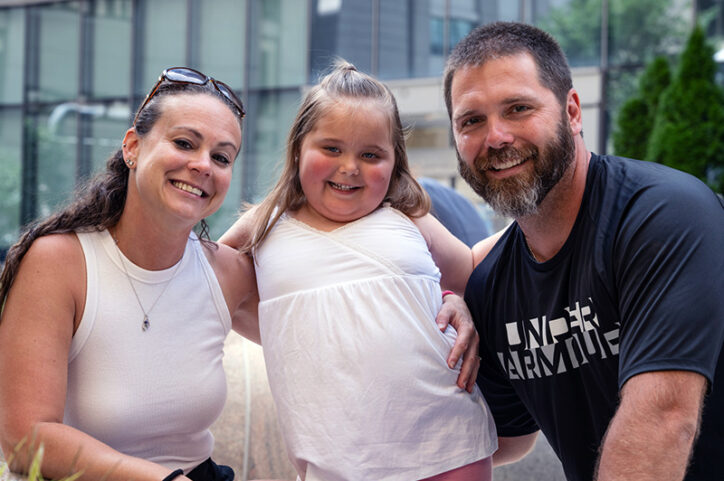
“Our families have been very supportive in helping us take care of all three kids, and it hasn’t been too difficult to take time off work,” says Joseph. Still, the stress of a chronic condition can be anxiety-provoking. “We have to be ready at all times in case Sophia gets a fever or another urgent problem,” he explains.
Today, Sophia’s health has stabilized and she’s doing well. She loves being creative, whether that means painting or adding to her collection of, yes, sticker books. She’s a big fan of both Bluey and SpongeBob but is also looking forward to starting soccer soon.
“She’s a happy kid,” says Kelly.
Learn more about our Neuroimmunology Center.
Related Posts :
-

A world of difference: Why Noah traveled from Florida for multiple sclerosis care
When Noah started having headaches four years ago, his mom, Jonda, initially wondered if it was a classic kid ruse. “...
-
No limitations: How Flora found answers for MOG antibody disease
Flora Ringler’s fifth birthday didn’t turn out as she had hoped. She and her family were vacationing in ...
-
“Princess June” reigns supreme over Rasmussen syndrome
What do you call a “girly” 5-year-old who adores dolls and frilly nightgowns? If you’re one of June Pelletier’...
-
After a severe case of myelitis, ‘rockstar’ Maxwell is on the move
When Maxwell Lazarz’s mother, Jennifer, tells him he’s a rockstar, he just laughs and asks her what that ...