‘We’re gonna start over’: Finding the right care for Remi’s aspiration

At almost 3 years old, Remi is confident, independent, and a bit headstrong.
“She wants to do everything on her own,” laughs her mom, Gabrielle. “If we even try to dress her or put on her shoes, she tells us, ‘Only myself’ — she doesn’t want any help.”
It’s a determined mindset that Gabrielle and her husband, Lenny, suspect might stem from Remi’s health journey, which took her family from New York to Boston in search of answers.
A diagnosis, but few answers
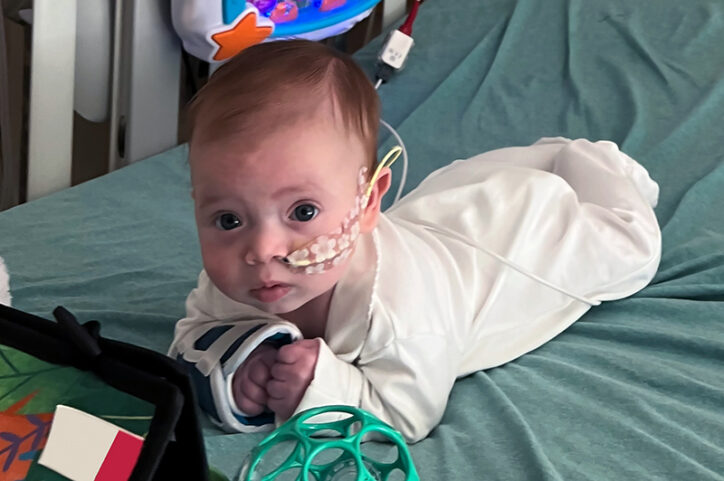
Although Remi was born prematurely, she initially seemed healthy. But when she was 11 weeks old, she spiked a fever and couldn’t tolerate a bottle, which landed her at her local children’s hospital.
There, she was diagnosed with aspiration, which happens when liquids or foods enter a child’s lungs. Aspiration can cause symptoms such as coughing when drinking, difficulty feeding, and frequent respiratory infections. Remi’s doctors told Gabrielle and Lenny that she might have a cricopharyngeal bar, a thickening of the muscle at the top of the esophagus that can make it difficult to swallow. As a result, they said, she would need to rely on a nasogastric (NG) tube for her nutrition and would likely be unable to eat by mouth.
“There wasn’t a lot of discussion about it,” remembers Gabrielle. “It seemed like we didn’t have a choice.”
Finding the best solution
But then Remi started aspirating reflux from her NG tube. “We would stay up all night, holding her and praying she would keep breathing,” says Lenny. Her doctors said the problem would likely only get worse and that inserting a G-tube into her stomach would be the next step.
“We know a G-tube is the right solution for some kids, but we weren’t ready to accept that it was the only answer for Remi,” says Gabrielle.
She and Lenny began to research other options for care, ultimately connecting with Dr. Rachel Rosen, director of Boston Children’s Aerodigestive Center. After traveling from their home on Long Island, Remi was admitted to the hospital and her parents met with Dr. Rosen almost immediately.
“She had reviewed Remi’s case and told us, ‘We’re gonna start over,’” says Lenny. “She wasn’t alarmist and was willing to push the envelope a bit to determine the best approach.”
No stone unturned
Much of that approach has involved feeding therapy and thickened meals that help Remi eat by mouth without aspirating. As a result, she’s been able to work on her swallowing skills, get the nutrients she needs, and wean off her NG tube. It’s been a slow but steady process that her parents appreciate: “We like that Dr. Rosen didn’t just throw medications at us and tried to figure things out from a more natural standpoint,” says Gabrielle. “She wouldn’t accept ‘no’ for an answer.”
Getting to the root cause of Remi’s aspiration has been more challenging. Although she doesn’t have a cricopharyngeal bar as initially believed, MRI and CT scans and genetic testing haven’t shed any light on what could be responsible.
“We’ve turned over every stone,” says Lenny. “Now we’re at peace knowing we may not have an exact answer, because we’ve ruled out anything serious and understand this could just be a fluke Remi might eventually outgrow.”
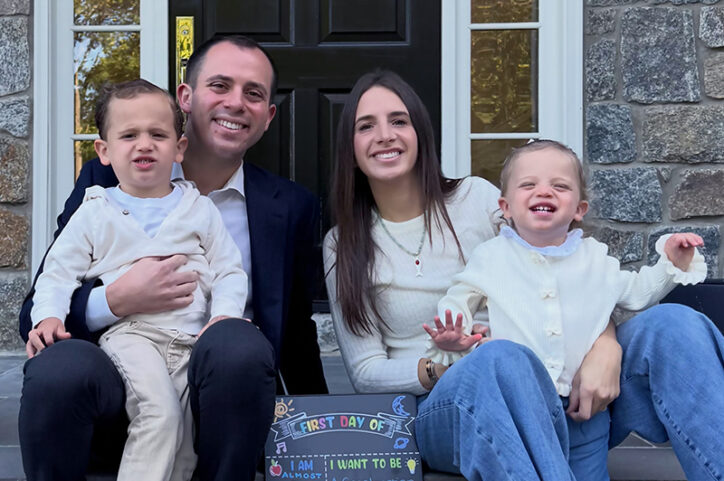
A bright future for Remi
Today, Remi still has ups and downs but is improving overall, thanks to her own tenacity and that of her care team, which also includes pulmonologist Dr. Tregony Simoneau, otolaryngologist Dr. Karen Watters, and the feeding and nurse practitioner teams.
“We like that the team doesn’t take a cookie cutter approach,” says Lenny. “They’re solutions-driven and great at troubleshooting. That’s given us the confidence and calmness for Remi to succeed.” The family has also connected with other parents of kids with similar health concerns — an ad hoc support group they value.
As for Remi herself, “She knows what she wants,” says Gabrielle, whether that means “going toe-to-toe” with her older brother, dressing in pink and purple sparkles, learning to potty train, or attending camp.
“When she was 12 weeks old, we didn’t know what her future would look like. One wrong turn medically could have changed her trajectory,” says Lenny. “But things have turned out so beautifully. She’s surpassed anything we could have imagined for her.”
Learn more about our Aerodigestive Center.
Related Posts :
-

Bringing Brazilian flair to blended diets: Josue’s g-tube journey
Josue Oliveira loves mealtime. In his large family — he’s the youngest of five kids — that means gathering around the ...
-
Mia’s team: Working together to address aspiration
Seven-month-old Mia Petrelli sits in a chair in the darkened room. As Kara Larson, a speech language pathologist in the ...
-
Taking a leap of faith: Jack says goodbye to his G-tube
As they waited for their son Jack’s appointment, Marika and Josh Reuling had no indication that July 17, 2018, would be ...
-
Evidence-based guideline reduces G-tube placement in young patients
Gastrostomy tubes (G-tubes) are commonly used to deliver nutrition directly to the stomach in patients who cannot eat by mouth, ...