How the stars aligned for CeCe’s spinal cord tumor care
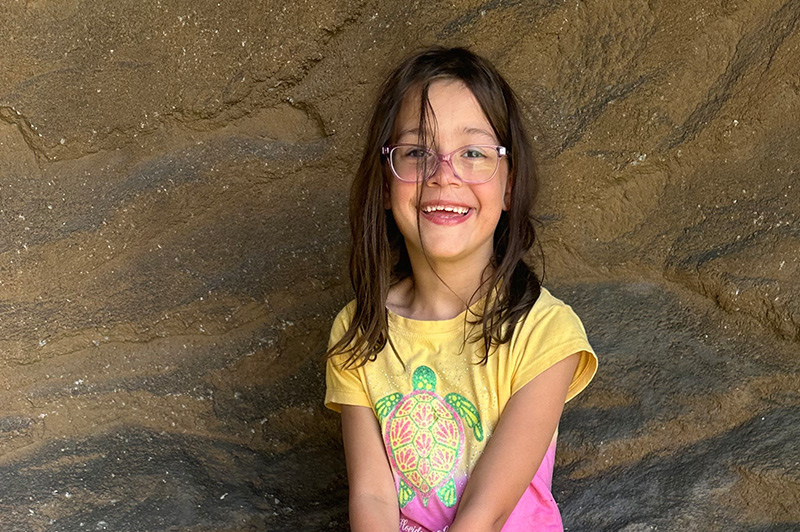
Last spring, 6-year-old CeCe was on vacation in Florida when she told her parents, Mike and Mary, that her neck hurt. After the family returned home to the Chicago area, her neck pain persisted despite Tylenol and rest — and she developed another concerning symptom.
“We noticed that she wasn’t using her right hand to hold utensils when she ate,” remembers Mike.
A trip to urgent care soon led to the emergency department at their local children’s hospital. There, neurological and MRI testing suggested that something serious might be responsible.
“The neurosurgeon took us into another room without CeCe,” says Mary. “He shared the images with us and said they showed what he thought was a high-grade type of spinal cord tumor called a glioma.”
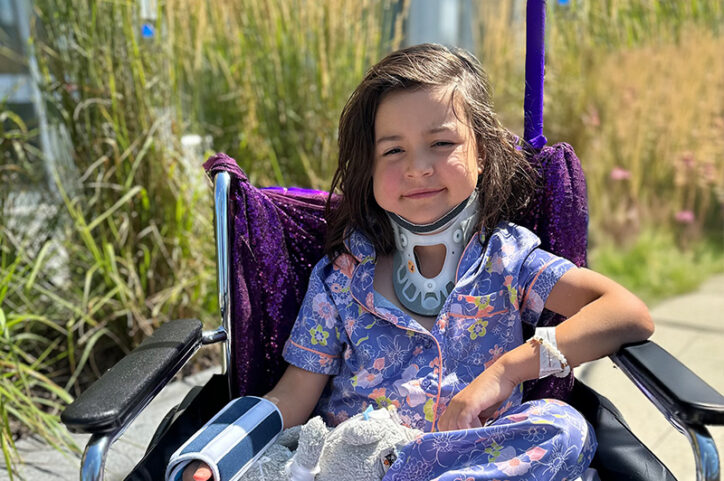
A frightening diagnosis
If that news threw the family for a loop, so did the recommended treatment. Mike and Mary knew that their daughter would need to undergo surgery, both to remove the tumor and to biopsy it, which would confirm the diagnosis. The potential risks of surgery made them nervous — but so did leaving the tumor there, which could ultimately cause her symptoms to worsen. Mike and Mary knew they needed to learn more about their options.
“We were warned that CeCe would likely never walk again and might not be able to use her hands. Because she would need a tracheostomy following surgery, even her laugh might not sound the same,” says Mary. “We were scared and knew we would have to make a lot of adjustments, but as long as she could still be herself, we’d give her a great life.”
Through their research, they learned that many surgeons wouldn’t even attempt this type of surgery because of the risks, leading families to believe these spinal cord tumors are inoperable.
Fortunately, a family friend who is a physician at Boston Children’s Hospital recommended the family reach out to Dr. Katie Fehnel, a neurosurgeon and director of the hospital’s Spinal Cord Tumor Program.
“We contacted her late on a Friday and by the next day she had reviewed CeCe’s case and spoke with us about a plan,” says Mike. “She told us that she’d treated a lot of these tumors and that we shouldn’t jump to conclusions based on the imaging. That was the first time we had hope.”
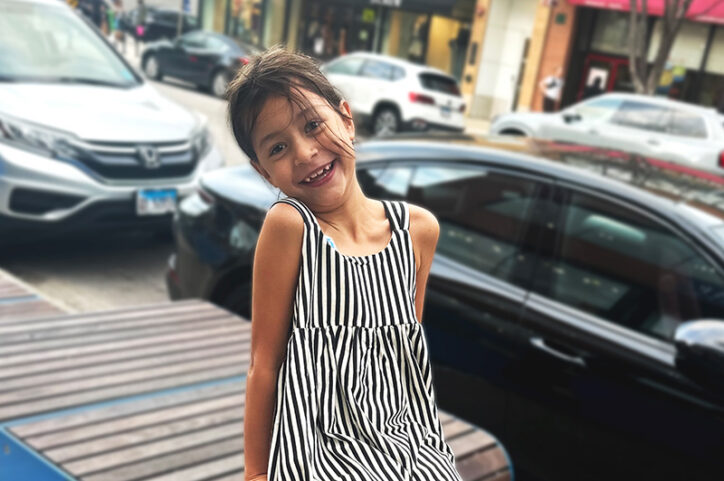
Successful spinal cord tumor surgery
Although Mike and Mary were happy with their local hospital, they knew that Dr. Fehnel’s experience made traveling for CeCe’s surgery the right decision. Within a week, they were in Boston for the seven-hour operation. The procedure was a success: Dr. Fehnel was able to remove most of the tumor, and CeCe was walking again — which they once thought was impossible — and demanding chocolate ice cream days later. What’s more, it was a low-grade pilocytic astrocytoma, a less-aggressive type of glioma.
However, genetic testing on the tumor revealed a rare FGFR mutation. Because tumors with this mutation are more likely to grow back, the family opted for a second surgery to remove the rest of the astrocytoma a few months later. Once again, the procedure was successful and CeCe recovered quickly — maybe even a little too quickly for her liking.
“She was a little upset about leaving Boston Children’s so soon,” laughs Mary. “She didn’t want to miss the therapy dogs and shows at Seacrest Studios.”
Support helps CeCe thrive
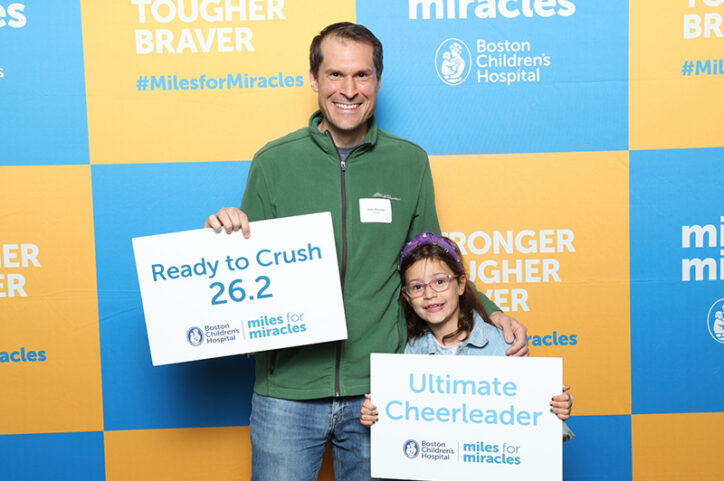
Back at home, this “kind and spunky” first grader is thriving as she makes her way through several rounds of chemotherapy to help prevent a recurrence. She’s also regained the use of her right hand and has no neurologic impairments. CeCe loves hanging out with her younger sister, Maddy, and might have a future in medicine: She uses a play hospital setup to care for her stuffed animals and even performed “surgery” on Mike’s legs after he recently ran the Boston Marathon.
Cheering him on at Heartbreak Hill? Dr. Fehnel, who ran the same course the year before. It’s that kind of support for CeCe and her family that has made the experience easier, says Mary. “We were just parents searching for an answer, and we’re so grateful that the stars aligned for CeCe.”
Learn more about the Spinal Cord Tumor Program, part of our Brain Tumor Center.
Related Posts :
-

After surgery for a brain tumor, Jenny is moving ahead — and giving back
“It might sound weird,” says Jenny Eckert, “but I’m very grateful that I got hit in the face with ...
-
‘Challenge accepted’: Sophia takes on a brain tumor
In 2023, Sophia Mordini landed the role of a lifetime. A competitive dancer, the 12-year-old would play Clara in her company’...
-
‘Life is so much better now’: Ethan finds treatment for mixed germ cell brain tumor
Ethan Winchenbach was playing with his dogs when he first noticed that something was off. “My vision changed, but only ...
-
‘We’re going to Boston’: Why Aydan’s family temporarily relocated for craniopharyngioma care
One evening in October 2022, 2-year-old Aydan Arguello arrived at Boston Children’s Hospital. It wasn’t a routine visit, but ...