Stay chill, show up, move forward: Nolan’s journey with ITP
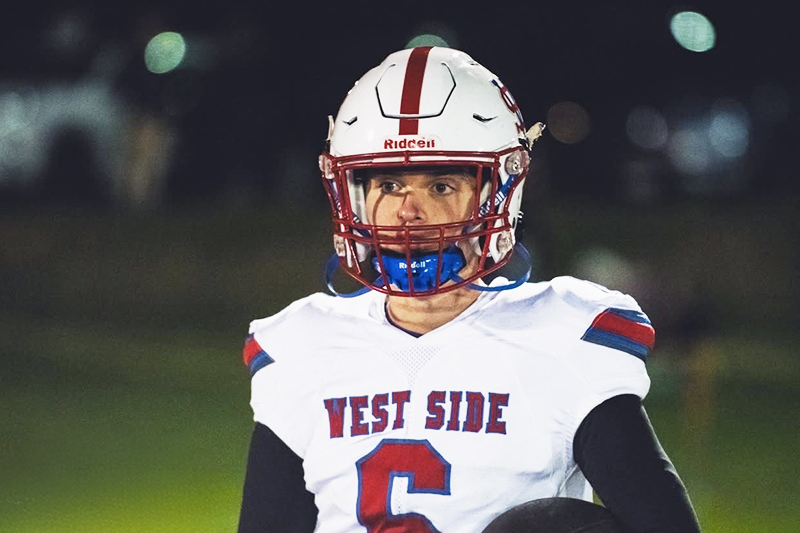
At 18 years old, Nolan Ryan is an all-around athlete. Between basketball, football, and lacrosse, sports have shaped his daily life for years. He’s a true team player who shows up to every game with humility and dedication, whether he’s on the field or sitting on the sidelines.
Like most student-athletes, Nolan had to balance long school days with practices and competitions. But he’s also been navigating years of appointments and treatment for immune thrombocytopenia (ITP), a rare autoimmune disorder that affects platelet counts and increases the risk of bleeding.
The early signs of ITP are often subtle. That was the case for Nolan, whose first symptom, unexplained bruising, surfaced during his freshman year.
Subtle symptoms and a rare diagnosis
As a quarterback at West Springfield High School in Massachusetts, Nolan didn’t get hit very often. So when severe bruises began appearing across his body and lingering for weeks, Nolan and his family sought medical guidance.
At the time, Nolan was already an established patient at Boston Children’s Hospital. A care team in the Division of Gastroenterology, Hepatology and Nutrition helped him manage eosinophilic esophagitis (EoE), while specialists in the Division of Endocrinology treated his hypothyroidism.
During a routine endocrinology visit, Nolan’s mom, Brenna, raised concerns about the bruising with his endocrinologist, Dr. Carmen Soto-Rivera. After seeing the bruises, Dr. Soto-Rivera ordered bloodwork. The results indicated that Nolan had thrombocytopenia: an abnormally low platelet count.
“They called us on a Friday evening and told us Nolan would have to lay low,” Brenna recalls. “He couldn’t go to basketball practice or even use his virtual reality headset. They wanted him on the couch watching TV all weekend because he might have to be hospitalized.”
Nolan was referred to Dana-Farber/Boston Children’s Cancer and Blood Disorders Center, where further testing confirmed a diagnosis of ITP. That’s when the family met hematologist Dr. Rachael Grace.
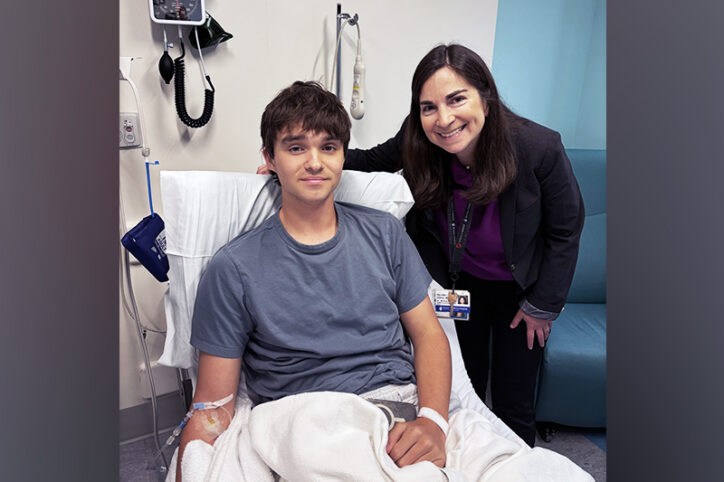
Multidisciplinary care helps stabilize Nolan’s health
The focus shifted to finding a treatment plan. Nolan first tried a short course of steroids, a standard initial treatment for ITP. His platelet counts rose briefly, but the effect didn’t last. In the weeks that followed, his doctors monitored Nolan’s platelet levels through regular bloodwork while determining next steps.
During that time, Dr. Grace referred Nolan to immunologist Dr. Rebecca Hale, who worked closely with her within the Immune Hematology Program. Because Nolan was managing more than one immune-related condition — EoE, hypothyroidism, and ITP — she wanted a clearer picture of how his immune system was functioning overall.
Throughout the process, Brenna says the focus remained on Nolan’s ability to do what he loves: Play sports.
“He wanted to play sports,” she says. “High school is such a short window in the grand scheme of life. We wanted to protect his quality of life during that time.”
Intravenous immunoglobulin (IVIG) infusions temporarily raised Nolan’s platelet counts, but eventually his body needed more support. Dr. Grace suggested adding a daily medication called avatrombopag to his treatment plan.
Together, and with Nolan’s input, they decided to move forward. The combination of IVIG and avatrombopag has helped stabilize Nolan’s platelet counts. He’s finally settled into a treatment plan that works.
“It’s made a huge difference,” Brenna says. “He’s thriving.”
Showing up from the sidelines
Low platelet counts repeatedly sidelined Nolan, but he never stopped showing up for his team.
On Fridays after IVIG infusions (or “Fusion Fridays,” as his teammates called them) Nolan and his family would rush from the hospital to the field so he could put on his football uniform and be with his teammates. “Most of the time he wasn’t even able to play, but he was there,” Brenna says. “He’d be groggy and freezing, but no matter what, he was there.”
“He never said, ‘Oh, Mom, I don’t want to do this,’” she adds. “He just keeps moving forward.”
When playing wasn’t an option, Nolan found other ways to support his team and his community, including hosting an ITP awareness night during a football game.
“It was pretty cool,” he says. “A lot of my teammates wore purple, which is the color for ITP awareness. We made a banner, and the student section was happy to support our cause.”
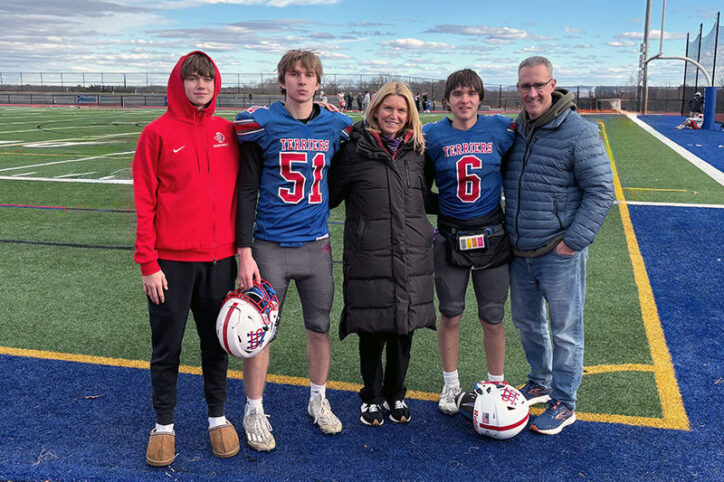
Back in the game
Today, Nolan is a high school senior with a full schedule. He’s back to playing sports, completing an internship with the Springfield Thunderbirds AHL team and preparing for college.
In addition, he’s continuing his care at Boston Children’s. Every month, he travels to Boston for IVIG infusions and continues to be followed by both hematology and immunology, with Dr. Grace and Dr. Hale coordinating his care. He still sees specialists in endocrinology and gastroenterology as needed. And all the while, he maintains his trademark humility and positivity.
“These things happen. You just have to deal with them,” Nolan says. “You can’t let it get to you. You’ve got to be chill.”
Explore the Immune Hematology Program at Dana-Farber/Boston Children’s Cancer and Blood Disorders Center
Related Posts :
-

Platelet profiles could enhance care for bleeding disorders, cardiovascular disease, cancer
The trillion-odd platelets in our blood are best known for controlling bleeding, helping clots form when we sustain an injury. ...
-
Breaking gender biases: What is it like to be a girl with severe hemophilia?
In human biology class this past semester, Morgan DiPrima viewed a PowerPoint presentation that made her head spin. It included ...
-
An education in hemophilia for Colin’s new school
Every morning, one of Colin Bazinsky’s parents puts a needle into his chest to give him an infusion of ...
-
Don't forget the cheese, please! Rachel's EoE journey
Like many teens, Rachel loves cheese and other dairy foods. “Cheese sticks, yogurt, and especially pizza,” Chellie, her mom, shares. ...