Hope in a new home: A family’s journey with HHT
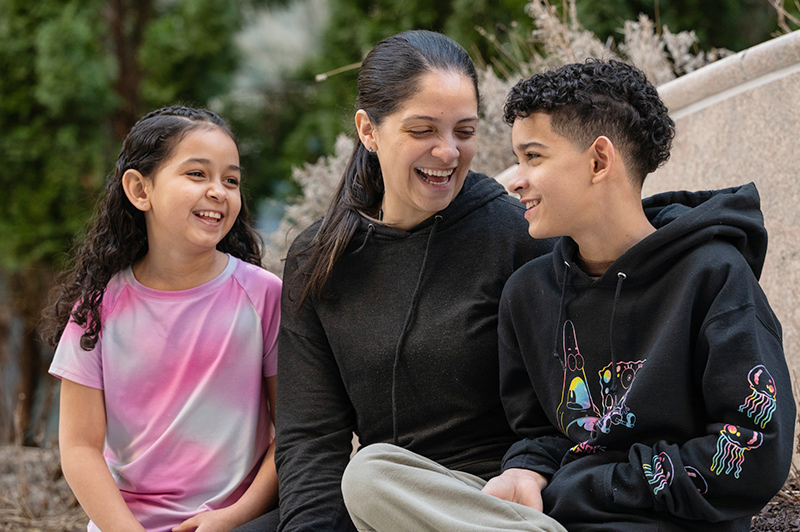
When Yeiden Pérez Camacho imagines the future, he sees himself on a basketball court. At 13, he’s already an award-winning athlete in several sports, including basketball, volleyball, tennis, and table tennis. His 8-year-old sister, Adienee “Adi” Pérez Camacho, is a budding gymnast who loves cooking and crafting with her family.
Yeiden and Adi grew up in Puerto Rico with their mom, Mirenis, and dad, Rigoberto. From a young age, they both experienced frequent nosebleeds, headaches, breathing difficulties, and other symptoms that were treated as separate issues by their local care teams. But in 2024, a long search for answers revealed a single underlying cause: hereditary hemorrhagic telangiectasia (HHT), a rare genetic disorder that affects how blood vessels form.
Seeking answers for Yeiden
Despite Yeiden’s history of health concerns, he had always been active. But by early 2024, those concerns began to worsen.
In January, Mirenis noticed Yeiden was slowing down, and she knew something was wrong. He was tiring easily and losing strength — at times nearly fainting. His once-monthly headaches were coming on as often as three or four times per week and increasing in severity. His lips began turning blue.
As Yeiden’s condition worsened, Mirenis pushed for answers, bringing him to the emergency room again and again. Each time, the pattern was the same: Yeiden’s oxygen levels were low, his care team treated him for an asthma attack, and he was sent home. Mirenis insisted something else was going on, but her concerns were not fully addressed.
After weeks of repeated visits and worsening symptoms, doctors agreed to do further testing. Imaging revealed arteriovenous malformations in Yeiden’s brain and lungs, and he was diagnosed with moyamoya disease, a rare condition that causes blood vessels in the brain to narrow.
Surgeons attempted a procedure to treat the AVMs in Yeiden’s brain but stopped after discovering an aneurysm. They planned to try again, but the procedure was deemed too risky to proceed. Eventually, Yeiden’s local care team delivered difficult news: There was nothing more they could do.
An unexpected pathway to hope
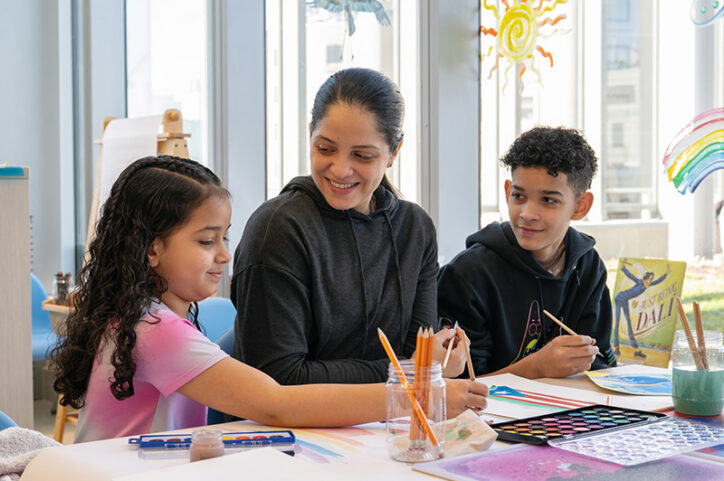
That summer, the family traveled to Boston to visit Yeiden’s godmother. Just two days after arriving, Yeiden developed a severe nosebleed, and Adi began having trouble breathing. Alarmed, Mirenis and Rigoberto brought both kids to the emergency department at Boston Children’s Hospital.
In the ED, clinicians focused on stabilizing both children and ordered additional imaging for Yeiden. Two neurologists then reviewed his scans and explained that, with specialized care and close follow-up, Yeiden could be treated.
As the conversation continued, it became clear that Yeiden’s care would take more time than the family had planned for when they arrived in Boston. Staying would give Yeiden access to the care he needed, and the possibility of a healthier future. It would also mean leaving their lives and community behind.
Mirenis and Rigoberto weighed their options. In the end, they chose the path that gave Yeiden the best chance forward: moving their family to Boston.
Coordinated care offers promise for Yeiden
Further evaluation by Boston Children’s physicians revealed that Yeiden’s symptoms were not caused by moyamoya disease, but by HHT. This shift in diagnosis helped explain the full range of his symptoms, particularly his lung involvement, and opened the door to more targeted treatment.
The family finally had an answer — and a team prepared to act. Specialists in pulmonary medicine, hematology, genetics, neurosurgery, and interventional radiology quickly came together to plan Yeiden’s care.
After evaluating Yeiden, interventional radiologist Dr. Mohammad Amarneh performed a pulmonary AVM embolization in December 2024 — a minimally invasive procedure that closes abnormal blood vessels using tiny coils delivered through a thin tube called a catheter.
During the procedure, Dr. Amarneh guided the catheter through Yeiden’s blood vessels to the abnormal connections in his lungs, sealing the AVMs. His oxygen levels improved almost immediately, and he needed less supplemental oxygen.
Yeiden’s neurosurgeon, Dr. Alfred See, reviewed his brain scans and medical history and performed a specialized imaging test called an angiogram to closely examine the blood vessels in his brain. The test confirmed cerebral proliferative angiopathy (CPA), an extremely rare type of brain vascular malformation that can appear similar to AVM but represents less than 5 percent of brain vascular malformations seen by surgical and interventional providers worldwide. Dr. See and the team at Boston Children’s Cerebrovascular Surgery and Intervention Center (CSIC), who specialize in CPA, developed a plan to treat it.
Adi’s diagnosis
Two days later, Mirenis met with Dr. Saba Sheikh, Adi’s pulmonologist. While there, she brought up Adi’s history of nosebleeds and breathing challenges, which closely resembled Yeiden’s.
“I thought Adi might also have HHT,” Mirenis recalls.
Dr. Sheikh expedited Adi’s genetic testing so the family could get answers as soon as possible. The results confirmed Mirenis’ concerns: Adi also had HHT.
“Hearing that was very hard,” Mirenis says. “But we were glad to have found out early.”
With her diagnosis confirmed, Adi was able to begin care right away. Yeiden’s doctors became Adi’s doctors as well, and the family continued forward with a shared care team through CSIC.
Healing in a new home
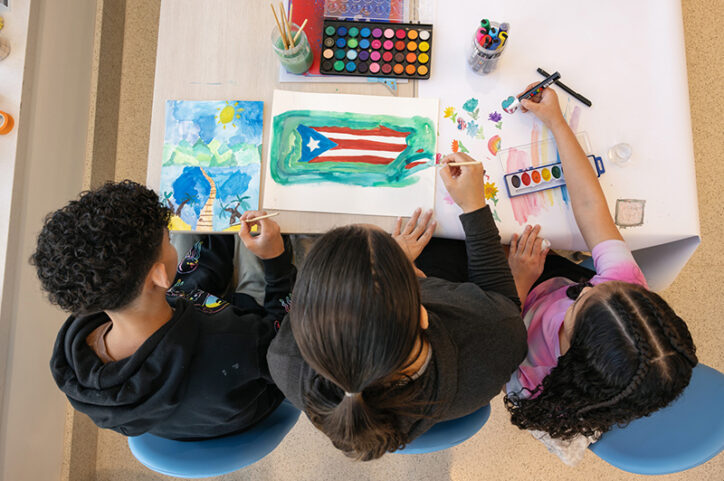
In February 2025, Yeiden underwent a second surgery to address his brain aneurysm. Doctors treated the portion that posed the greatest risk and will continue to monitor the rest. His oxygen levels are now far more stable, and he no longer needs supplemental oxygen during the day. He’s back in school part-time and able to play the sports he loves.
“Back in Puerto Rico, they told him maybe he shouldn’t play anymore,” says Mirenis. “Here, his doctor said, ‘No more restrictions. Let him live as normally as possible.’”
Adi is doing well, too. She has had two embolization procedures, with more expected in the future. Her oxygen levels continue to improve, and her care team is closely monitoring her health.
Leaving Puerto Rico to build a life in Boston was profoundly difficult, but Mirenis remains confident it was the right decision for her children.
“We’re really happy to be here — not just because of the treatment, but because of the care and the way they treat my children,” she says. “It’s been a long road, but every time we come to Boston Children’s, it feels like home. I know we made the right decision.”
Learn more about interventional radiology at Boston Children’s.
Related Posts :
-

Thinking – and operating – outside the box: Bypassing Saoirse’s aneurysm
Saoirse just turned 3. There was a big to-do for her birthday, complete with family flying to Massachusetts from Ireland for ...
-
Full-family support sees Hannah and her parents through AVM surgery
Nine-year-old Hannah from Vermont is passionate about skiing; not much keeps her off the slopes. In fact, not much slows ...
-
Varsity blues: How AVM radiation therapy got Greta back to sports
Want to find Greta? Try the hockey rink, or softball field, or volleyball court. Where won’t you find her? ...
-
All in it for Hudson: A family’s shared path with cavernous malformations
Three-year-old Hudson loves trucks and PAW Patrol. He’s a delightful blend of sweet, fun, and feisty, and — after a ...