

Finding the right team for achondroplasia: Jeremy’s story
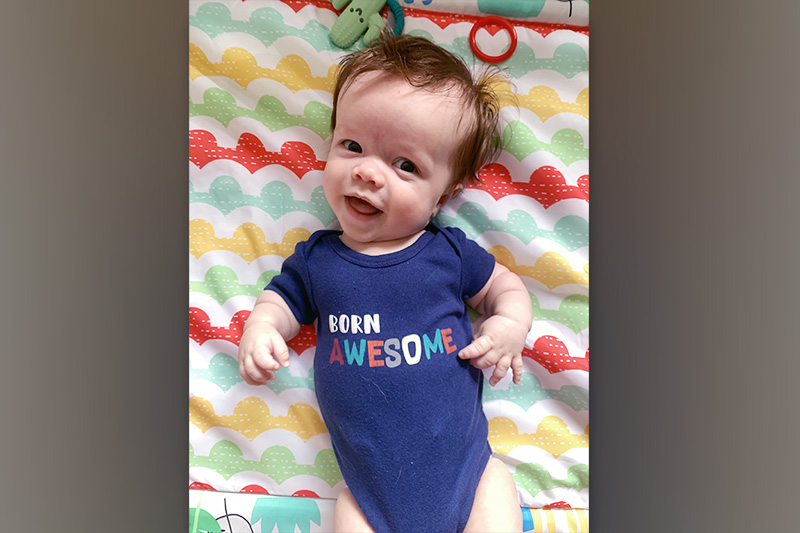
As an “older” mom, Erica Johnson was used to undergoing more frequent screenings while pregnant with her second child, Jeremy. But when an ultrasound at 30 weeks revealed that his head appeared to be much larger than his legs, she raised a flag with her local obstetrics team.
“They assured me that he’d catch up,” Erica remembers. But, like many parents, she took to the internet, where she learned that Jeremy’s measurements suggested he might have achondroplasia, the most common type of a bone growth disorder called skeletal dysplasia. Ultimately, another ultrasound at 37 weeks proved Erica’s instincts correct. A blood test after Jeremy was born in February 2025 confirmed that he had achondroplasia.
What is achondroplasia?
Achondroplasia is a genetic bone disorder in which a child’s limbs are shorter in proportion to the length of their body. Along with short stature, people with achondroplasia may have bone differences in the back and legs that typically require surgery, as well as dental concerns, frequent ear infections, and sometimes developmental delays.
The search for specialized care
Although achondroplasia is a genetic condition, most cases aren’t inherited and instead stem from a new gene alteration. Genetic testing showed that this was the case with Jeremy: Both Erica and her husband, Andrew, are of average height and don’t carry the gene that results in achondroplasia.
Achondroplasia is relatively rare, so it made sense that Jeremy’s team at another Boston hospital didn’t have a lot of experience caring for babies with the condition.
“My son was the first ‘little person’ I’d ever met,” says Erica. “I had a lot of questions about what to expect — even how to hold him safely.” She learned as much as she could from online resources.
“Still,” she says, “I expected an expert’s guidance.”
Expertise and reassurance
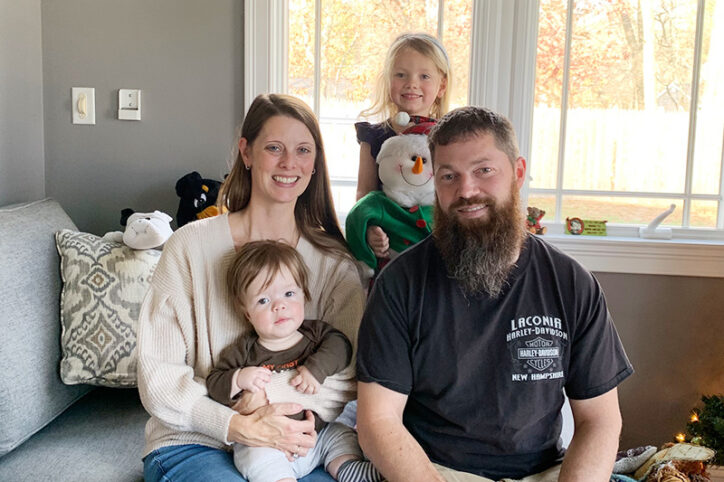
At the same time, Jeremy’s pediatrician was there to support them. She suggested the family might find more specialized care at Boston Children’s Hospital and referred them to orthopedic surgeon Dr. Samantha Spencer, the surgical director of what is now the Skeletal Health Center.
“We knew this was in Dr. Spencer’s wheelhouse and that she’d be able to answer our questions,” says Erica. “She took extra steps to get us the help we needed rather than just checking the box.”
The family also met Dr. Jennifer Arnold, one of the Center’s co-medical directors. “She’s the second little person I’d ever met,” laughs Erica. “Knowing she’s had firsthand experience with skeletal dysplasia was so reassuring — she can tell us what to expect as Jeremy grows up.”
‘The happiest boy’
Achondroplasia care requires a team of multiple experts from different specialties. After having 30 separate appointments during Jeremy’s first few months of life, the Johnsons are looking forward to streamlined, coordinated care from one multidisciplinary team at his next visit to the Skeletal Health Center. What’s more, the Center’s main location in Waltham, Massachusetts, saves them travel into the city.
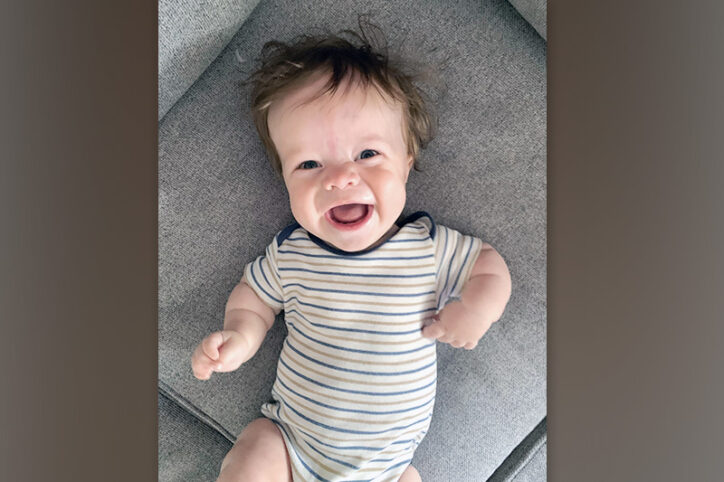
With the right team finally in place, Erica is eager to lean into their guidance and focus on letting Jeremy just be a kid. By all accounts, that won’t be difficult for him.
“He loves to smile, giggle, and play with his older sister,” she says. “He’s just the happiest boy that’s ever existed.”
Learn more about our Skeletal Health Center.