How a meniscal transplant made me a Boston sports fan
I was in kindergarten when my knee started popping and cracking. My parents and I didn’t know it at the time, but I’d been born with discoid meniscus. The cartilage in my knee that was supposed to protect my shinbone and thighbone from rubbing together was misshapen and throwing my knee out of alignment.
I had my first surgery when I was 6. Doctors in my hometown of Philadelphia tried to reshape my meniscus, but the pain continued. By the time I was 9, I’d had two more surgeries and was in more pain than ever. Then my knee froze and would not bend.
At the hospital, I overheard one of my doctors tell my mother that I was “fine” and that the pain was “all in my head.” That really changed my view of medicine and made me hesitant to trust any doctors. It also put us on a path of looking for new care.
Our appointment with Dr. Kocher (of the Orthopedics and Sports Medicine Department at Boston Children’s Hospital) was totally different. From the moment he stepped in the room, Dr. Kocher’s heartwarming demeanor reduced our anxiety. After discussion and evaluation, he provided us with hope. He told us, “Ashley needs a new meniscus. We need to unlock her knee so she can walk again.”
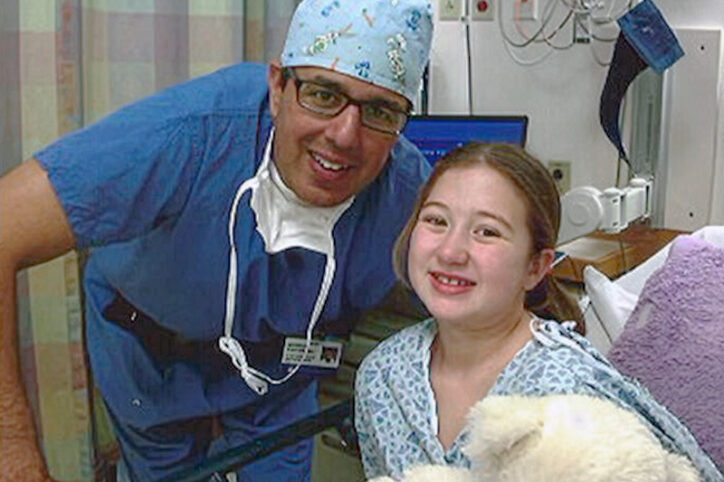
Looking at MRI images of my knee, he explained: I had practically no meniscus left in my knee and the bones already showed signs of arthritis.
Dr. Kocher was very clear and confident. He had a plan and described it to us in a way that we could understand: He would replace my meniscus with meniscal tissue from a donor. We’d traveled to Boston looking for a second opinion, and now we knew Boston Children’s would be the place where I’d receive care.
Advice from a medical first
When people ask me for a fun fact, I tell them I’m the youngest person ever to have a meniscal transplant. In 2010, when I had the surgery, meniscal transplant was considered an operation for adults. Dr. Kocher had to modify the procedure so that it wouldn’t damage my growth plate or interfere with my leg’s future growth. There was also a risk that the transplanted meniscus wouldn’t grow as I grew, and Dr. Kocher continued to see me for several years to monitor the growth of both my leg and my new meniscus.
I’m happy to say my leg did continue to grow, and the transplant grew with me. Best of all, I was able to walk again. It was a very good outcome that improved my quality of life. A few years after the surgery, my case was written up in a medical journal.
Over the years, my parents and I have talked with many other families considering a meniscal transplant. I’m always happy to share my experience. Here’s some of the advice I give them:
- If you have knee issues, go to Boston Children’s.
Ever since our first meeting with Dr. Kocher, things started to get better. He renewed my faith in medicine. Everyone at Boston Children’s was so friendly and helped us feel confident in my care. - Take care of your knee.
Ever since the surgery, my main goal has been to protect my meniscus and strengthen my leg. Staying committed to physical therapy and keeping up with follow-up care with Dr. Kocher have been essential to my progress. I’ve had to avoid running and jumping — something especially challenging since all of my siblings are athletic — but preserving my knee has always been the priority. In grade school, I played flute in the band and joined the swim team. In high school, I continued exploring what I could do by playing on the varsity golf team and becoming a member of the National Honor Society. - Make sure you have family support.
I’ve learned that healing is about far more than physical recovery. It’s the people around you who make the hardest moments easier. My family, especially my siblings, were always there — joining me on countless trips to the doctor and helping me get through the exhausting, painful days. And on the days when things felt especially heavy, they never failed to make me laugh. Their support, love, and steady presence turned some of my toughest moments into reminders that I wasn’t going through any of it alone.
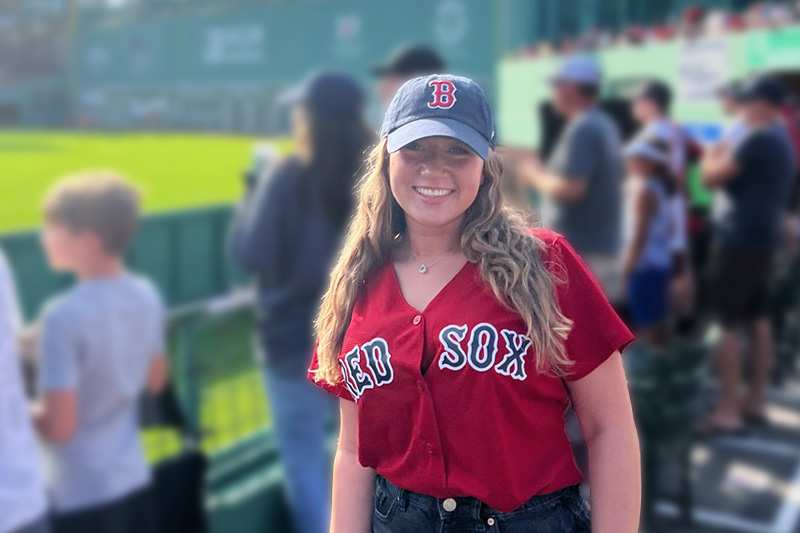
Rooting for the Red Sox
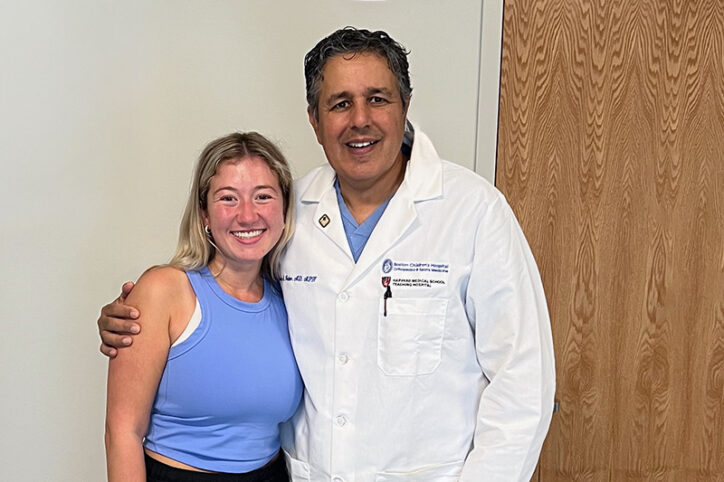
Philadelphia has great teams, but I’m team Boston. I like to say that Dr. Kocher gave me back the ability to walk, so I’m a Boston fan.
I’m 25 now. I’ve been a research subject, worked as a research assistant, and am getting ready to enter medical school. Knowing how it changed my life, I plan to stay involved in research as a physician. My goal is to help improve patients’ quality of life the way the care I received at Boston Children’s improved mine.
Learn more about the Orthopedics and Sports Medicine Department
Related Posts :
-

Griffin's return to the slopes and sea after kneecap dislocation
Whether cruising down a snowy trail or catching a wave, 18-year-old Griffin Srokose loves the adrenaline and freedom he feels ...
-
A fall from a swing uncovers a rare cervical spine condition: Charlotte's story
If it were any other year, Charlotte Gillis would have celebrated her 10th birthday in mid-July with a big party. ...
-
A heavy-medaled gymnast and his close call with leg-length discrepancy
Ask 15-year-old Kaleb what he likes about gymnastics and with a sly smile, he’ll say, “flipping around.” That’s ...
-
3D imaging could become standard practice in orthopedics. Here's how.
It took a trained eye to see the abnormality on the patient’s X-ray. There, hidden behind the acetabulum was ...