Thriving — not just surviving — as an adult with esophageal atresia
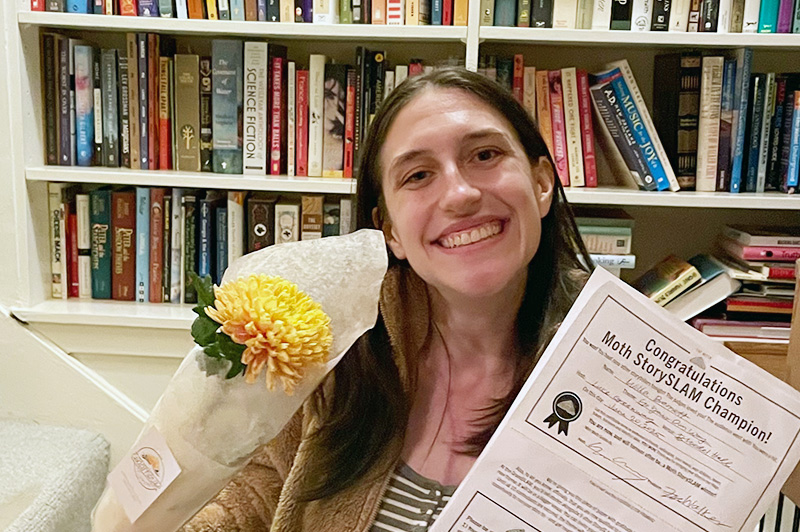
Willa Barnett has a story to tell — and it’s a big one. At 26, she’s experienced a slew of serious health challenges since she was born with VACTERL association. In this group of growth anomalies, certain parts of the body don’t form properly during fetal development. This can lead to problems with the vertebrae, limbs, heart, trachea, esophagus, and other areas.
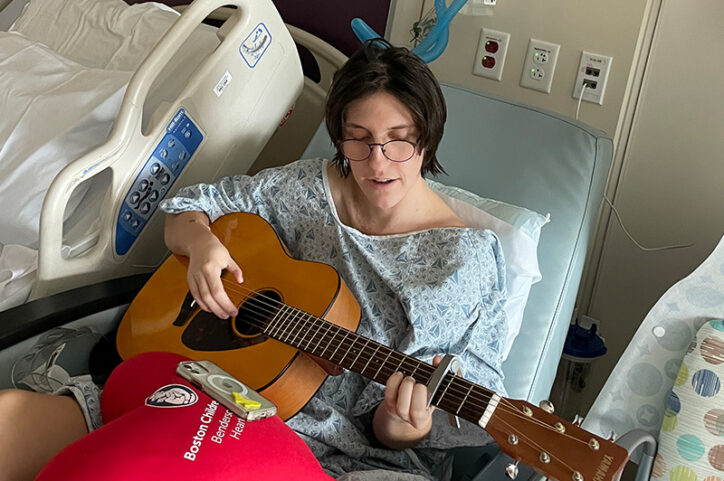
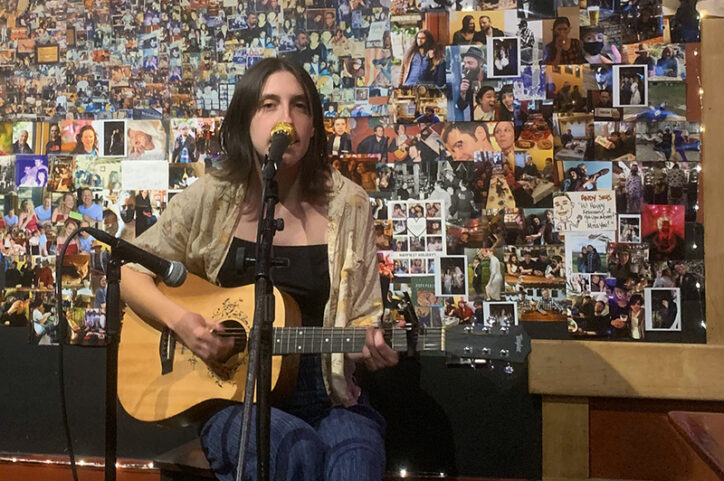
“Of course I’m scared/I’d be lying if I wasn’t/They sat me down, said I’ve got problems by the dozen,” the songwriter and drama teacher sings in one of her many original songs inspired by the experience. But it wasn’t until Willa underwent major surgery as an adult at Boston Children’s Esophageal and Airway Treatment (EAT) Center that she felt compelled to share her story with a larger audience.
‘I didn’t think I had several months’
Willa was just a baby when she had surgery in Seattle to repair long-gap esophageal atresia (EA), a rare birth defect in which the esophagus develops in two separate segments that don’t connect. The surgical procedure, a gastric pull-up, involved pulling her stomach up into the chest to replace the esophagus. Even with surgery, EA requires lifelong monitoring and care. Willa was about 10 when she and her parents learned that she might eventually need further treatment.
By the time Willa was a freshman in college, her doctors’ prediction was proving true.
“They said the surgical quality had started to degrade, and the tissue didn’t look healthy,” she remembers. That July, she was hardly sleeping or eating. “I was in horrific pain and was losing weight. I kept getting sicker and sicker.”
Willa returned to her local children’s hospital in Seattle but found herself in an unusual position. “I went there because I knew the world of adult health care wasn’t equipped to deal with the problem.” But as their oldest patient with esophageal atresia, she left the pediatric surgeons there stumped too.
“They wanted to wait several months and see what happened,” she recalls. “I didn’t think I had several months.”
Second opinion leads to jejunal interposition
On the Seattle surgeons’ advice, Willa reached out to Boston Children’s EAT Center for a second opinion. The center is one of just a few that performs EA revision surgery in adults. After flying to Boston to meet Dr. Benjamin Zendejas-Mummert, the center’s surgical director, she was scheduled for surgery four months later. The procedure, a jejunal interposition, would replace the missing section of Willa’s esophagus with a section of the jejunum (the middle part of the small intestine). The procedure is typically used to treat patients who have already undergone failed repair of long-gap EA.
Four months quickly turned to six days when an earlier surgical slot became available in October 2023.
“Dr. Zendejas-Mummert called to me know there was an opening the following week,” remembers Willa. “He said, ‘I highly suggest you take it.’”
Although she was initially hesitant, especially with having just met her new care team, she now knows she made the right decision.
“They told me after surgery that the tissue was necrotizing [dying] so much that I probably would have been dead by January,” she says.
The next couple of years weren’t easy. The following November, Willa underwent additional procedures to address complications and redo parts of the jejunal interposition. “I was very angry,” she admits. “But the team was equipped to deal with that and helped me find resources to process everything in healthy ways.” In addition to Dr. Zendejas-Mummert, that team includes gastroenterologists Dr. Peter Ngo and Dr. Jessica Yasuda, surgeon Dr. Somala Mohammed, and nurse practitioner Rebecca Leslie-Roberts.
Making progress
Today, Willa is still recovering but making a lot of progress. “At first I felt like I lost the last three years of my life to the surgeries,” she says. “But I’m realizing that I lost a lot more because I was so sick for so long.” Now, she’s eating better and gaining weight, gardening, and just moved in with her boyfriend, who has seen her through the ups and downs. Along with singing, she’s working at her “dream job,” teaching drama to kids full time.
And she’s found another way to express herself. Last fall, she participated in Seattle’s Moth StorySLAM, an open mic storytelling competition. There, she squeezed the saga of her health journey into about 5 minutes — and won that night’s contest.
Willa hopes to keep sharing her story with others and inspiring them to advocate for themselves. “Everyone keeps telling me that I survived and that should be enough,” she says. “But it’s not enough for me. I want to make people feel less alone because of what I’ve gone through.”
Learn more about our Esophageal and Airway Treatment (EAT) Center.
Related Posts :
-

Beyond limits: A staged approach to jejunal interposition
By the time Chase Essex arrived at Boston Children’s Hospital in 2016, he had reached what most clinicians would consider ...
-
Ready for the next step: Innovative care for Chase
Chase Essex loves pizza and has even prepared shrimp scampi for his family. So it might come as a surprise ...
-
Making up for lost time: Living with esophageal atresia
Whether he’s riding his dirt bike, learning how to swim, playing with his dogs and cats, or herding the ...
-
Taking treatment of long-gap esophageal atresia to the next level: Refining innovative techniques
The surgeons in the Esophageal and Airway Treatment Center at Boston Children’s Hospital are pioneers in developing and refining ...