Mapping ‘neighborhoods’ in aggressive childhood brain tumors
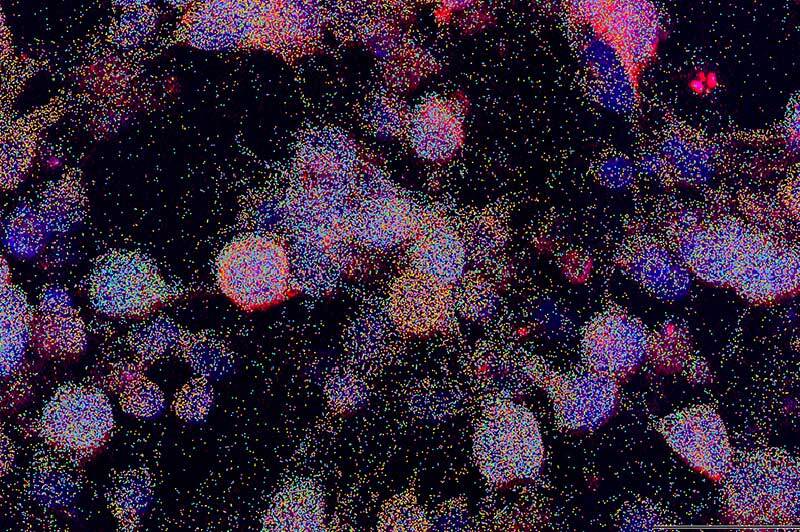
The third-most common kind of childhood brain tumor, supratentorial ependymoma, is an aggressive cancer that often returns after surgery and radiation therapy. By learning more about the makeup of these tumors, Boston Children’s researchers hope to better understand how to treat them and prevent recurrence.
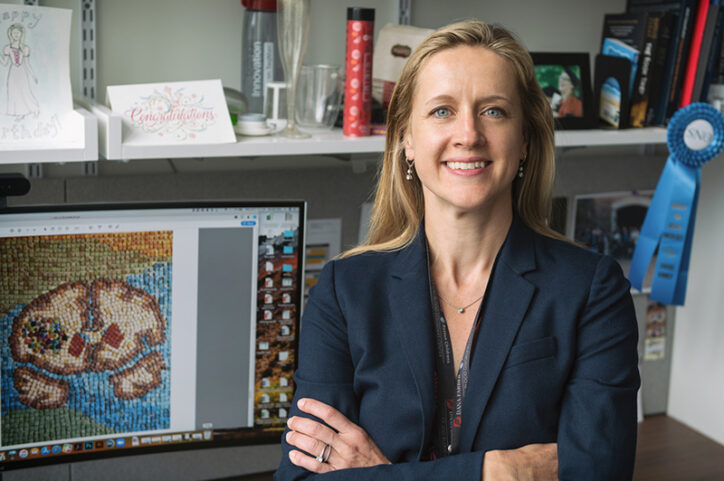
In a new study published in Nature, and led by Mariella Filbin, MD, PhD, co-director of the Brain Tumor Center at Dana-Farber/Boston Children’s Cancer and Blood Disorders Center, researchers mapped the different cell types in supratentorial ependymomas, finding these tumors form “neighborhoods” based on cell characteristics.
“This is the first time we have been able to assign different functions to different cancer cell types within a tumor, which might open the door for an entire new way of treating these cells,” says Filbin.
“Uncovering differences between cancer cells in the tumor helps us develop targeted therapies for each cell type. Given that each cancer cell type has a ‘job’ or ‘role’ within a tumor — for example, some proliferate, some are more mobile and invasive etc., it’s likely they will respond differently to treatment.”
How supratentorial ependymomas form
Supratentorial ependymomas have genetic errors in which one early regulatory gene essential for development breaks in half and gets stitched to another different regulatory gene, forming a new Frankenstein-like cancer gene. The type of supratentorial ependymoma can be classified based on the combination of the two component genes in the new hybrid.
These tumors are comprised of early developing brain cells found typically in early pregnancy. The tumor cells then morph into one of two cancer cell types that resemble either the brain’s neurons or neuron-helper glial cells of a special sort. These special glial cells line the spinal cord and the cavities in the brain (ventricles), known as ependymal cells, per the name of the cancer.
Brain tumor blueprints
To map the development and function of these tumors, Filbin’s team analyzed the genes turned on or off in individual tumor cells by single-cell transcriptomics on 42 supratentorial ependymoma tumor samples from 34 pediatric patients, including six distinct genetic types. They found that each cancer type turned on specific genes that coincided with different points in the first and second trimesters during very early brain development. And the more immature tumor cells that corresponded to the earliest points in development were the most proliferative.
For the most common genetic form of supratentorial ependymoma, the researchers analyzed 56 tumor samples from 23 patients to determine what genes turned on or off within the position of the tumor using spatial transcriptomics. Filbin’s team found that the neuron-like cells are more mobile and spread throughout the tumors. Cells with genes turned on in response to low oxygen and those marked as mesenchymal stem cells tended to form stationary clusters together, with the stem cells continuing to proliferate. Mesenchymal stem cells can form fat, cartilage, bone, as well as blood vessels, which can bring new blood supply to feed tumors in low oxygen conditions. The researchers also showed that the brain’s environment can influence and drive tumor spread, as healthy brain cells can push nearby tumor cells to become highly mobile, neuron-like cells.
In future experiments, the research team plans to target the specific ‘neighborhoods’ and find out which cell types in these tumors respond best to different treatments.
Learn more about the Brain Tumor Center.
Related Posts :
-

How the stars aligned for CeCe’s spinal cord tumor care
Last spring, 6-year-old CeCe was on vacation in Florida when she told her parents, Mike and Mary, that her neck ...
-
Hope in a new home: A family’s journey with HHT
When Yeiden Pérez Camacho imagines the future, he sees himself on a basketball court. At 13, he’s already an ...
-
Small gains with big meaning: Loic’s story of deep brain stimulation for PKAN care
Loic, 5, lives in Montana with his parents, Sherine and Mark, and his sister, Selah. He loves Spider-Man, sushi, and the ...
-
‘Challenge accepted’: Sophia takes on a brain tumor
In 2023, Sophia Mordini landed the role of a lifetime. A competitive dancer, the 12-year-old would play Clara in her company’...