Hard and beautiful at the same time: Five lessons of raising a medically complex child
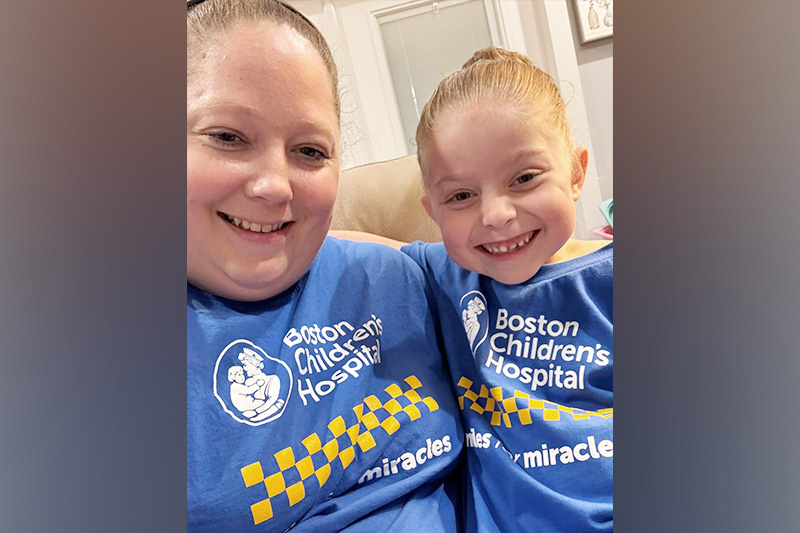
When they learned they were expecting a baby, Michelle and Stephen Strickland were delighted. The South Carolina couple looked forward to their child’s first words, first steps, and first family vacation. “You have this vision of a perfect life,” says Stephen.
But when Aubree was born with a rare and complex condition, the couple entered a world they’d never expected: the world of medically complex parents.
Aubree is one of a small number of children born with cloacal exstrophy, or OEIS syndrome, and epispadias. A portion of her large intestine was exposed on the outside of her body, as were the two halves of her bladder that hadn’t fused during pregnancy. Her urethra, the tube that carries urine out of the body, hadn’t developed fully and the bones that normally form a ring at the base of the pelvis hadn’t closed.
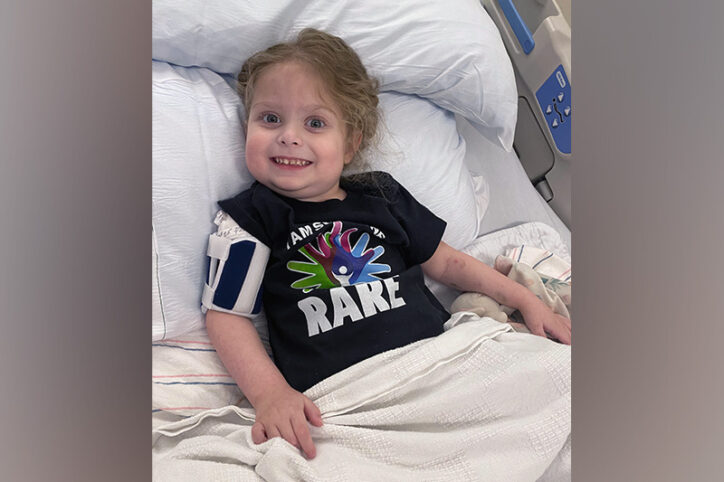
Aubree’s first surgery took place soon after her birth. She spent three months in intensive care at a local hospital followed by two more months — and more surgery — at Boston Children’s Hospital.
Instead of the perfect life they’d imagined, Michelle and Stephen faced a different reality. Here they share some of the ways they coped and how they’ve found beauty along the way.
1. Prepare for uncertainty
Raising a child with a complex medical condition is far from the experience most parents imagine. As they learn about their child’s condition, medically complex parents have to reset their expectations for their child’s future.
“The first thing I thought about was her quality of life,” says Michelle. Would Aubree be able to dress herself, eat, or get around independently? Would she have friends? What would school be like for her?
2. Find your team
When the Stricklands arrived at Boston Children’s for the first time, they met many of the clinicians who remain deeply involved in Aubree’s care today, including Drs. Richard Lee, Belinda Dickie, and Ted Lee.
“There’s no way to describe the weight that was just gone when we got to Boston and realized she was in the best possible hands,” says Michelle.
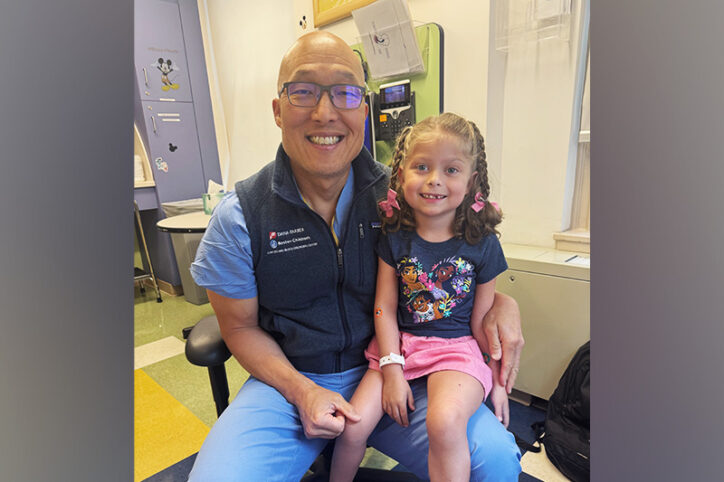
When she could finally go home, Aubree needed significant hands-on care. The team at Boston Children’s eased the transition by equipping her parents with supplies and training. Back home, Aubree’s team expanded to include local clinicians who continue to collaborate with Boston Children’s to manage her care.
3. Expect your expectations to change
Michelle and Stephen wanted to avoid orthopedic surgery at all costs. They dreaded the idea of Aubree wearing a cast that extended from her ankles to her chest for eight weeks. Nonetheless, when she was 4, Aubree underwent the operation at Boston Children’s, part of a 15-hour day in the OR. After Dr. Young-Jo Kim cut and repositioned her pelvic bone to better support her bladder, Drs. Lee, Dickie, and Lee performed a Mitrofanoff procedure, creating a new channel from her bladder to a small opening on her belly.
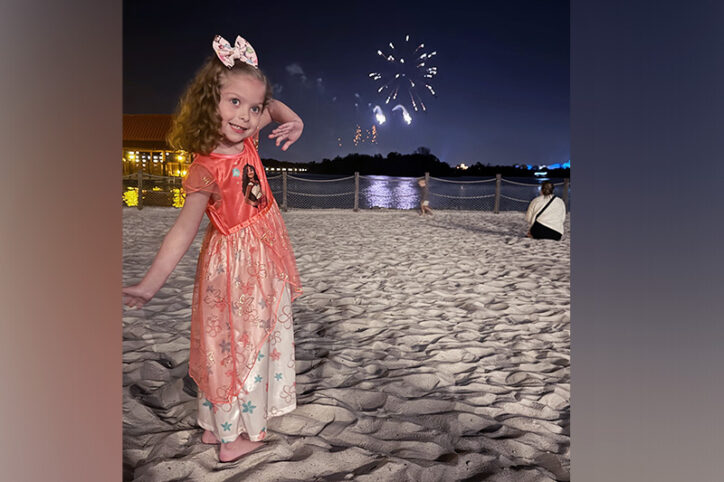
The long day served as a turning point. After recovering, Aubree — who first started walking at age 3 — started to run, jump, dance, and do gymnastics. For the first time, she could put on pants without her parents’ help and gained independence in self-catheterizing.
“I didn’t even realize all the things I thought she’d never do until she started doing them,” says Michelle.
4. Lean on your village
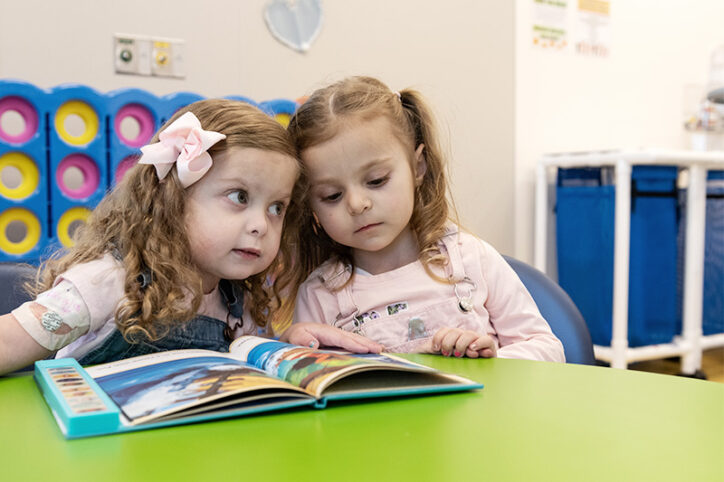
Today, the Stricklands’ village includes family, friends, other medically complex families, and Aubree’s best friend, Makayla.
“Obviously, if I could change some things, I would,” says Michelle. “But if I look at this situation holistically, the reason this happened is the family we gained at home, the community of medical moms, and the team in Boston. They’re determined to give Aubree the best quality of life.”
5. Know that some days are easier than others
Now 6 years old, Aubree has traveled to Boston Children’s 10 times, had 10 surgeries, and faces more in the future. Nonetheless, she started first grade this fall and instantly made new friends.
“I try not to live in the negative,” says Michelle. “Some days are easier than others.” On harder days, Michelle finds inspiration through Aubree and her determination to never give up.
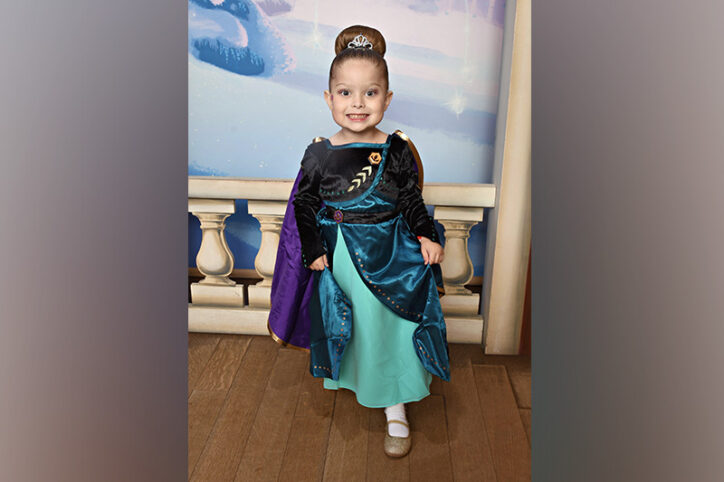
“This isn’t the perfect life we imagined,” says Stephen. Then, tilting his head toward his joyful, radiant daughter, he adds, “But this is her perfect life.”
Learn more about the Colorectal and Pelvic Malformations Center and Bladder Exstrophy Program.
Related Posts :
-

Answers for Aubree: Finding support for OEIS
Michelle and Stephen Strickland are used to having questions about their infant daughter, Aubree’s, health. After all, Aubree was ...
-
‘A picture-perfect life’: Makayla is thriving with OEIS syndrome
On a sunny day this spring, Makayla Brisson was on a mission: to find the two bunny rabbit sculptures in ...
-
‘Supported and heard’: Harven gets care for an anorectal malformation
Like lots of 3-year-olds, Harven Gifford has a great imagination. Lately, he’s taken to roaring loudly and pretending that ...
-
Thanks to Carter and his family, people are talking about spastic paraplegia
Nine-year-old Carter may be the most devoted — and popular — sports fan in his Connecticut town. “He loves all sports,” ...